🚀 Introduction
The best alternatives to Semrush for AI visibility are SE Ranking, Nightwatch, Ahrefs Brand Radar, Profound, Peec AI, Otterly AI, Goodie, RankScale, Mangools, and Surfer SEO. Choose based on whether you need SEO plus AI tracking, AI citations, prompt monitoring, competitor benchmarking, or enterprise AEO workflows.
This article is not a general Semrush alternatives guide.
That topic needs a broader comparison of keyword research, backlinks, rank tracking, technical audits, PPC data, local SEO, and content optimization.
This guide answers one narrower and more important question:
What should you use instead of Semrush if your main goal is tracking AI visibility?
That means we are comparing tools based on:
- Brand mentions in AI answers.
- Website citations in AI-generated responses.
- ChatGPT visibility.
- Google AI Overviews visibility.
- Google AI Mode visibility.
- Perplexity visibility.
- Gemini visibility.
- Claude’s visibility.
- AI share of voice.
- Prompt tracking.
- Competitor visibility.
- Brand sentiment.
- Cited source analysis.
- Content recommendations.
- GEO and AEO actionability.
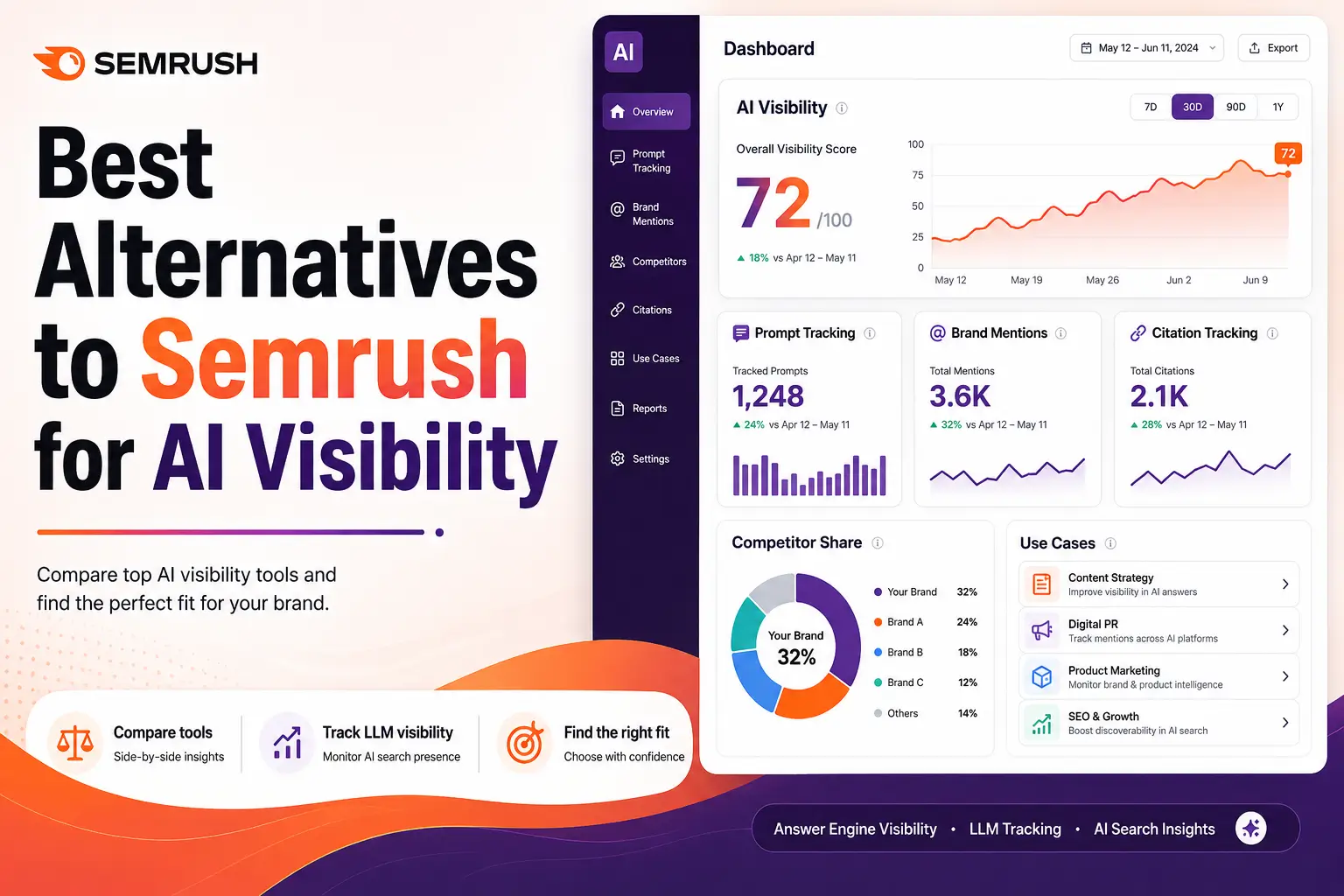
Semrush is now a serious AI visibility platform because of its AI Visibility Toolkit and Semrush One.
But it is not always the best fit.
Some teams need a cheaper AI visibility tracker. Some agencies need stronger client reporting. Some brands need a deeper AEO strategy. Some content teams need a platform that turns AI visibility gaps into content actions.
That is why the best alternative depends on the workflow, not only the brand name.
⚡ Quick Verdict
SE Ranking is the best balanced alternative to Semrush for teams that want SEO and AI visibility together. Nightwatch is better for agencies that need rank tracking, AI citations, local visibility, and reporting. Ahrefs Brand Radar is stronger for large-scale brand benchmarking, while Profound, Goodie, Peec AI, Otterly AI, and RankScale are more focused on dedicated AEO and AI search monitoring.
| Visit Website | Tool | Best For | Why Choose It Instead of Semrush |
|---|---|---|---|
| Visit Website | SE Ranking | Best balanced SEO + AI visibility alternative | Combines traditional SEO, AI tracking, AI Overviews, ChatGPT tracking, and agency workflows |
| Visit Website | Nightwatch | Agencies and reporting-heavy teams | Strong for rank tracking, AI citations, local visibility, share of voice, and white-label reports |
| Visit Review | Ahrefs Brand Radar | AI brand benchmarking | Better for large-scale AI visibility research, search-backed prompts, and competitive analysis |
| Visit Review | Profound | Enterprise AEO strategy | Stronger for brands that need deeper AI search visibility, citations, sentiment, and AEO workflows |
| Visit Review | Peec AI | Marketing teams | Useful for tracking brand performance across ChatGPT, Perplexity, Gemini, and AI search channels |
| Visit Review | Otterly AI | Affordable AI search monitoring | Good entry option for smaller teams testing brand mentions and AI citations |
| Visit Review | Goodie | AEO platform for brands and agencies | Useful for monitoring, recommendations, sentiment, and AI-search optimization |
| Visit Review | RankScale | Focused AI visibility tracking | Practical for teams that want prompt tracking, citations, sentiment, and competitor insights |
| Visit Website | Mangools | Beginners and smaller businesses | Better if you want simple SEO tools with lighter AI-search monitoring |
| Visit Review | Surfer SEO | Content teams | Better when your main action is improving pages after AI visibility gaps appear |
| Your Main Need | Best Alternative |
|---|---|
| SEO and AI visibility together | SE Ranking |
| Rank tracking plus AI citations | Nightwatch |
| AI brand benchmarking | Ahrefs Brand Radar |
| Enterprise AEO strategy | Profound |
| Marketing team AI analytics | Peec AI |
| Budget AI visibility monitoring | Otterly AI |
| AEO monitoring and recommendations | Goodie |
| Focused GEO tracking | RankScale |
| Beginner-friendly AI search insights | Mangools |
| Content optimization after visibility gaps | Surfer SEO |
The clearest takeaway is this: Semrush is strong if you already want a broad SEO ecosystem. But if AI visibility is the main job, a more focused alternative may give you clearer insights and faster decisions.
📚 Recommended Reads
- Best AI Visibility Tools Tested
- Ahrefs vs Semrush for AI Visibility: Which One Is Better for Brand Tracking, AEO, and SEO?
- Nightwatch Review: Is This Rank Tracking and AI Visibility Platform Worth It?
- SE Ranking Review: Is It the Best ROI SEO Platform for Agencies and AI Visibility?
- Semrush Alternatives: Best SEO Tools by Use Case This Year
📌 In This Guide
1. 🧠 What AI Visibility Really Means
2. 🔎 Why Look for Semrush Alternatives for AI Visibility?
3. 🧭 What Makes a Good AI Visibility Tool?
4. 📊 Semrush AI Visibility vs Alternatives at a Glance
5. 🏆 Best Alternatives to Semrush for AI Visibility
6. 🧩 Best Tool by Use Case
7. 💰 Pricing and Value Comparison
8. 🧪 My Practical AI Visibility Tracking Workflow
9. 📊 Real-World Evidence: What External Sources Show
10. ⚠️ Common Mistakes When Tracking AI Visibility
11. ❓ FAQ
12. 🏁 Final Verdict
13. 📚 Recommended Next Reads
🧠 What AI Visibility Really Means
AI visibility measures how often your brand, website, products, people, or competitors appear inside AI-generated answers.
Traditional SEO measures things like:
- Keyword rankings.
- Organic clicks.
- Impressions.
- Backlinks.
- Technical health.
- Indexed pages.
- Search Console performance.
AI visibility measures a newer layer of discovery.
It asks:
- Does ChatGPT mention your brand?
- Does Perplexity cite your website?
- Does Gemini recommend your competitor?
- Does Google AI Overviews use your page as a source?
- Does Google AI Mode mention your product?
- Is your brand sentiment positive, neutral, or negative?
- Which prompts trigger your brand?
- Which prompts ignore your brand?
- Which competitors appear more often?
- Which websites are being cited instead of yours?
This matters because users are no longer only clicking traditional search results.
They are asking AI systems for:
- Tool recommendations.
- Product comparisons.
- Buying advice.
- Brand alternatives.
- Step-by-step answers.
- Local business suggestions.
- Software shortlists.
- Expert summaries.
- Pricing explanations.
- “Best for” decisions.
For example, a user may ask:
- What is the best AI SEO tool for bloggers?
- Which rank tracker shows AI visibility?
- What is the best Semrush alternative for small agencies?
- Which local SEO tool is best for citations?
- What tools track ChatGPT brand mentions?
If your brand does not appear in those answers, your competitor may win the conversation before the user ever reaches Google.
That is why AI visibility is becoming part of modern SEO, GEO, and AEO strategy.
🔎 Why Look for Semrush Alternatives for AI Visibility?
Semrush is already relevant in AI visibility.
Its AI Visibility Toolkit and Semrush One can help teams track brand mentions, AI citations, prompts, competitor gaps, sentiment, and AI-search performance.
So why consider alternatives?
Because AI visibility is not one simple feature.
Different teams need different workflows.
1. You Only Need AI Visibility, Not a Full SEO Suite
Semrush is powerful because it is broad.
But that can be unnecessary if you only need:
- Prompt tracking.
- Brand mentions.
- AI citations.
- Share of voice.
- Competitor visibility.
- Source analysis.
- Sentiment tracking.
- Prompt gaps.
- AI search monitoring.
- Content recommendations.
If you do not need a full SEO ecosystem, a focused AI visibility tool may be easier to justify.
2. You Need AI Visibility Connected to Rank Tracking
Some teams do not want AI visibility in a separate dashboard.
They want to compare:
- Google rankings.
- Local rankings.
- Google Maps visibility.
- AI mentions.
- AI citations.
- AI share of voice.
- Competitor visibility.
- Client reporting.
This is where tools like Nightwatch and SE Ranking become especially useful.
3. You Need Better Client Reporting
Agencies need reports that explain AI visibility clearly.
Clients no longer ask only:
“Are we ranking?”
They also ask:
- Are we mentioned in AI answers?
- Are competitors being recommended instead?
- Which prompts should we monitor?
- Which content needs improvement?
- Which pages are cited?
- Is brand sentiment improving?
- Are we gaining AI share of voice?
A reporting-focused tool may be stronger than a broad SEO dashboard.
4. You Need an Enterprise AEO Strategy
Large brands may need deeper workflows around:
- Answer engine optimization.
- Brand perception.
- AI source influence.
- Citation gaps.
- Competitive positioning.
- Executive reporting.
- Multi-region tracking.
- Multi-language visibility.
- Prompt research.
- Content: AEO recommendations.
This is where tools like Profound, Goodie, and Peec AI may fit better.
5. You Want a Lower-Cost Starting Point
AI visibility tracking is still a young category.
Not every brand needs an expensive enterprise tool immediately.
A smaller business may start with:
- Otterly AI.
- RankScale.
- Mangools.
- SE Ranking.
- A smaller Nightwatch plan.
Then upgrade when AI visibility becomes a serious reporting or revenue channel.
🧭 What Makes a Good AI Visibility Tool?
A good AI visibility tool should not only show whether your brand appears in AI answers.
It should help you understand why, where, and what to do next.
1. AI Platform Coverage
The tool should support the AI platforms your audience actually uses.
Important platforms may include:
- ChatGPT.
- Google AI Overviews.
- Google AI Mode.
- Perplexity.
- Gemini.
- Claude.
- Copilot.
- Grok.
- DeepSeek.
- Mistral.
- Meta AI.
Do not assume every tool tracks every model.
Model coverage is one of the biggest differences between platforms.
2. Prompt Tracking
Prompt tracking is the foundation of AI visibility.
A good tool should let you track prompts such as:
- Best tools for your category.
- Brand vs competitor comparisons.
- Buying-intent questions.
- Problem-solution questions.
- Local-service recommendations.
- Product alternatives.
- “Best for” queries.
- Pricing and value questions.
- Use-case questions.
- Industry-specific prompts.
The best prompts are connected to business value, not curiosity.
3. Citation Analysis
Mentions are useful, but citations are often more important.
A citation tells you which pages AI systems trust enough to reference.
A good AI visibility tool should help identify:
- Which URLs are cited?
- Which competitor URLs are cited?
- Which third-party sources influence answers?
- Which source types appear often?
- Which pages are missing from citations?
- Which content should be improved?
- Which entities need stronger support?
4. Share of Voice
AI share of voice shows how visible your brand is compared with competitors.
This is more useful than looking at your brand alone.
A low AI share of voice may mean:
- Competitors are more established.
- Your content is not cited.
- Your brand is not associated with the category.
- You lack third-party mentions.
- Your pages do not answer the right prompts.
- Your content is too shallow.
- Your entity footprint is weak.
5. Sentiment Tracking
Being mentioned is not always good.
AI systems may describe a brand as:
- Recommended.
- Expensive.
- Limited.
- Best for beginners.
- Not suitable for agencies.
- Strong for enterprises.
- Weak for small businesses.
- Popular but complicated.
Sentiment tracking helps you understand whether AI visibility is helping or hurting brand perception.
6. Competitor Benchmarking
AI visibility is relative.
A brand can appear in some prompts but still lose to competitors.
A good tool should compare:
- Mention frequency.
- Citation frequency.
- Prompt coverage.
- Sentiment.
- Source strength.
- Visibility trends.
- Competitor gaps.
7. Actionable Recommendations
The best tools do not stop at monitoring.
They help answer:
- Which page should we update?
- Which prompt should we target?
- Which competitor is winning?
- Which source should we earn a mention from?
- Which topic needs stronger content?
- Which FAQ should we add?
- Which comparison page should we create?
- Which entity needs clarification?
Tracking without action becomes just another dashboard.
📊 Semrush AI Visibility vs Alternatives at a Glance
Semrush is a strong option if you want AI visibility inside a broader SEO ecosystem.
But alternatives may be stronger depending on your workflow.
| Tool | AI Visibility Focus | Best Fit |
|---|---|---|
| Semrush AI Visibility Toolkit | Mentions, citations, prompts, sentiment, competitors, and AI-readiness audit | Existing Semrush users and teams wanting AI visibility inside a broader SEO suite |
| SE Ranking | AI visibility, ChatGPT tracking, AI Overviews, AI Mode, SEO tracking, and reports | Agencies and growing teams needing SEO + GEO |
| Nightwatch | AI citations, sentiment, share of voice, rankings, local tracking, and reports | Agencies and rank-tracking teams |
| Ahrefs Brand Radar | Large-scale AI brand visibility across search-backed prompts and AI platforms | Competitive SEO teams and brand researchers |
| Profound | Enterprise AI visibility, citations, sentiment, and content AEO | Larger brands and enterprise AEO teams |
| Peec AI | AI search analytics for marketing teams | SaaS, growth, and marketing teams tracking AI discovery |
| Otterly AI | Brand mentions, citations, and share of voice across AI search platforms | Small teams and budget-conscious marketers |
| Goodie | AEO monitoring, recommendations, sentiment, and optimization | Brands and agencies needing AI-search action plans |
| RankScale | AI rank tracking, citations, sentiment, prompt research, and competitor analysis | Growing teams testing focused GEO workflows |
| Surfer SEO | Content optimization connected to AI-search readiness | Content teams acting on visibility gaps |
The key decision is not:
“Which tool has the most features?”
The better question is:
“Which tool connects AI visibility data to the next action my team can actually take?”
🏆 Best Alternatives to Semrush for AI Visibility
1. SE Ranking: Best Overall Semrush Alternative for SEO and AI Visibility
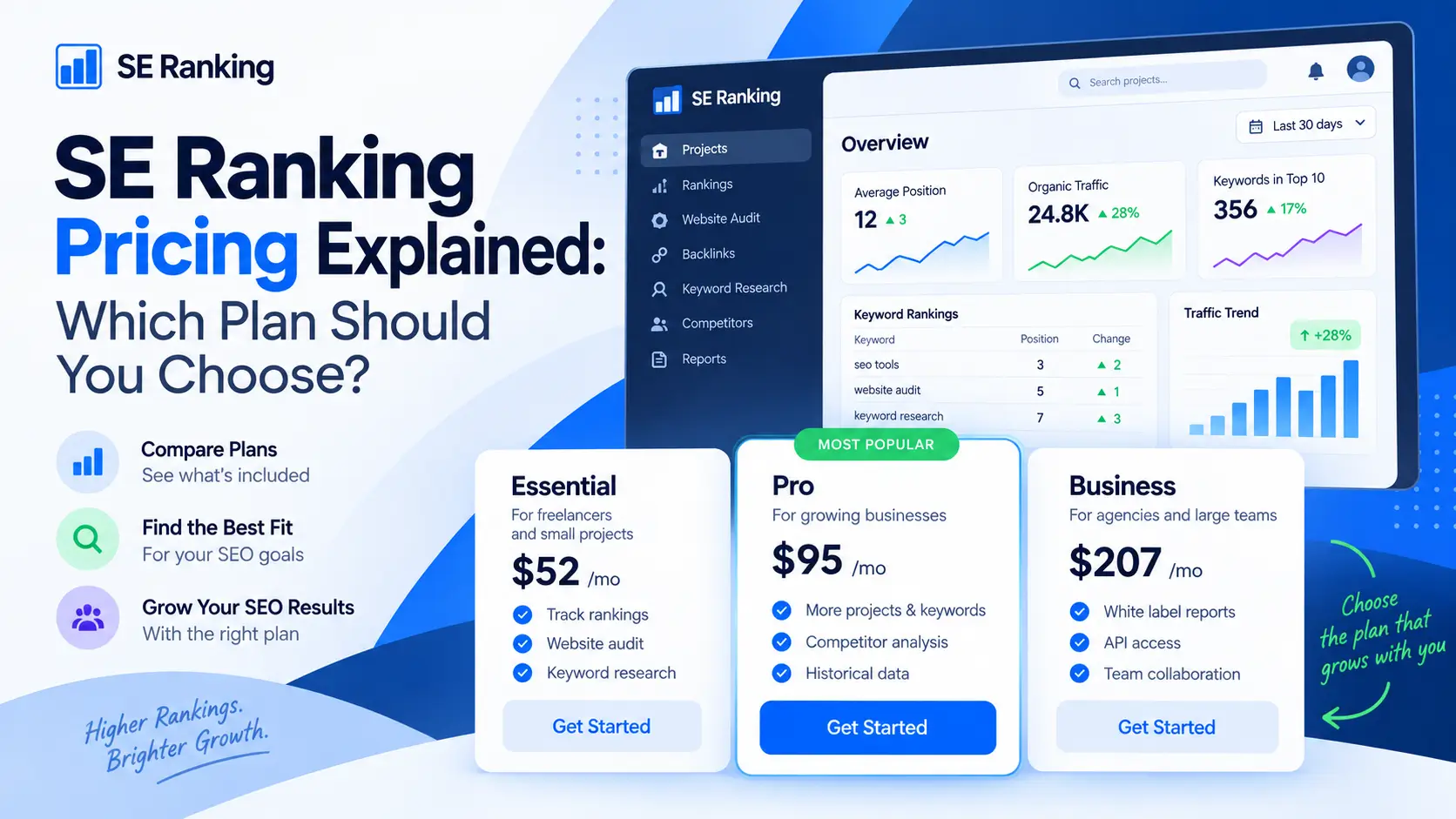
SE Ranking is one of the strongest alternatives to Semrush for AI visibility because it connects AI tracking with traditional SEO workflows. It is useful for teams that want rankings, audits, competitor research, AI Overviews monitoring, ChatGPT tracking, and reports inside one platform.
This makes it a strong choice for agencies, freelancers, and growing businesses that do not want AI visibility separated from SEO.
Why SE Ranking Works Well
SE Ranking works well because it can support both classic SEO and AI search tracking.
Most businesses still need:
- Google rankings.
- Technical SEO.
- Competitor research.
- Backlink monitoring.
- Local tracking.
- AI visibility.
- Content improvement.
- Reporting.
AI visibility should not replace SEO.
It should sit beside it.
I Would Use SE Ranking If You Need:
- AI visibility and traditional SEO together.
- ChatGPT visibility tracking.
- Google AI Overviews monitoring.
- Google AI Mode tracking.
- Website audits.
- Competitor research.
- Local SEO tracking.
- Agency reporting.
- Google Search Console and Analytics workflows.
- A practical Semrush alternative for SEO plus GEO.
I Would Not Use SE Ranking If You Need:
- Enterprise-only AEO strategy.
- A pure AI visibility platform.
- The deepest AI prompt database.
- Large-scale brand benchmarking.
- A tool only for content optimization.
Best for: agencies, freelancers, SMBs, SaaS teams, and in-house marketers.
2. Nightwatch: Best Alternative for Rank Tracking and AI Citation Intelligence
Nightwatch is one of the best Semrush alternatives if you need rank tracking and AI visibility in one reporting-focused platform. It connects traditional rankings with AI visibility across major AI platforms and adds citation intelligence, sentiment, share of voice, and client reporting.
This is especially useful for agencies.
Why Nightwatch Works Well
Nightwatch is strong because it helps teams report on:
- Organic rankings.
- Local rankings.
- Google Maps visibility.
- AI mentions.
- AI citations.
- Sentiment.
- Share of voice.
- Competitor movement.
- White-label reports.
- Client performance.
Agencies need clarity.
Nightwatch makes it easier to show clients how classic search and AI search visibility are changing together.
I Would Use Nightwatch If You Need:
- Daily rank tracking.
- Local rank tracking.
- Google Maps visibility.
- AI citation tracking.
- AI share-of-voice reporting.
- Sentiment analysis.
- Competitor visibility.
- White-label reports.
- Team access.
- A strong reporting layer for clients.
I Would Not Use Nightwatch If You Need:
- Deep backlink research.
- AI article writing.
- Advanced keyword clustering.
- Enterprise AEO consulting workflows.
- A broad PPC research suite.
Best for: agencies, consultants, local SEO teams, and reporting-heavy SEO teams.
3. Ahrefs Brand Radar: Best for Large-Scale AI Brand Benchmarking
Ahrefs Brand Radar is a strong Semrush alternative when your main goal is large-scale brand visibility research across AI platforms and search-backed prompts.
It is especially useful for teams that already care about competitive SEO research and want AI visibility data at a broader market level.
Why Ahrefs Brand Radar Works Well
Ahrefs Brand Radar stands out because of its research depth.
It can help teams explore:
- Brand mentions.
- Competitor mentions.
- AI platform visibility.
- AI Overviews.
- AI Mode.
- ChatGPT visibility.
- Perplexity visibility.
- Gemini visibility.
- Copilot visibility.
- Search-backed prompt datasets.
This is valuable for brands that want to understand category-level visibility, not only a small prompt list.
I Would Use Ahrefs Brand Radar If You Need:
- Large-scale AI brand research.
- Competitive benchmarking.
- AI visibility across many prompts.
- Search-backed prompt data.
- Brand comparison workflows.
- Market-level analysis.
- AI citations and mentions.
- SEO research in the same ecosystem.
- A serious data platform.
- Broader brand intelligence.
I Would Not Use Ahrefs Brand Radar If You Need:
- A low-cost entry tool.
- Simple client reports.
- Local map tracking.
- Beginner-friendly dashboards.
- A lightweight AI visibility checker.
Best for: SEO professionals, brand teams, publishers, and competitive research teams.
4. Profound: Best for Enterprise AEO Strategy
Profound is a dedicated AI visibility and answer-engine optimization platform. It is designed for brands that want to understand and improve how they appear in AI-generated answers.
It is not a basic SEO tool.
It is better understood as an enterprise AEO platform.
Why Profound Works Well
Profound can support deeper workflows around:
- AI visibility.
- Source citations.
- Brand sentiment.
- Content AEO.
- Competitive positioning.
- AI answer analysis.
- Executive visibility reporting.
- Market-level tracking.
- Brand perception.
- Answer-engine optimization.
This makes it more relevant for larger brands than small blogs.
I Would Use Profound If You Need:
- Enterprise AI visibility analysis.
- Dedicated AEO workflows.
- Citation intelligence.
- Brand sentiment research.
- Executive reporting.
- Competitive AI search analysis.
- Content: AEO recommendations.
- Multi-market strategy.
- A premium AI visibility platform.
- A tool built specifically for answer engines.
I Would Not Use Profound If You Need:
- A budget tool.
- Traditional rank tracking.
- Basic keyword research.
- Local SEO reports.
- A beginner-friendly SEO toolkit.
Best for: enterprise brands, funded SaaS companies, large marketing teams, and AEO-focused teams.
5. Peec AI: Best for Marketing Teams Tracking AI Search Performance
Peec AI is an AI search analytics platform built for marketing teams that want to analyze brand performance across AI search platforms such as ChatGPT, Perplexity, and Gemini.
It is useful for teams that want AI search insights without making a traditional SEO suite the center of the workflow.
Why Peec AI Works Well
Peec AI is built around marketing visibility.
It helps teams understand:
- Where the brand appears.
- Which competitors appear?
- Which answers cite which sources?
- Which prompts matter?
- Which content needs attention?
- How visibility changes over time.
- Where AI search may influence discovery.
This is useful for growth teams, SaaS teams, and marketing teams that care about demand creation.
I Would Use Peec AI If You Need:
- AI search analytics.
- Brand visibility tracking.
- Competitor benchmarking.
- Prompt-level monitoring.
- Citation analysis.
- Marketing-team dashboards.
- AI discovery insights.
- Content strategy guidance.
- Visibility across major AI platforms.
- A dedicated AI search analytics workflow.
I Would Not Use Peec AI If You Need:
- Technical SEO audits.
- Backlink databases.
- Traditional rank tracking is the main feature.
- Local SEO tracking.
- A full SEO toolkit.
Best for: SaaS companies, growth teams, marketing teams, and brands focused on AI discovery.
6. Otterly AI: Best Budget-Friendly AI Search Monitoring Tool
Otterly AI is a practical Semrush alternative for users who want affordable AI search monitoring. It tracks brand mentions, share of voice, cited content, and visibility across AI search platforms.
It is especially useful for teams testing AI visibility for the first time.
Why Otterly AI Works Well
Otterly AI focuses on the core questions many small teams have:
- Are we mentioned?
- Are we cited?
- Which AI platforms show us?
- Which competitors appear?
- Which prompts reveal gaps?
- Which content gets cited?
- Is visibility improving?
- Where should we focus next?
This is enough for many smaller businesses.
I Would Use Otterly AI If You Need:
- Affordable AI visibility monitoring.
- Brand mention tracking.
- Citation monitoring.
- Share-of-voice tracking.
- Competitor comparisons.
- AI Overviews monitoring.
- AI Mode visibility.
- A simple dashboard.
- A lower-risk starting point.
- A practical way to begin GEO tracking.
I Would Not Use Otterly AI If You Need:
- Deep SEO tools.
- Rank tracking.
- Backlink research.
- Technical audits.
- Enterprise AEO strategy.
Best for: solo marketers, small teams, startups, and budget-conscious businesses.
7. Goodie: Best AEO Platform for Brands and Agencies
Goodie is an AI Search Visibility and Answer Engine Optimization platform focused on helping brands monitor visibility, understand sentiment, benchmark competitors, and improve how they appear in AI-powered answers.
It is a better fit when the goal is action, not only monitoring.
Why Goodie Works Well
Goodie can support workflows around:
- AI visibility monitoring.
- Answer engine optimization.
- Brand sentiment.
- Competitor visibility.
- Content recommendations.
- Prompt opportunities.
- Multi-market visibility.
- AI search performance.
- Agency reporting.
- Strategic AEO planning.
This makes it useful for brands and agencies trying to build a serious AI-search presence.
I Would Use Goodie If You Need:
- AEO strategy.
- AI visibility monitoring.
- Prompt research.
- Sentiment tracking.
- Competitor benchmarking.
- Content recommendations.
- AI search optimization.
- Agency workflows.
- Brand-focused reporting.
- A dedicated AI visibility platform.
I Would Not Use Goodie If You Need:
- Classic keyword research.
- Backlink analysis.
- Technical SEO audits.
- Google Maps tracking.
- A basic beginner SEO tool.
Best for: agencies, brands, ecommerce teams, and AEO-focused marketers.
8. RankScale: Best Focused AI Visibility Tracker for Growing Teams
RankScale is a focused AI visibility platform for teams that want to track brand performance, prompts, citations, sentiment, competitor movement, and page-level opportunities in AI search.
It is especially useful if you want a dedicated tool without adopting a full SEO suite.
Why RankScale Works Well
RankScale focuses on the AI-search ecosystem.
It can help teams monitor:
- Brand visibility.
- AI rank tracking.
- Competitor analysis.
- Citation analysis.
- Sentiment analysis.
- Page audits.
- Prompt research.
- Visibility dashboards.
- Source behavior.
- GEO performance.
This makes it a practical option for growing teams that want focused AI visibility data.
I Would Use RankScale If You Need:
- Focused AI visibility tracking.
- Prompt-level monitoring.
- Citation analysis.
- Sentiment analysis.
- Competitor insights.
- Page audits.
- GEO reporting.
- A lighter alternative to enterprise platforms.
- A practical starting point for AI search tracking.
- Brand performance monitoring.
I Would Not Use RankScale If You Need:
- Full SEO audits.
- Backlink analysis.
- Traditional keyword research.
- Local SEO tracking.
- A large all-in-one marketing suite.
Best for: startups, consultants, smaller brands, and growing teams testing GEO workflows.
9. Mangools: Best Simple AI Visibility Alternative for Beginners
Mangools is best known as a beginner-friendly SEO toolkit, but it has also moved into AI search monitoring.
It is useful for users who want simple SEO tools and basic AI-search visibility insights without the complexity of enterprise platforms.
Why Mangools Works Well
Mangools is easier to learn than many larger SEO suites.
It can help users with:
- Keyword research.
- SERP analysis.
- Rank tracking.
- Basic backlink checks.
- Website authority metrics.
- AI-search monitoring.
- Localized SEO research.
- Beginner-friendly dashboards.
For smaller teams, usability matters.
A tool that gets used is better than a powerful platform that stays confusing.
I Would Use Mangools If You Need:
- Simple SEO tools.
- Beginner-friendly keyword research.
- AI-search visibility without enterprise complexity.
- Lower-cost workflows.
- A clean interface.
- Rank tracking.
- SERP analysis.
- Light backlink research.
- A simpler Semrush alternative.
- A tool small teams can actually use.
I Would Not Use Mangools If You Need:
- Enterprise AI visibility.
- Deep AI citation analysis.
- Advanced AEO workflows.
- Large-scale brand benchmarking.
- Technical SEO at specialist depth.
Best for: bloggers, freelancers, small businesses, and beginners.
10. Surfer SEO: Best When AI Visibility Problems Are Content Problems
Surfer SEO is not mainly an AI visibility tracker like Profound, Nightwatch, or Otterly AI.
Its strength is content optimization.
However, it can be a smart alternative if the main action after tracking visibility gaps is improving your pages.
Why Surfer SEO Works Well
AI visibility often depends on content quality.
If competitors are cited more often, the issue may be:
- Weak topical coverage.
- Missing sections.
- Poor structure.
- Thin definitions.
- Lack of supporting entities.
- Poor answer clarity.
- Outdated content.
- Weak comparisons.
- Missing FAQ answers.
- Poor content organization.
Surfer can help improve the pages that should be more visible.
I Would Use Surfer SEO If You Need:
- Content optimization.
- SERP-based recommendations.
- Topic coverage improvement.
- Content scoring.
- Content audits.
- AI content workflows.
- Better on-page structure.
- Content refreshes.
- Stronger topical relevance.
- A tool to act on visibility gaps.
I Would Not Use Surfer SEO If You Need:
- Dedicated prompt tracking.
- Citation monitoring across AI systems.
- Brand sentiment analysis.
- AI share-of-voice dashboards.
- Pure AI visibility reporting.
Best for: content teams, publishers, bloggers, and SEO teams improving pages after AI visibility gaps appear.
🧩 Best Tool by Use Case
AI visibility tools are not interchangeable.
Use this table to choose faster.
| Use Case | Best Tools | Why |
|---|---|---|
| I want SEO and AI visibility in one platform | SE Ranking, Semrush, Nightwatch | Better for teams that still need classic SEO tracking |
| I manage SEO clients | Nightwatch, SE Ranking, Goodie | Stronger reporting and agency workflows |
| I need enterprise AEO | Profound, Goodie, Peec AI | More focused on AI-answer visibility and strategy |
| I need competitive brand research | Ahrefs Brand Radar, Profound, Peec AI | Better for benchmarking and market-level visibility |
| I need a budget starting point | Otterly AI, RankScale, Mangools | Easier to test without enterprise pricing |
| I need content recommendations | Goodie, Surfer SEO, SE Ranking | More useful when visibility gaps must turn into page updates |
| I need AI citation tracking | Nightwatch, Otterly AI, Profound, RankScale | Better for understanding source influence |
| I need simple dashboards | Mangools, Otterly AI, RankScale | Easier for smaller teams |
| I need extensive prompt coverage | Ahrefs Brand Radar, Profound, Peec AI | Better for broader visibility research |
| I need local SEO plus AI visibility | Nightwatch, SE Ranking | Better combination of rankings, locations, and AI tracking |
💰 Pricing and Value Comparison
AI visibility pricing changes quickly because this category is still new. Some tools publish clear monthly pricing, while others use custom quotes, demo-based sales, or add AI visibility as part of a broader SEO platform.
The best choice depends on whether you need a dedicated AI visibility tracker or a wider SEO platform that also includes rankings, reports, and traditional SEO workflows.
| Tool | Pricing Position | Best Value For |
|---|---|---|
| Semrush AI Visibility Toolkit | Starts at $99/month per domain | Existing Semrush users who want AI visibility inside a familiar SEO platform |
| SE Ranking | Plan and add-on based | Teams that want SEO tracking and AI visibility in one workflow |
| Nightwatch | SEO and AI tracking plans | Agencies that need rank tracking, reporting, and AI visibility together |
| Ahrefs Brand Radar | Part of the Ahrefs AI visibility ecosystem | Research-heavy teams and brands comparing visibility against competitors |
| Profound | Premium/enterprise positioning | Larger brands, AEO teams, and companies investing seriously in AI search visibility |
| Peec AI | Mid-market / enterprise positioning | Marketing teams tracking how brands appear across AI discovery platforms |
| Otterly AI | Lower-cost entry positioning | Smaller teams testing AI search monitoring before committing to larger platforms |
| Goodie | Demo or sales-led pricing | Brands and agencies that need AEO strategy, monitoring, and guided recommendations |
| RankScale | Lower-cost focused tracker | Startups and growing teams that want prompt tracking without a full SEO suite |
| Mangools | Lower-cost SEO toolkit | Beginners and small businesses that still need traditional SEO tools more than advanced AI visibility |
Best Value by Budget
| Budget Level | Best Direction |
|---|---|
| Low budget | RankScale, Otterly AI, or Mangools |
| Mid-range SEO workflow | SE Ranking or Nightwatch |
| Existing SEO platform users | Semrush or Ahrefs |
| Enterprise AI visibility | Profound, Peec AI, or Goodie |
| Agency reporting needs | Nightwatch, SE Ranking, or Semrush |
Pricing Verdict
If you already use a major SEO platform, it may be cheaper to add AI visibility inside your existing workflow. If your main goal is prompt tracking, brand mentions, and AI citations, a focused tool like Otterly AI, RankScale, Profound, Peec AI, or Goodie may provide a cleaner experience.
How to Judge Value
Do not compare only the monthly price.
Compare:
- Number of prompts.
- Number of tracked AI platforms.
- Tracking frequency.
- Citation tracking.
- Competitor limits.
- Sentiment tracking.
- Historical data.
- Share-of-voice reporting.
- Export options.
- White-label reports.
- Team seats.
- API access.
- Content recommendations.
- SEO integrations.
- Local tracking.
A cheaper tool may be enough for a small brand.
A more expensive tool may be worth it if AI visibility influences real revenue, brand positioning, or client reporting.
🧪 My Practical AI Visibility Tracking Workflow
If I were tracking AI visibility for a brand, I would not start by tracking hundreds of random prompts.
I would start with a focused system.
Step 1: Define the Business Categories
First, choose the categories where the brand should appear.
Examples:
- Best AI SEO tools.
- Best local SEO tools.
- Best rank tracking tools.
- Best content optimization tools.
- Best Semrush alternatives.
- Best tools for AI visibility.
- Best SEO tools for agencies.
Step 2: Build Prompt Groups
Create prompt groups based on intent.
| Prompt Group | Example |
|---|---|
| Best tools | What are the best AI SEO tools? |
| Alternatives | What are the best Semrush alternatives? |
| Comparisons | SE Ranking vs Semrush: which is better? |
| Use cases | Best SEO tools for local agencies |
| Pricing | Affordable AI visibility tools |
| Problems | How do I track brand mentions in ChatGPT? |
Step 3: Add Competitors
Track at least 3–5 competitors.
AI visibility only makes sense in context.
You need to know:
- Who appears more often?
- Who gets cited?
- Who is recommended?
- Which competitor owns each prompt group?
- Which sources influence the answers?
Step 4: Track Multiple AI Platforms
Do not rely on one AI system.
Track platforms such as:
- ChatGPT.
- Google AI Overviews.
- Google AI Mode.
- Perplexity.
- Gemini.
- Claude.
- Copilot.
Each platform can behave differently.
Step 5: Review Citations
Look at the sources being cited.
Ask:
- Are your pages cited?
- Are competitor pages cited?
- Are third-party listicles cited?
- Are review sites cited?
- Are documentation pages cited?
- Are news pages cited?
- Are forums or communities cited?
This tells you where AI systems are getting trust signals.
Step 6: Turn Gaps Into Content Actions
Tracking alone does not improve visibility.
Use the data to create actions:
- Update important pages.
- Add clearer definitions.
- Improve comparison sections.
- Add FAQ answers.
- Strengthen entity coverage.
- Create missing category pages.
- Improve source credibility.
- Earn mentions from cited third-party sources.
- Refresh outdated pages.
- Add expert opinion and evidence.
Step 7: Measure Trends, Not One-Off Results
AI answers can vary.
Do not panic because one prompt changed once.
Track trends over time.
Look for:
- Rising mentions.
- More citations.
- Better sentiment.
- Improved share of voice.
- Competitor movement.
- New source opportunities.
- Prompt groups where the brand is still absent.
This creates a more reliable AI visibility workflow.
📊 Real-World Evidence: What External Sources Show
The AI visibility tracking category is still young, but official and independent sources show clear patterns.
Semrush positions its AI Visibility Toolkit around AI visibility reports, custom prompts, mentions from ChatGPT, Google AI, Gemini, and Perplexity, competitor analysis, prompt research, AI citations, and an AI-readiness site audit.
SE Ranking positions its AI visibility products around brand mentions, links in AI answers, competitor comparisons, prompt tracking, and AI search visibility trends.
Nightwatch positions its platform as a combination of rank tracking and AI visibility across ChatGPT, Claude, Gemini, Perplexity, Google AI Mode, and AI Overviews through citation intelligence.
Ahrefs Brand Radar emphasizes large-scale AI visibility research using search-backed prompts across AI Overviews, AI Mode, ChatGPT, Copilot, Gemini, Perplexity, and Grok.
Profound positions itself around AI visibility, source citations, brand sentiment, and content AEO. Peec AI focuses on AI search analytics for marketing teams across platforms such as ChatGPT, Perplexity, and Gemini. Otterly AI focuses on brand mentions, share of voice, and cited content across AI search platforms.
Independent AI visibility tool comparisons show the same broad trend: this market is splitting into three categories.
| Category | Examples | Best For |
|---|---|---|
| SEO platforms with AI visibility | Semrush, SE Ranking, Nightwatch, Ahrefs | Teams that still need traditional SEO |
| Dedicated AI visibility platforms | Profound, Peec AI, Otterly AI, Goodie, RankScale | Teams focused mainly on AI search |
| Content-action platforms | Surfer SEO, Goodie, SE Ranking | Teams that want tracking to lead into optimization |
The practical conclusion is simple:
AI visibility tools are useful, but they should not be treated like classic rank trackers.
They are better for:
- Measuring visibility trends.
- Comparing competitors.
- Finding prompt gaps.
- Studying citations.
- Understanding sentiment.
- Prioritizing content updates.
- Improving source credibility.
- Tracking how AI search mentions your brand over time.
No tool can guarantee citations from ChatGPT, Gemini, Claude, Perplexity, or Google AI Overviews.
The value comes from visibility, intelligence, and better decisions.
⚠️ Common Mistakes When Tracking AI Visibility
1. Measuring One Prompt Once
AI answers can change.
Track important prompts repeatedly over time.
2. Tracking Random Prompts
Do not track prompts only because they sound interesting.
Track prompts connected to revenue, leads, comparisons, or category discovery.
3. Ignoring Competitors
Your brand visibility means little without context from competitors.
4. Looking Only at Mentions
Mentions matter, but citations show which sources AI systems are using.
5. Treating AI Visibility Like Google Rankings
AI answers are not classic ranked lists.
They can vary by prompt, model, timing, and context.
6. Ignoring Sentiment
Being mentioned is not always positive.
Track whether your brand is recommended, criticized, or misunderstood.
7. Forgetting Content Action
A dashboard does not improve visibility by itself.
Use the data to update content, improve entities, and build stronger sources.
8. Buying an Enterprise Tool Too Early
Small teams should start with a focused set of prompts before paying for a premium platform.
9. Choosing a Tool Without Checking AI Model Coverage
Make sure the tool tracks the platforms your audience actually uses.
10. Expecting Guaranteed AI Citations
No AI visibility tool can guarantee that your website will be cited.
❓ FAQ
1. What is the best alternative to Semrush for AI visibility?
SE Ranking is the best balanced alternative if you want SEO and AI visibility together. Nightwatch is better for agencies and reporting. Ahrefs Brand Radar is stronger for large-scale brand benchmarking.
2. What is the best budget alternative to Semrush for AI visibility?
Otterly AI, RankScale, and Mangools are practical starting points for smaller teams that want to test AI visibility tracking before investing in larger platforms.
3. Is SE Ranking better than Semrush for AI visibility?
SE Ranking may be better if you want AI visibility inside a more focused SEO workflow. Semrush may be better if you already use the Semrush ecosystem and want AI visibility connected to its broader SEO tools.
4. Is Nightwatch a good alternative to Semrush for AI visibility?
Yes. Nightwatch is strong for teams that need traditional rank tracking, local visibility, AI citations, share of voice, sentiment, and client reports.
5. Is Ahrefs Brand Radar better than Semrush AI Visibility Toolkit?
Ahrefs Brand Radar may be better for large-scale AI brand research and competitive benchmarking. Semrush may be better for users who already rely on Semrush SEO tools.
6. What is the best AI visibility tool for agencies?
Nightwatch, SE Ranking, Goodie, and Profound are strong options. The best choice depends on whether the agency needs reporting, SEO integration, AEO strategy, or enterprise workflows.
7. What is the best AI visibility tool for small businesses?
Otterly AI, RankScale, Mangools, and SE Ranking are more practical starting points for small businesses.
8. What should I track in AI visibility?
Track brand mentions, website citations, competitor mentions, AI share of voice, sentiment, prompt coverage, source pages, and content gaps.
9. Does AI visibility tracking increase traffic?
Not directly. AI visibility tracking shows where your brand appears or does not appear. Traffic improvement depends on how you use the data to improve content, authority, citations, and brand trust.
10. Do I still need traditional SEO tools?
Yes. AI visibility does not replace technical SEO, keyword research, backlinks, rankings, internal links, content quality, or Google Search Console data.
🏁 Final Verdict
The best alternative to Semrush for AI visibility depends on the workflow you need.
Choose SE Ranking if you want SEO and AI visibility in one balanced platform.
Choose Nightwatch if rank tracking, local visibility, AI citations, sentiment, share of voice, and client reporting matter most.
Choose Ahrefs Brand Radar if you need large-scale brand benchmarking and competitive research across AI and search-backed prompts.
Choose Profound if your company needs an enterprise AEO strategy, citation intelligence, sentiment analysis, and executive-level AI visibility reporting.
Choose Peec AI if your marketing team wants dedicated AI search analytics across platforms like ChatGPT, Perplexity, and Gemini.
Choose Otterly AI if you want a lower-cost way to start tracking brand mentions, citations, and share of voice.
Choose Goodie if you want an AEO platform focused on monitoring, recommendations, sentiment, and optimization.
Choose RankScale if you want a focused AI visibility tracker with prompt research, citations, sentiment, page audits, and competitor analysis.
Choose Mangools if you want a simpler SEO toolkit with lighter AI-search monitoring.
Choose Surfer SEO if your main need is improving content after AI visibility gaps appear.
My recommendation for most Searchmora readers is simple:
Start with SE Ranking if you want a practical SEO + GEO platform.
Choose Nightwatch if reporting and tracking are the priority.
Use Otterly AI or RankScale if you want a lower-cost way to test AI visibility.
Consider Profound, Peec AI, Goodie, or Ahrefs Brand Radar when AI visibility becomes a strategic brand-level priority.
The clearest takeaway is this: Semrush is a strong AI visibility platform, but it is not automatically the best fit for every team. The best alternative is the tool that turns AI visibility data into better SEO, content, and brand decisions.
📚 Recommended Next Reads
- Best AI Visibility Tools Tested
- Ahrefs vs Semrush for AI Visibility: Which One Is Better for Brand Tracking, AEO, and SEO?
- Nightwatch Review: Is This Rank Tracking and AI Visibility Platform Worth It?
- SE Ranking Review: Is It the Best ROI SEO Platform for Agencies and AI Visibility?
- Semrush Alternatives: Best SEO Tools by Use Case This Year
Comments 4