Semrush Review
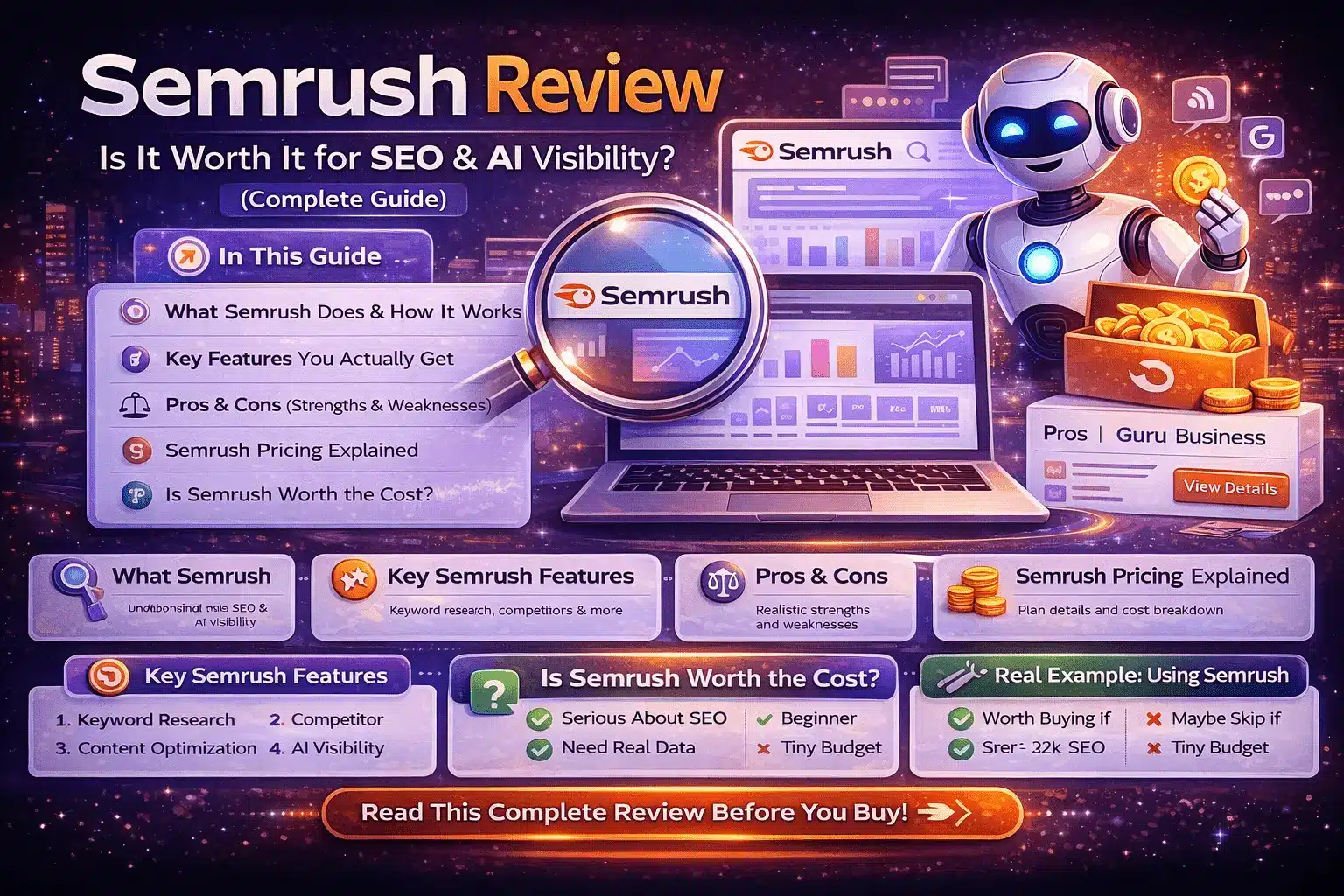
Semrush is a powerful SEO and AI visibility platform for marketers who need keyword research, competitor analysis, site audits, content tools, rank tracking, and brand visibility insights in one place. It is worth it for serious SEO teams, agencies, SaaS marketers, and growing websites, but it may feel expensive or complex for beginners.
📚 Recommended Next Reads
- Best AI SEO Tools This Year
- Best AI Visibility Tools Tested
- AI SEO vs Traditional SEO
- Ahrefs vs Semrush for AI Visibility
- Semrush vs SE Ranking
- Semrush vs Surfer SEO
- Semrush vs Ahrefs
✨ Introduction
Semrush has been one of the most popular SEO platforms for years, but it is no longer only a traditional SEO toolkit.
Today, Semrush is moving deeper into AI visibility, content optimization, competitor intelligence, and multi-channel digital marketing workflows. That makes it more relevant for websites that want to compete not only in Google Search, but also in AI-powered discovery experiences.
This matters because SEO is changing.
Ranking on Google is still important, but users are also asking AI tools for answers, recommendations, comparisons, and product research. If your brand is invisible in those AI-generated answers, you may lose awareness before users ever click a traditional search result.
That is where Semrush becomes interesting.
It can help you research keywords, analyze competitors, audit your site, plan content, track rankings, monitor backlinks, and understand parts of your AI search visibility.
In this Semrush review, I’ll break down what Semrush does well, where it falls short, who should use it, and whether it is worth the price.
⚡ Quick Verdict
Semrush is worth it if SEO is a serious growth channel for your website or business.
It is especially useful if you need one platform for keyword research, competitor analysis, technical audits, content planning, backlink research, rank tracking, and AI visibility insights. However, it is not the cheapest tool, and beginners may not need everything Semrush offers on day one.
| Question | Quick Answer |
|---|---|
| Is Semrush worth it? | Yes, if you need a serious SEO and visibility platform. |
| Best for | SEO teams, agencies, SaaS marketers, affiliate sites, and content teams. |
| Not best for | Beginners with a very small budget or users who only need a simple keyword tool. |
| Strongest feature | The combination of SEO data, competitor research, site audits, content tools, and AI visibility tracking. |
| Main drawback | Pricing, learning curve, and feature overload for new users. |
| Best alternative | Ahrefs for SEO research, SE Ranking for a lower-cost all-in-one option, and Surfer SEO for content optimization. |
My practical recommendation: use Semrush if you are ready to act on the data. If you only want to look up keywords occasionally, it may be too much. If you publish regularly, manage clients, or compete in a serious niche, Semrush can become a very valuable platform.
📌 In This Guide
1. 🔍 What Is Semrush?
2. 🧠 Who Is Semrush Best For?
3. 🧰 Semrush Key Features
4. 🤖 Semrush and AI Visibility
5. 💰 Semrush Pricing
6. ✅ Semrush Pros and Cons
7. 👥 Who Should Use Semrush?
8. 🧪 My Practical Semrush Workflow
9. 🔁 Best Semrush Alternatives
10. ⚠️ Common Semrush Mistakes
11. 🧱 Best Semrush Use Cases
12. 📊 Semrush Review Scorecard
13. ❓ FAQ
🔍 What Is Semrush?
Semrush is an all-in-one digital marketing and SEO platform.
Most people know it for SEO, but the platform now covers several areas, including:
- Keyword research
- Competitor analysis
- Rank tracking
- Technical SEO audits
- Backlink analysis
- Content planning
- Content optimization
- Local SEO
- PPC research
- Market research
- AI visibility tracking
- Reporting
In simple terms:
Semrush helps you understand how your website performs in search, what your competitors are doing, and where you can find new growth opportunities.
For a small website, Semrush can help you find keywords, fix technical issues, and improve content.
For an agency, it can help manage client research, audits, reports, competitors, rankings, and visibility gaps.
For a SaaS company or affiliate site, it can help identify high-intent content opportunities, competitor weaknesses, and topics worth targeting.
🧠 Who Is Semrush Best For?
Semrush is best for users who need more than a basic keyword tool.
It is a better fit when SEO is part of a serious growth strategy.
| User Type | Is Semrush a Good Fit? | Why |
|---|---|---|
| SEO agencies | Yes | Strong reporting, audits, competitor research, and multi-client workflows. |
| SaaS teams | Yes | Useful for content strategy, competitors, rankings, and AI visibility. |
| Affiliate sites | Yes, if budget allows | Strong keyword, competitor, and content opportunity research. |
| In-house marketers | Yes | Good for managing SEO, content, and visibility from one platform. |
| Beginners | Maybe | Powerful, but the learning curve and pricing may feel heavy. |
| Small blogs | Not always | Yes, if the budget allows |
| Freelancers | Maybe more than they need in the early stage. | Useful for audits, proposals, keyword research, and reporting. |
I would use Semrush if I had a website where SEO directly affects revenue.
I would not start with Semrush if I only had a small personal blog, no clear content plan, and no budget to publish or optimize consistently.
🧰 Semrush Key Features
Semrush includes many tools, but not every feature matters equally for every user.
The most valuable features usually fall into five groups: keyword research, competitor analysis, site audits, content workflows, and visibility tracking.
Keyword Research
Semrush is strong for keyword discovery and keyword analysis.
You can use it to find:
- Main keywords
- Long-tail keywords
- Keyword difficulty
- Search volume
- Search intent
- Related keywords
- Questions
- SERP competitors
- Keyword clusters
- Content opportunities
The biggest value is not just finding a keyword. It is understanding whether that keyword is actually worth targeting.
A keyword may look attractive because it has search volume, but Semrush can help you check competition, intent, and related terms before investing time in content.
Competitor Analysis
Competitor research is one of Semrush’s strongest use cases.
You can analyze competing domains, see their top pages, compare keyword gaps, review traffic trends, and identify where they are winning.
This is useful because SEO is not only about your website.
You need to know:
- Which competitors rank for your target topics
- Which pages bring them traffic
- Which keywords are you missing
- Which content formats perform well
- Which topics are becoming more competitive
- Which gaps can you realistically target
For affiliate websites and SaaS content teams, this can be especially useful because competitor data can guide your entire content roadmap.
Site Audit
The Site Audit tool helps identify technical SEO issues that may affect crawlability, performance, internal linking, indexability, and overall site health.
It can flag issues such as:
- Broken links
- Duplicate content
- Missing meta tags
- Slow pages
- Crawl errors
- HTTPS issues
- Internal linking problems
- Redirect problems
- Structured data issues
- Core Web Vitals-related concerns
A site audit does not replace a technical SEO expert, but it is a very useful starting point.
For beginners, it can show obvious problems. For agencies, it can support client audits and recurring reports.
Rank Tracking
Semrush can track keyword rankings over time.
This helps you monitor whether your SEO work is improving visibility.
Rank tracking is useful for:
- Important commercial keywords
- Content refreshes
- New blog posts
- Local SEO terms
- Competitor movement
- SERP volatility
- Client reporting
However, rankings should not be the only metric you track.
You should also monitor clicks, impressions, conversions, content quality, AI visibility, and whether the page actually satisfies search intent.
Backlink Analysis
Semrush includes backlink research tools that help you understand your link profile and competitor backlinks.
You can use this for:
- Backlink audits
- Link gap analysis
- Competitor backlink research
- Toxic link checks
- Outreach planning
- Authority comparisons
Ahrefs is often considered especially strong for backlinks, but Semrush still provides useful backlink data for many SEO workflows.
Content Tools
Semrush also includes content-related tools that can help with:
- Topic discovery
- Content briefs
- SEO writing support
- Content optimization
- Content ideas
- Content performance
- AI-assisted content workflows
This is useful for teams that want to connect keyword research with content production.
The best use case is not to let a tool write everything for you. The best use case is to improve planning, structure, search intent coverage, and editorial quality.
🤖 Semrush and AI Visibility
This is one of the most important updates to Semrush.
Semrush is no longer only about traditional SEO visibility. It now also offers AI visibility features designed to help brands understand how they appear in AI-driven search environments.
AI visibility matters because users are asking tools like ChatGPT, Google AI experiences, Perplexity, Gemini, and other AI search platforms for recommendations, comparisons, and answers.
If your competitors appear in AI-generated answers and your brand does not, that is a visibility gap.
What Semrush AI Visibility Toolkit Tracks
Semrush AI Visibility Toolkit can help teams monitor and analyze signals such as:
- AI mentions
- AI citations
- Brand visibility
- Share of voice
- Sentiment
- Competitor gaps
- Prompt research
- Prompt tracking
- Opportunities
- AI visibility trends
- Potential technical issues that may affect AI crawler access
This makes Semrush useful for teams that want to connect SEO with AI search monitoring.
Instead of only asking, “Where do we rank on Google?” you can also ask:
- Are AI tools mentioning our brand?
- Are they citing our content?
- Which competitors appear more often?
- How is our brand sentiment described?
- Which prompts are we missing?
- What topics should we strengthen?
Who Should Use Semrush for AI Visibility?
Semrush AI visibility features are most useful for teams that already care about SEO performance and want to expand into AI search monitoring.
It is a good fit for:
- SEO teams
- SaaS marketers
- Agencies
- Content teams
- Mid-market brands
- Affiliate sites in competitive niches
- Businesses that want to track competitors in AI answers
It may be less useful if you are still at the very beginning and do not yet have enough content, brand presence, or search demand to monitor.
Semrush AI Visibility Pros and Limits
| Area | Practical Take |
|---|---|
| Best use | Tracking brand visibility, competitors, prompts, citations, and sentiment in AI search. |
| Strong advantage | Connects AI visibility with a broader SEO platform. |
| Best users | Teams that already use SEO data and want AI search insights. |
| Main limit | AI visibility is still a young field, so results should be interpreted as directional insights, not absolute truth. |
| Best workflow | Use AI visibility data to improve content, topic coverage, entity clarity, and competitor positioning. |
My view: Semrush’s AI visibility features are valuable because they connect AI search visibility with real SEO workflows. The data becomes more useful when you use it to improve content strategy, not just watch dashboards.
💰 Semrush Pricing
Semrush pricing can feel expensive, especially for beginners.
That is because Semrush is not only a keyword tool. It is a broader SEO, content, competitor research, and visibility platform.
Semrush pricing may vary depending on the toolkit, plan, billing cycle, add-ons, and user seats. Always check the official Semrush pricing page before choosing a plan because prices and plan limits can change.
Semrush Pricing Overview
| Plan or Toolkit Type | Best For | Pricing Note |
|---|---|---|
| SEO Toolkit | Traditional SEO workflows such as keywords, rankings, audits, and competitors | Usually priced by plan tier. |
| AI Visibility Toolkit | Tracking AI mentions, citations, prompts, sentiment, and competitor gaps | Often sold separately or as part of AI-focused packages. |
| Content Toolkit | Content creation, briefs, optimization, and AI-supported content workflows | Useful for content teams. |
| Semrush One | Combined SEO and AI visibility workflows | Better for teams that want SEO plus AI visibility in one package. |
Pricing may change over time, so do not base your decision only on old reviews.
Is Semrush Expensive?
Semrush can be expensive if you are a beginner with no clear SEO plan.
But it can be cost-effective if it helps you:
- Find profitable keywords
- Improve content strategy
- Fix technical SEO issues
- Track rankings
- Monitor competitors
- Build better reports
- Identify AI visibility gaps
- Improve content that drives leads or affiliate revenue
The key question is not only, “How much does Semrush cost?”
The better question is:
Will Semrush help me make better SEO decisions that lead to measurable growth?
If the answer is yes, the price may be justified.
If the answer is no, a smaller tool may be better.
✅ Semrush Pros and Cons
Pros
- Strong all-in-one SEO platform
- Excellent competitor research
- Useful keyword research tools
- Strong site audit features
- Good rank tracking
- Useful backlink analysis
- Helpful content and topic tools
- AI visibility features are becoming more relevant
- Good for agencies and teams
- Strong reporting potential
- Useful for both SEO strategy and execution
Cons
- Can be expensive for beginners
- Learning curve can feel steep
- Some users may not need all features
- Add-ons and extra toolkits can increase cost
- AI visibility data still needs careful interpretation
- Content tools still require human editing and strategy
- Smaller blogs may get better value from cheaper tools at the start
👥 Who Should Use Semrush?
Semrush is not for everyone.
It is best when you have a clear SEO workflow and enough activity to justify the cost.
| User Type | Should You Use Semrush? | Recommendation |
|---|---|---|
| SEO agency | Yes | Use it for audits, keyword research, competitor analysis, reporting, and AI visibility. |
| SaaS company | Yes | Strong for product-led SEO, comparison content, competitors, and AI search visibility. |
| Affiliate site | Yes, if budget allows | Very useful for keyword gaps, competitor pages, and content planning. |
| Local business | Maybe | Yes, if the budget allows |
| Beginner blogger | Maybe later | Start smaller unless you have a clear publishing plan. |
| Enterprise team | Yes | Semrush can support broader SEO, visibility, and reporting workflows. |
| Freelancer | Useful if SEO is a serious channel, but it may be more than needed. | Useful for audits, proposals, and client reporting. |
I Would Use Semrush If You Need:
- Serious keyword research
- Competitor analysis
- Site audits
- Rank tracking
- Content planning
- SEO reporting
- AI visibility insights
- A single platform for multiple SEO workflows
I Would Not Use Semrush If You Need:
- A very cheap beginner tool
- Only basic keyword ideas
- A simple writing assistant
- A lightweight content optimizer
- Occasional SEO checks only
🧪 My Practical Semrush Workflow
If I were using Semrush for a serious SEO project, I would not start by opening every tool.
I would use a focused workflow.
1. Audit the Website
Start with Site Audit to identify technical issues.
Look for:
- Crawlability problems
- Broken links
- Duplicate pages
- Missing titles or meta descriptions
- Internal linking issues
- Performance problems
- Indexability issues
Fixing technical problems first helps the rest of the SEO work perform better.
2. Analyze Competitors
Next, identify 3–5 real competitors.
Check:
- Their top organic pages
- Their best-performing keywords
- Their content gaps
- Their backlink profile
- Their traffic trends
- Their strongest topic clusters
This helps you avoid guessing.
3. Build a Keyword and Content Plan
Use keyword tools and gap analysis to build a realistic content plan.
I would prioritize:
- Low-competition opportunities
- Commercial-intent keywords
- Comparison queries
- Alternative queries
- Topic cluster support articles
- Existing pages that need refreshing
4. Improve Existing Pages
Before publishing a large number of new posts, improve the pages that already have impressions.
Use Google Search Console and Semrush together to find:
- Pages ranking on page two
- Pages with deep impressions but low CTR
- Pages with outdated information
- Pages are missing important subtopics
- Pages that need better internal links
5. Monitor AI Visibility
If AI visibility matters for your niche, track important prompts.
Look for:
- Whether your brand appears
- Which competitors appear
- Which pages are cited
- How your brand is described
- Which topics are missing
- Whether sentiment is positive or neutral
This turns AI visibility into a practical content improvement process.
🔁 Best Semrush Alternatives
Semrush is strong, but it is not the only option.
The best alternative depends on what you need most.
| Alternative | Best For | Why Choose It Instead of Semrush? |
|---|---|---|
| Ahrefs | Backlink and competitor research | Strong SEO research workflow and link data. |
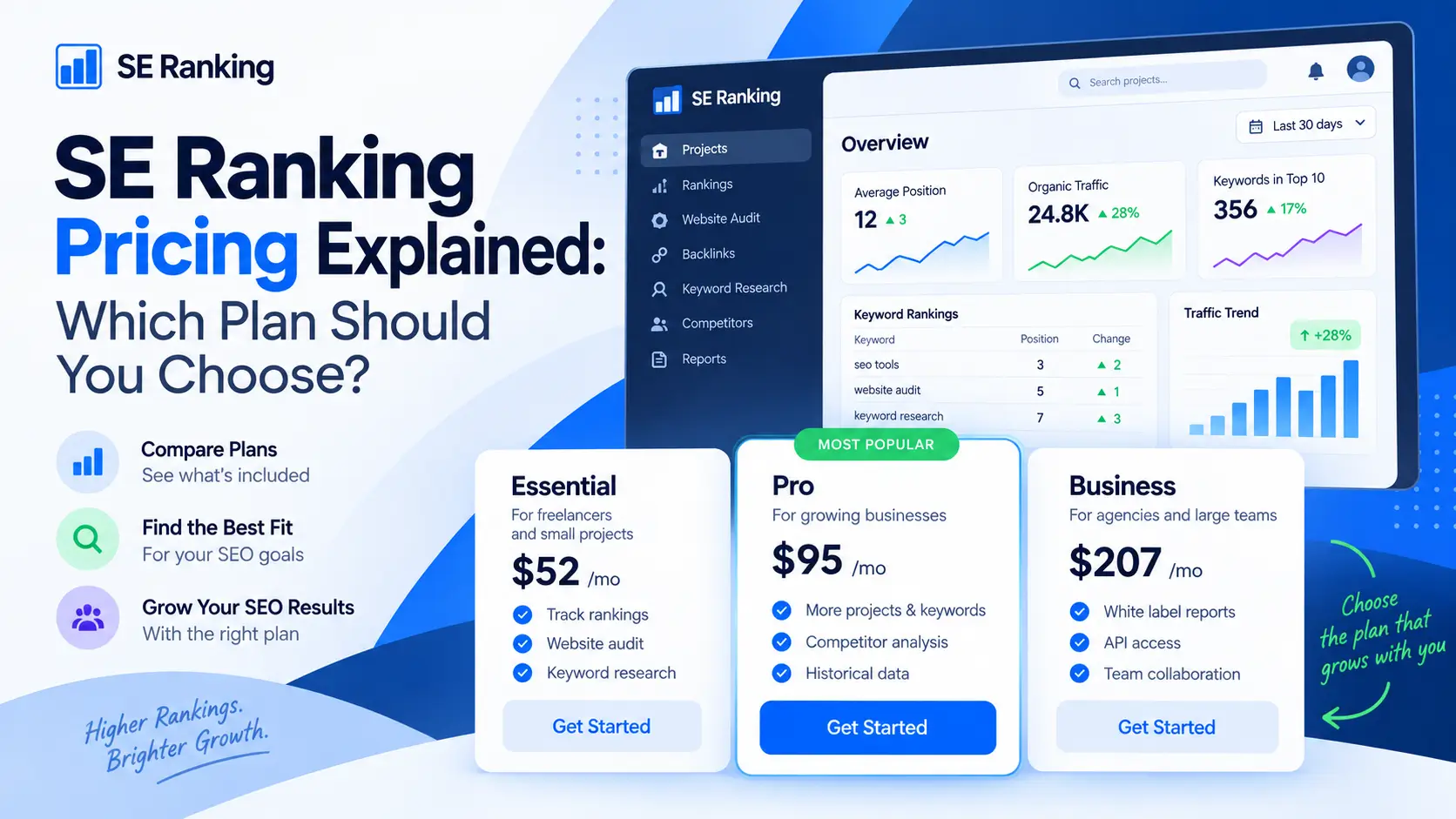
| SE Ranking | Budget-conscious teams | More affordable all-in-one SEO platform for many users. |
| Surfer SEO | Content optimization | Better focused content editor and optimization workflow. |
| Frase | SEO, GEO, and AEO content workflow | Strong research-to-brief and answer-focused content workflow. |
| Moz Pro | Simpler SEO workflows | Easier for some beginners and teams that want a more traditional SEO setup. |
| Ubersuggest | Beginners | Lower-cost entry point for simple keyword and SEO research. |
| Google Search Console | Free SEO performance data | Essential for real search performance, but not a full Semrush replacement. |
Semrush vs Ahrefs
Semrush is usually better if you want a broader marketing and SEO platform.
Ahrefs is often preferred by users who care deeply about backlinks, competitor research, and SEO data exploration.
Use Semrush if you want SEO, content, competitor research, reporting, and AI visibility in one platform.
Use Ahrefs if your priority is SEO research, backlinks, and competitive analysis.
Semrush vs SE Ranking
SE Ranking can be a better option if budget is your main concern.
It offers many all-in-one SEO features at a lower cost for many users.
Use Semrush if you need deeper competitive research, larger workflows, and more advanced marketing features.
Use SE Ranking if you want a more affordable SEO platform.
Semrush vs Surfer SEO
Surfer SEO is not a full Semrush replacement.
Surfer is better for content optimization and SEO writing workflows.
Semrush is better for keyword research, competitor analysis, audits, rankings, backlinks, and broader SEO strategy.
Many teams use both.
⚠️ Common Semrush Mistakes
1. Buying Semrush Before Knowing Your SEO Workflow
Semrush is powerful, but it will not create a strategy for you automatically.
Before paying, know what you want to do:
- Keyword research
- Competitor analysis
- Site audits
- Content planning
- Rank tracking
- AI visibility tracking
- Client reporting
If you do not have a workflow, you may waste money.
2. Using Keyword Volume Without Checking Search Intent
Search volume alone is not enough.
A keyword may have good volume but poor intent, strong competition, or low business value.
Always check:
- Search intent
- SERP competitors
- Ranking difficulty
- Content type
- Conversion potential
- Topic fit
3. Ignoring the Site Audit Tool
Many users focus only on keywords and ignore technical SEO.
That is a mistake.
Site Audit can help find issues that may limit your content performance, especially on larger websites.
4. Not Using Competitor Gap Analysis
One of Semrush’s biggest strengths is competitor comparison.
If you only research keywords manually, you may miss important gaps.
Use gap tools to find where competitors are ranking and where your website is absent.
5. Treating AI Visibility as Separate From SEO
AI visibility should not live in a separate silo.
Use AI visibility insights to improve:
- Content structure
- Topic coverage
- Brand clarity
- Entity signals
- FAQs
- Comparison pages
- Authority-building content
6. Not Checking Pricing Before Upgrading
Semrush has different plans, toolkits, limits, and add-ons.
Always check current pricing and limits before upgrading, especially if you need extra users, AI visibility features, content tools, or agency reporting.
7. Chasing Scores Instead of Business Results
Do not use Semrush only to improve tool scores.
Use it to make better decisions.
The real goal is not a higher score. The real goal is more qualified traffic, better visibility, stronger content, and improved business outcomes.
🧱 Best Semrush Use Cases
Semrush works best when it is tied to a clear use case.
| Use Case | How Semrush Helps |
|---|---|
| SEO audit | Finds technical issues and site health problems. |
| Keyword research | Identifies search opportunities and keyword difficulty. |
| Competitor research | Shows competitor keywords, pages, and gaps. |
| Content planning | Helps build topic clusters and content strategies. |
| Affiliate SEO | Finds comparison, alternative, and review keywords. |
| SaaS SEO | Supports BOFU content, competitor pages, and use-case pages. |
| Agency reporting | Helps create client reports and monitor progress. |
| AI visibility | Tracks brand mentions, citations, sentiment, prompts, and competitors. |
📊 Semrush Review Scorecard
| Category | Score | Notes |
|---|---|---|
| Keyword research | 9/10 | Strong for keyword discovery, intent, and competitive research. |
| Competitor analysis | 9.5/10 | One of Semrush’s strongest areas. |
| Site audit | 8.5/10 | Very useful for identifying technical SEO issues. |
| Content tools | 8/10 | Helpful, especially when paired with human editing. |
| Backlink analysis | 8/10 | Strong, though some users may prefer Ahrefs for link research. |
| AI visibility | 8.5/10 | Becoming a major advantage as search evolves. |
| Ease of use | 7.5/10 | Powerful, but can feel overwhelming. |
| Pricing value | 7.5/10 | Worth it for serious users, heavy for beginners. |
| Overall | 8.7/10 | Excellent platform for serious SEO and visibility work. |
❓ FAQ
1. Is Semrush worth it?
Yes, Semrush is worth it if SEO, content, competitor research, and visibility are important to your business. It may not be worth it for beginners who only need occasional keyword ideas.
2. Is Semrush good for beginners?
Semrush can be useful for beginners, but it may feel complex and expensive. Beginners should use it only if they have a clear SEO plan and enough time to act on the data.
3. What is Semrush best used for?
Semrush is best used for keyword research, competitor analysis, technical SEO audits, rank tracking, backlink research, content planning, reporting, and AI visibility insights.
4. Does Semrush help with AI visibility?
Yes. Semrush has AI visibility features that help track brand mentions, citations, sentiment, share of voice, prompts, competitors, and visibility gaps in AI-driven search environments.
5. Is Semrush better than Ahrefs?
Semrush is better if you want a broader SEO and marketing platform with content, PPC, reporting, and AI visibility features. Ahrefs is often preferred for backlink research and SEO data exploration.
6. Is Semrush good for affiliate sites?
Yes, Semrush can be very useful for affiliate sites because it helps find keyword opportunities, competitor pages, comparison topics, and content gaps. The main issue is whether the site earns enough to justify the cost.
7. Is Semrush good for SaaS SEO?
Yes. Semrush is useful for SaaS SEO because it supports competitor research, BOFU keyword research, comparison content, use-case pages, site audits, and AI visibility monitoring.
8. What is the best Semrush alternative?
The best Semrush alternative depends on your needs. Ahrefs is strong for SEO research and backlinks, SE Ranking is a lower-cost all-in-one option, Surfer SEO is better for content optimization, and Frase is strong for research-to-brief workflows.
9. Does Semrush pricing change?
Yes, pricing, plans, limits, and add-ons can change. Always check Semrush’s official pricing page before choosing a plan.
10. Should I use Semrush AI Visibility Toolkit?
Use it if your brand, clients, or website needs to monitor how they appear in AI-generated answers. It is most useful when AI search visibility matters to your content, SEO, PR, or competitor strategy.
✅ Final Verdict
Semrush is one of the strongest SEO platforms for serious marketers.
It is not the cheapest tool, and it may feel overwhelming for beginners. But if SEO matters to your business, Semrush can help you make better decisions across keyword research, competitor analysis, technical SEO, content planning, backlinks, rankings, and AI visibility.
The biggest reason Semrush still stands out is that it connects many parts of the SEO workflow in one place.
You can research competitors, find keyword gaps, audit your site, plan content, monitor rankings, review backlinks, and track important AI visibility signals.
I would use Semrush if you need a serious platform for SEO growth and you are ready to act on the insights.
I would not use Semrush if you only need a cheap keyword tool or if you are not yet publishing, optimizing, or tracking content consistently.
For agencies, SaaS teams, affiliate websites, and serious content operations, Semrush remains one of the best SEO and AI visibility platforms available.
Comments 4