Best GEO Tools Tested
📌 In This Guide
- What GEO tools actually do
- Why GEO matters beyond traditional SEO
- How I evaluated these tools
- Best tools for enterprise GEO
- Best tools for startups and lean teams
- Best tools for citation tracking and share of answers
- Best tools for multi-model monitoring
- Best tools for sentiment and brand narrative analysis
- Technical GEO audits and machine readability
- Pricing, prompts, and scaling costs
- Pros and cons of the leading GEO tools
- The final decision matrix
- Best GEO tools FAQ
- Final thoughts
Introduction
The best GEO tools do not just track rankings. They help you understand whether AI systems can read, trust, cite, and describe your brand correctly across answer engines like ChatGPT, Gemini, Perplexity, Claude, and Copilot. That is the real job now.
I do not think of GEO tools as traditional SEO tools.
I think of them more like content API tools.
They help you measure whether your content is structured well enough to be:
- extracted
- summarized
- cited
- spoken aloud by AI assistants
- reused inside generated answers
That is a very different job from classic SEO rank tracking.
🔍 What GEO Tools Actually Do
GEO tools help you monitor and improve how your brand appears inside AI-generated answers.
That includes:
- citations
- unlinked mentions
- share of the answer
- sentiment
- prompt-level visibility
- source accuracy
- authority gaps
- multi-model visibility
Direct Answer
GEO tools are platforms that measure how well AI systems can discover, interpret, cite, and describe your content across generative search engines and AI assistants.
The clearest shift is this:
- SEO tools ask, “Do I rank?”
- GEO tools ask, “Do AI systems choose me as part of the answer?”
That is why GEO sits closer to:
- answer engine optimization
- AI visibility
- citation readiness
- content extractability
- machine readability
🚀 Why GEO Matters Beyond Traditional SEO
Traditional SEO still matters.
But GEO matters because AI systems increasingly shape what users see before they ever click.
That means your brand can win or lose visibility through:
- citations
- summaries
- unlinked mentions
- comparative recommendations
- answer-engine inclusion
The clearest business shift is this:
In GEO, the share of the answer often matters more than rank position.
If an AI system keeps citing your competitors instead of you, your traffic, leads, and brand authority can erode even if your classic rankings still look strong.
🧪 How I Evaluated These Tools
Because this article says Tested, the methodology matters.
I am not going to invent a fake benchmark or claim I ran every tool through a private lab with 100,000 prompts.
So I used a practical evaluation framework based on what serious GEO teams actually need.
What I looked for
I judged these tools based on:
- citation tracking depth
- unlinked brand mention tracking
- AI share of voice visibility
- sentiment analysis
- multi-model coverage
- daily or live monitoring
- local or geo-specific tracking
- technical GEO auditing
- reporting quality
- pricing logic and scalability
What matters most
The strongest GEO tools do at least one of these especially well:
- show exactly which URL got cited
- reveal which competitors dominate the answer layer
- explain how AI systems describe your brand
- track multiple AI engines in one place
- help connect AI visibility to content, authority, and business impact
That is the standard I used here.
🏢 Best Tools for Enterprise GEO
These are the tools I would look at first if the priority is:
- executive reporting
- broad visibility intelligence
- large-team workflows
- deep competitive benchmarking
- multi-market AI visibility
Semrush
Semrush is one of the strongest enterprise GEO tools because it combines:
- AI visibility tracking
- citations
- mentions
- competitor analysis
- charts and reporting
- broader SEO and marketing context
What stands out to me most is that Semrush feels tactical and operational.
It does not just show that AI visibility exists.
It helps teams decide what to fix next.
That makes it especially strong for:
- AEO teams
- agencies
- integrated marketing teams
- brands that want AI visibility tied to SEO execution
AthenaHQ
AthenaHQ is one of the clearest GEO-native platforms in the enterprise tier.
It feels more purpose-built for:
- AI answer monitoring
- daily share of voice
- enterprise GEO operations
- strategic visibility across answer engines
What I like here is the positioning.
It is not pretending to be a classic SEO suite.
It is built around becoming the answer AI trusts.
Profound
Profound is one of the most interesting enterprise-facing GEO tools because it leans heavily into:
- AI share of voice
- citations
- sentiment
- competitor comparison
- visibility across answer engines
The clearest reason it belongs in this category is that it treats AI visibility as a market intelligence problem, not only a rank-tracking problem.
Comparison table: Enterprise GEO tools
| Tool | Best for | Main strength | Best fit |
|---|---|---|---|
| Semrush | Integrated GEO + SEO workflows | Enterprise teams, agencies, and integrated marketing organizations | Enterprise teams, agencies, and integrated marketing organizations |
| AthenaHQ | End-to-end enterprise GEO | GEO-native workflow, share of voice, enterprise positioning | Large brands and enterprise SEO teams |
| Profound | Strategic AI visibility intelligence | Brand-level share of answer, citations, sentiment | Enterprise brand and PR-led GEO teams |
🚀 Best Tools for Startups and Lean Teams
These are the tools I would look at first if:
- budget matters
- The team is small
- You want AI visibility without enterprise overhead
- You need practical GEO workflows fast
OtterlyAI
OtterlyAI is one of the clearest startup-friendly GEO tools because it focuses on:
- AI search monitoring
- prompt research
- citations
- mentions
- competitive intelligence
What I like about OtterlyAI is that it feels purpose-built for AI search without drowning smaller teams in heavyweight enterprise complexity.
Maxeo
Maxeo is another strong option for startups and growth-stage teams.
It is useful for:
- AI visibility tracking
- competitor positioning
- generative search strategy
- entity trust and answer selection
The clearest reason it stands out is that it feels like a strategic GEO platform without requiring the user to think like a giant enterprise team.
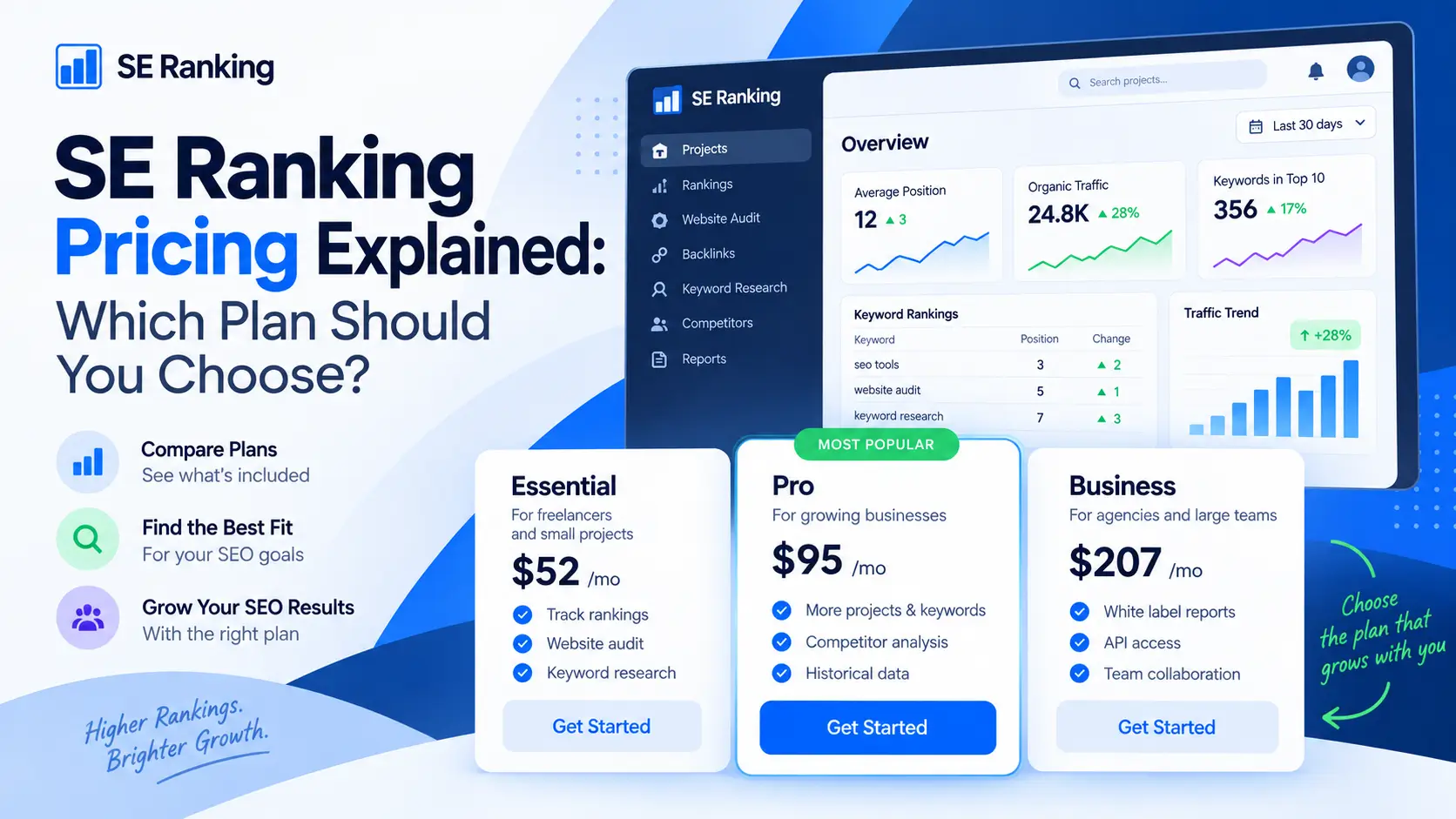
SE Ranking
SE Ranking is not always framed as a pure GEO platform, but it deserves a place here because it gives smaller teams a practical path into:
- AI snippets tracking
- AI mentions
- cited links
- day-by-day monitoring
- competitor comparison
If I wanted a more familiar SEO-style environment with growing GEO value, SE Ranking would be one of the first tools I’d consider.
Comparison table: Startup and lean-team GEO tools
| Tool | Best for | Main strength | Best fit |
|---|---|---|---|
| OtterlyAI | Startup-friendly AI visibility monitoring | Practical prompt, citation, and visibility tracking | Startups, lean SEO teams, growth-stage brands |
| Maxeo | Strategic GEO for smaller brands | Small teams, consultants, and smaller agencies | Startups, challenger brands, small marketing teams |
| SE Ranking | Best value entry into AI answer tracking | Practical daily monitoring and simpler workflows | Small teams, consultantsand and smaller agencies |
📚 Best Tools for Citation Tracking and Share of Answer
This is one of the most important GEO categories.
A lot of platforms can show that AI content exists.
The better tools show:
- which source was cited
- how often your brand appears
- whether your competitors are winning the answer layer
- whether the AI system linked you or only mentioned you
Bear AI
Bear AI is one of the more interesting tools here because it focuses directly on:
- How AI talks about your brand
- visibility across multiple answer engines
- mentions
- citations
- AI search score logic
That makes it especially useful when the question is not only:
“Am I visible?”
But also:
“How am I being represented?”
LLM Pulse
LLM Pulse is one of the clearest citation-tracking tools in this category.
It is especially useful for:
- prompt-level visibility
- citations
- mention tracking
- sentiment
- benchmarking competitors across top LLMs
What I like here is the clarity.
It feels built for AI search visibility first, not retrofitted from traditional SEO.
Semrush
Semrush still belongs here because its AI visibility workflows are very strong around:
- citations
- mentions
- prompt tracking
- share of answer logic
- competitor reporting
Comparison table: Citation tracking and share of answer
| Tool | Best for | Main strength | Best fit |
|---|---|---|---|
| Bear AI | Brand representation in AI answers | AI visibility score, mentions, narrative visibility | Brand-focused GEO teams |
| LLM Pulse | Prompt-level citation and mention tracking | Unified monitoring across LLMs, citations, sentiment | AI visibility teams, agencies, mid-market brands |
| Semrush | Tactical citation and answer-share analysis | Strong operational tracking and reporting | SEO teams, agencies, enterprise workflows |
🌐 Best Tools for Multi-Model Monitoring
This matters because Google is not the whole AI discovery layer.
Serious GEO work now means watching:
- ChatGPT
- Gemini
- Perplexity
- Claude
- Copilot
- Google AI Overviews and AI Mode
LLM Pulse
This is one of the strongest tools here because it is explicitly built around multi-model visibility.
If your team wants one dashboard for:
- mentions
- citations
- sentiment
- prompt performance
LLM Pulse is one of the clearest options.
Cognizo
Cognizo is another strong player here because it emphasizes:
- real-time visibility
- citations
- mentions
- sentiment
- multi-platform AI visibility
It also deserves attention for teams that care about privacy and enterprise-grade handling of data.
OtterlyAI
OtterlyAI also stands out because it now covers a wide set of AI search environments from one platform.
Comparison table: Multi-model GEO monitoring
| Tool | Model coverage strength | Main strength | Best fit |
|---|---|---|---|
| LLM Pulse | Strong | Unified dashboard for major AI platforms | Agencies, enterprise teams, AI visibility specialists |
| Cognizo | Strong | Real-time visibility, sentiment, privacy-minded positioning | Enterprise teams and privacy-conscious brands |
| OtterlyAI | Strong | Broad AI search monitoring with practical workflows | Lean teams and growth-stage brands |
😊 Best Tools for Sentiment and Brand Narrative Analysis
This is one of the most underrated GEO categories.
A brand can be visible and still be described badly.
That is a problem.
Why sentiment matters
If AI systems describe your product as:
- cheap when it is premium
- basic when it is expert-level
- Risky when it is trusted
- niche when it is category-leading
that affects:
- conversions
- positioning
- trust
- recall
- customer expectations
Best options here
Profound
Profound is especially strong because it treats sentiment and narrative framing as a first-class GEO problem.
Bear AI
Bear AI also deserves credit here because it is built around understanding how AI agents talk about your brand.
Cognizo
Cognizo stands out because it explicitly tracks mentions, citations, and sentiment in one platform.
The clearest sentiment takeaway
The best GEO tools not only tell you whether you are mentioned. They tell you whether you are being described in the right way.
⚙️ Technical GEO Audit
Good GEO performance is not only a content issue.
It is also a machine-readability issue.
That means the technical layer matters:
- clean structure
- schema
- crawlability
- HTML readability
- structured content blocks
- llm.txt experimentation where relevant
Why this matters
If AI crawlers and retrieval systems struggle to read your pages cleanly, your chances of being cited drop.
Best options here
Semrush
Semrush is strong because it connects technical SEO findings to broader search and AI visibility workflows.
It feels more action-oriented.
AthenaHQ
AthenaHQ deserves attention here because GEO-native platforms increasingly care about whether the content stack is actually answer-engine-ready.
Cognizo
Cognizo is also worth watching because it combines monitoring with visibility insights that can help teams connect technical cleanliness to AI outcomes.
The clearest technical GEO takeaway
A strong GEO tool should help you improve not only what you say, but also how readable your content is to machines.
📉 Traffic Erosion, Zero-Click Loss, and Brand Impression
This is one of the most commercially important GEO topics.
If AI answers absorb clicks, your old traffic model can erode.
Why this matters
The clearest question is:
What happens if I stayvisible butt fewer users click?
That is why GEO teams increasingly look at:
- brand impressions
- answer share
- citation share
- mention frequency
- non-click visibility value
Which tools help here
Semrush
Semrush is especially useful because it connects AI visibility to the broader search and reporting layer.
Ahrefs-style brand benchmarking logic
Even when not framed purely as a GEO suite, benchmark-heavy platforms help explain:
- lost click opportunity
- category capture
- share othe f the answer
- competitor takeover
The clearest erosion takeaway
The real GEO ROI is not always direct traffic. Sometimes it is brand presence inside the answer layer when clicks are shrinking.
💰 Pricing, Prompts, and Scaling Costs
This matters a lot because GEO platforms often price around:
- prompts
- tracking volume
- monitored topics
- dashboards
- seat access
- enterprise support
Budget reality
If your team is:
- small
- startup-stage
- prompt-budget-sensitive
Then the value per prompt matters a lot.
General pattern
- OtterlyAI feels more startup-friendly
- SE Ranking feels like a strong value if you want practical tracking inside a familiar SEO environment.
- AthenaHQ and Profound are more enterprise-shaped
- LLM Pulse and Bear AI sit in the specialist middle, where the value depends on how central AI visibility is to your business
Pricing note
Prices and plans may change over time. Always check the official website for the latest details.
✅ Pros and Cons of the Leading GEO Tools
Semrush
Pros
- Strong tactical AI visibility tracking
- Excellent reports and visuals
- Good competitor and citation workflows
- Strong for agencies and integrated SEO teams
Cons
- Can feel broad and heavy
- Higher cost of learning tools
- More platform than some small teams need
AthenaHQ
Pros
- GEO-native enterprise positioning
- Strong share-of-voice framing
- Built around AI trust and answer-engine visibility
Cons
- Better fit for larger teams than solo users
- Less familiar than mainstream SEO suites
Profound
Pros
- Strong brand narrative and sentiment layer
- Enterprise-grade GEO framing
- HeHelpful r the share of answer and competitor visibility
Cons
- More strategic than lightweight
- Likely too much for very small teams
OtterlyAI
Pros
- Practical and startup-friendly
- Strong AI search monitoring focus
- Easier entry into GEO workflows
Cons
- Less all-in-one depth than larger suites
- May need complementary SEO tools
Maxeo
Pros
- Strong strategic AI visibility framing
- Good for smaller growth-stage teams
- Built around AI answer discoverability
Cons
- Less mainstream ecosystem support than bigger platforms
- Less proven at a broad enterprise scale than top suites
Bear AI
Pros
- Strong brand representation insights
- Useful AI visibility scoring
- Good for narrative and mention analysis
Cons
- More specialized than general-purpose SEO platforms
- Best when brand visibility is central to the use case
LLM Pulse
Pros
- Strong multi-model monitoring
- Good citation and sentiment tracking
- Built directly for AI visibility workflows
Cons
- More specialized than broader SEO platforms
- Less useful if your team still needs classic SEO tooling elsewhere
Cognizo
Pros
- Strong real-time visibility framing
- Good sentiment and citation layer
- Privacy and enterprise positioning are attractive
Cons
- Better fit for organizations with serious GEO needs
- Less familiar than mainstream suites for many buyers
SE Ranking
Pros
- Good value
- Easier to use
- Practical AI answer tracking for smaller teams
Cons
- Not as deep as enterprise GEO specialists
- Better for value and simplicity than category-leading depth
🧭 The Final Decision Matrix
| Best fit | Recommended tools | Why |
|---|---|---|
| Enterprise | Semrush / AthenaHQ | Best for deeper reporting, strategic visibility, and large-team GEO workflows |
| Startups | OtterlyAI / Maxeo | Best for leaner budgets, faster adoption, and focused AI visibility work |
| Citation tracking | Bear AI / LLM Pulse | Best for mentions, citations, and answer-layer representation |
Quick decision rules
- Choose Semrush if you want tactical GEO tracking plus broader SEO and marketing workflows
- Choose AthenaHQ if you want a more GEO-native enterprise platform
- Choose OtterlyAI if you want a practical, startup-friendly AI visibility tool
- Choose Maxeo if you want strategic AI discoverability without full enterprise overhead
- Choose Bear AI if brand narrative and AI representation matter most
- Choose LLM Pulse if unified citation and prompt tracking across LLMs is the priority
- Choose SE Ranking if you want practical value and easier daily monitoring
- Choose Cognizo if privacy and enterprise-grade GEO monitoring matter heavily
❓ Best GEO Tools FAQ
1. What is a GEO tool?
A GEO tool helps you track and improve how AI systems discover, cite, and describe your content across answer engines and AI assistants.
2. What matters more in GEO: rankings or share of answer?
Share of answer matters more than many teams realize because AI systems can shape user perception even before a click happens.
3. What is the difference between citation tracking and AI presence tracking?
Presence tracking tells you an AI answer existed. Citation tracking tells you whether your brand or URL was actually used inside that answer.
4. Which GEO tool is best for startups?
OtterlyAI and Maxeo are two of the strongest options for lean teams and startups.
5. Which GEO tool is best for enterprises?
Semrush and AthenaHQ are especially strong for enterprise workflows.
6. Which GEO tool is best for citation tracking?
LLM Pulse and Bear AI are especially strong if citation and mention tracking are central to your workflow.
7. Why does sentiment matter in GEO?
Because being mentioned is not enough. You also need AI systems to describe your brand correctly and favorably.
8. Do GEO tools replace SEO tools?
No. GEO tools expand the visibility layer. They do not replace classic SEO fundamentals like authority, crawlability, and content quality.
9. Why is real-time tracking important in GEO?
Because AI answers can change quickly, stale data makes it harder to act on real visibility shifts.
10. What is the best starting point for most teams?
Start by identifying your main bottleneck: citations, sentiment, multi-model monitoring, local tracking, or budget. Then pick the tool that solves that first.
🧠 Final Thoughts
The best GEO tools are not just SEO add-ons.
They are answer-layer intelligence systems.
They help you understand:
- whether AI systems can read you
- whether they trust you
- whether they cite you
- whether they describe you correctly
- whether competitors are taking your share of the answer
The clearest way to choose is simple:
- Choose Semrush for tactical GEO execution and broad reporting
- Choose AthenaHQ for GEO-native enterprise workflows
- Choose OtterlyAI or Maxeo for startup-friendly AI visibility
- Choose Bear AI or LLM Pulse for citation and narrative tracking
- Choose SE Ranking for practical value
- Choose Cognizo when privacy and enterprise controls matter most
And the biggest shift of all is this:
GEO is not about ranking first. It is about becoming the answer AI systems trust enough to repeat.
Recommended Next Reads
- Best AI Overviews Tracking Tools Tested
- Ahrefs vs Semrush for AI Visibility
- How to Track AI Visibility
- How to Get Cited by AI
- Best AI Search Intent Tools Tested
Comments 4