Easy AI SEO Tools Tested for New Website Owners
📌 In This Guide
- What makes an AI SEO tool easy for new website owners
- Why time-saving matters more than raw features
- How I evaluated these tools
- Best tools for guided task lists
- Best tools for one-click implementation
- Best tools for easy keyword targeting
- Best tools for beginner content creation
- Best tools for simple AEO and AI visibility
- Best tools for backlinks, health monitoring, and daily use
- Pricing and startup-friendly value
- Pros and cons of the leading tools
- A 10-minute daily routine
- The final decision matrix
- Easy AI SEO tools FAQ
- Final thoughts
Introduction
If I were launching a new site today, I would not start with the most advanced SEO tool on the market. I would start with the tool that saves me the most time, tells me what to do next, and helps me make progress without forcing me to become an SEO expert overnight.
That is what matters for new website owners.
Most new site owners are dealing with:
- a small budget
- limited time
- no in-house SEO team
- no developer on standby
- too many things to learn at once
So the best beginner SEO tools are not the ones with the biggest dashboards.
They are the ones that turn SEO into:
- simple tasks
- fast wins
- clear priorities
- repeatable habits
🔍 What Makes an AI SEO Tool Easy for New Website Owners
For a new website owner, an easy tool should do three things well:
- save time
- reduce confusion
- make action obvious
Direct Answer
The best easy AI SEO tools for new website owners are the ones that simplify decisions, automate repetitive fixes, suggest realistic keyword targets, and help improve content without overwhelming the user with technical complexity.
I look for tools that can do things like:
- show the next best action
- explain what the issue means
- suggest realistic keywords for a smaller site
- help write or optimize content
- monitor site health automatically
- reduce the need for code or manual SEO work
That is what makes a tool practical, not just powerful.
🚀 Why Time-Saving Matters More Than Raw Features
If you own a new site, your biggest resource problem is usually not traffic.
It is time.
You are probably writing, editing, publishing, fixing issues, and trying to learn SEO at the same time.
That is why I care a lot about time-saver tools.
The best tools in this category do not just show you data.
They help you skip hours of work by doing things like:
- turning SEO into a simple to-do list
- automating meta and schema updates
- suggesting easier keywords
- generating article outlines fast
- finding pages that need quick fixes
- sending simple daily alerts instead of giant audit reports
The clearest beginner rule
If a tool saves me ten hours but takes five hours to learn, it is not beginner-friendly enough.
That is why I rate clarity so highly in this article.
🧪 How I Evaluated These Tools
Because this article is for new website owners, I did not judge tools only by raw SEO depth.
I judged them by how useful they are when:
- the site is new
- time is limited
- the budget is small
- SEO knowledge is basic
- the owner needs fast direction
What I looked for
I evaluated these tools based on:
- ease of use
- guided workflows
- one-click SEO implementation
- keyword targeting for smaller sites
- content creation support
- internal linking help
- daily health monitoring
- beginner-friendly reporting
- startup-friendly pricing
- whether the tool can grow with the user
What mattered most
The tools that stood out most did at least one of these really well:
- gave simple tasks instead of raw reports
- reduced technical work without code
- suggested low-competition opportunities
- helped create better content faster
- made daily SEO feel manageable
That is the lens I used throughout this article.
✅ Best Tools for Guided Task Lists
These are the tools I would recommend first if a new website owner wants SEO to feel like a checklist instead of a puzzle.
1- diib
diib is one of the easiest SEO tools for beginners to understand.
What I like most is that it turns SEO into:
- a health score
- a daily set of priorities
- simple alerts
- easy-to-read recommendations
That matters because a new website owner usually wants answers like:
- Is my site okay?
- What should I fix today?
- What can improve traffic fastest?
diib is good at making SEO feel less abstract.
2- Hike SEO
Hike SEO is another strong choice if the user wants a more guided, step-by-step experience.
It is especially useful for:
- small businesses
- local websites
- new site owners who want simple tasks
- users who prefer a checklist-style workflow
It feels more like a practical roadmap than a technical dashboard.
Comparison table: Guided tasks
| Tool | Best for | Main strength | Best fit |
|---|---|---|---|
| diib | Simple daily SEO direction | Easy health score and practical action list | New site owners, solo founders, non-technical users |
| Hike SEO | Step-by-step SEO workflow | Guided tasks and simpler SEO planning | Small business owners and local websites |
⚙️ Best Tools for One-Click Implementation
This is one of the most important categories for beginners.
A lot of people know what they should fix, but they do not want to touch:
- code
- templates
- plugins
- WordPress settings
- sitewide meta changes manually
1- Alli AI
Alli AI stands out here because it makes on-page SEO automation much easier.
It is especially useful for:
- bulk title and meta updates
- schema changes
- internal linking updates
- sitewide SEO implementation
- non-developer workflows
What I like here is simple:
It reduces the gap between knowing what to fix and actually fixing it.
That is a huge deal for new site owners.
The clearest automation takeaway
If you are afraid of breaking your site by editing things manually, Alli AI is one of the most useful tools in this category.
🔑 Best Tools for Easy Keyword Targeting
A new website should not chase giant keywords too early.
That is one of the fastest ways to waste time.
I want beginner tools that help smaller sites find:
- easier terms
- low-hanging opportunities
- realistic targets
- keywords that fit the site’s current authority
1- Mangools
Mangools is one of the easiest keyword research tools to recommend to a new website owner.
Its biggest strength is simplicity.
It makes it easier to find:
- easier-to-rank keywords
- realistic topic ideas
- competitor opportunities
- keyword difficulty in a clean visual workflow
I like it because it feels like a beginner tool without feeling weak.
2- RankIQ
RankIQ is a very different kind of tool, and that is why it works so well for some beginners.
It is especially useful for:
- bloggers
- niche sites
- content-focused websites
- users who want low-competition keyword ideas without doing heavy research manually
The clearest reason RankIQ matters is that it tries to filter the keyword universe down to opportunities that are actually realistic for smaller sites.
Comparison table: Easy keyword targeting
| Tool | Best for | Main strength | Best fit |
|---|---|---|---|
| Mangools | Clean beginner keyword research | Easy UI and low data fatigue | New site owners and bloggers |
| RankIQ | Low-competition content planning | Focus on easier ranking opportunities for smaller sites | Bloggers and content-led sites |
✍️ Best Tools for Beginner Content Creation
This matters because many new site owners get stuck before they even publish consistently.
The biggest problem is often not optimization.
It is getting the first draft written.
1- NeuronWriter
NeuronWriter is one of the best value tools here.
It is especially useful for:
- SEO writing
- article optimization
- semantic SEO
- content scoring
- internal linking support
If I wanted one budget-friendly tool that helps a new site owner write stronger articles without paying enterprise prices, NeuronWriter would be near the top.
2- Scalenut
Scalenut is strong because it helps take a user from:
- keyword idea
to - article draft
to - optimized blog content
Its Cruise Mode is especially useful for beginners who hate the blank page.
Writesonic also deserves mention because it supports:
3- Writesonic
- article generation
- AI image workflows
- internal linking support
- broader content production
- automated content engine workflows
For new site owners trying to produce content faster, that matters a lot.
Comparison table: Beginner content tools
| Tool | Best for | Main strength | Best fit |
|---|---|---|---|
| NeuronWriter | Budget-friendly SEO writing | Strong optimization and value for money | Bloggers, freelancers, small websites |
| Scalenut | Fast blog creation workflow | Cruise Mode and beginner-friendly article workflow | New publishers and content-first sites |
| Writesonic | Faster article production and automation | Speed, content generation, and broader workflow support | New site owners who want more output fast |
🤖 Best Tools for Simple AEO and AI Visibility
A lot of new site owners assume AI visibility is too advanced for them.
I do not think that is true anymore.
In some cases, it is actually easier for a newer brand to start understanding answer-engine visibility early than to compete on the hardest classic SEO keywords right away.
1- AIClicks
AIClicks is useful because it makes AI visibility feel simpler and more visual.
It helps answer basic questions like:
- Am I showing up in AI answers?
- Is my brand being mentioned?
- Am I becoming part of the answer layer at all?
For beginners, that kind of clarity is useful.
2- AI Rank Lab
AI Rank Lab is another tool worth watching for newer users who want:
- simpler AI search visibility monitoring
- easier views into answer-engine presence
- less technical friction than traditional enterprise tools
The clearest beginner AEO takeaway
A beginner does not need the deepest AEO suite first. They need a tool that makes AI visibility feel understandable.
🔗 Best Tools for Topic Clusters and Internal Linking
New site owners often struggle most with site structure.
They know they should build topical authority, but they do not know:
- which articles belong together
- what to publish next
- how to connect pages internally
1- NeuronWriter
NeuronWriter stands out again here because it helps users think in:
- related articles
- semantic support
- internal linking
- clustered content
- stronger topical organization
It does not replace full site strategy, but it makes the process much easier.
The clearest cluster takeaway
A beginner tool becomes much more valuable when it does not just help with one article, but helps suggest the next three articles too.
📊 Best Tools for Simplified Backlinks and Daily Health Monitoring
Backlinks and technical health often scare beginners because the reports are too dense.
That is why simpler tools matter.
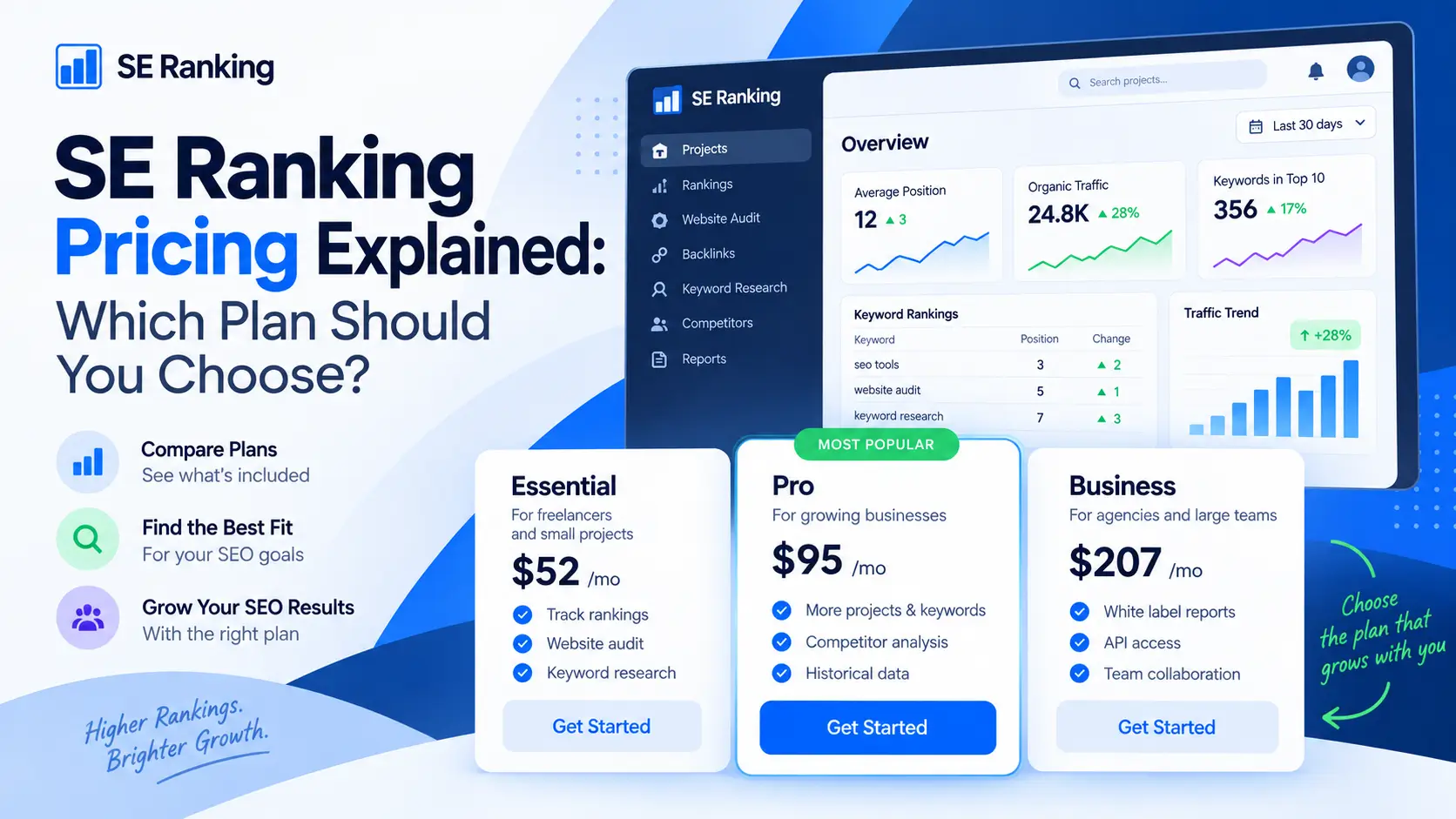
1- SE Ranking
SE Ranking is one of the easiest tools I would recommend to a newer site owner who wants:
- backlink monitoring
- rank tracking
- site audits
- practical reports
- more visual and approachable SEO workflows
It feels more understandable than some larger, heavier SEO suites.
2- diib
diib also matters here because beginners often need:
- one score
- one daily email
- one simple alert
- one clear next step
That is where it works very well.
The clearest monitoring takeaway
A new website owner usually does not need the deepest technical stack first. They need a tool that tells them when something important changed and what to do next.
💰 Pricing and Startup-Friendly Value
This matters a lot because new site owners rarely want to spend:
- $150 per month
- on three tools
- before the site even has traction
So I care a lot about starter pricing.
What I would prioritize
For beginners with tighter budgets, I would look first at:
- diib
- Mangools
- NeuronWriter
- Ubersuggest
- RankIQ
- SE Ranking
For users who want more power later, I would eventually consider:
- Semrush
- Surfer
- Frase
The clearest pricing rule
A new site owner should buy the tool that solves today’s bottleneck, not the tool that solves every future bottleneck at once.
That is the smartest beginner ROI model.
✅ Pros and Cons of the Leading Tools
1- diib
Pros
- Easy to understand
- Daily health score is beginner-friendly
- Good for simple daily direction
Cons
- Less depth than larger SEO suites
- Better for monitoring than advanced SEO planning
2- Hike SEO
Pros
- Guided workflow
- Task-based setup
- Good for smaller business websites
Cons
- Narrower than broader SEO platforms
- Better for guidance than advanced analysis
3- Alli AI
Pros
- Strong one-click implementation
- Great for non-technical users
- Useful for sitewide changes
Cons
- More operational than educational
- Best when users already know which actions they want to automate
4- Mangools
Pros
- Clean interface
- Easy keyword research
- Beginner-friendly visuals
Cons
- Less powerful than large all-in-one suites
- Better for research than full-site operations
5- RankIQ
Pros
- Great for low-competition blog topics
- Good for niche content sites
- Simple content planning logic
Cons
- Narrower use case
- Less useful for broad technical SEO work
6- NeuronWriter
Pros
- Great price-to-performance ratio
- Strong SEO writing help
- Useful for semantic content and linking logic
Cons
- More article-focused than all-in-one
- Less broad than a full SEO suite
7- Scalenut
Pros
- Great for blank-page problems
- Strong AI-assisted writing workflow
- Useful for beginner content production
Cons
- Still needs human editing
- Better for content than technical SEO
8- Writesonic
Pros
- Fast content production
- Useful automation support
- Helpful for new site owners producing lots of content
Cons
- More editing may still be needed
- Better for speed than deep SEO coaching
9- SE Ranking
Pros
- Easier reporting
- Simpler backlink and monitoring workflows
- Good value for growing sites
Cons
- Less beginner-simple than diib
- Still broader than some ultra-simple tools
⏱️ The 10-Minute Daily Routine
If I were running a new website with limited time, this is how I would use these tools in just ten minutes a day.
Minute 1–2: Check site health
Use diib to see:
- health score
- urgent issues
- traffic trend changes
Minute 3–4: Review keyword opportunities
Use Mangools or RankIQ to spot:
- easier keyword targets
- content ideas
- low-competition wins
Minute 5–7: Improve one article
Use NeuronWriter or Scalenut to:
- optimize a draft
- improve headings
- strengthen topic coverage
- add internal links
Minute 8–9: Check AI visibility
Use AIClicks or AI Rank Lab to see whether your brand is appearing in answer engines at all.
Minute 10: Log the next action
Write down one action only:
- fix one page
- publish one article
- improve one internal link
- update one title
The clearest routine takeaway
Beginners make faster progress when they do one useful SEO action daily instead of one giant SEO project monthly.
🧭 The Final Decision Matrix
| Best fit | Recommended tool | Why |
|---|---|---|
| Best for automation | Alli AI | Strong one-click implementation and sitewide SEO fixes |
| Best for guided tasks | diib | Simple health score and beginner-friendly daily action list |
| Best for budget content | NeuronWriter | Strong SEO writing and optimization at a beginner-friendly price |
My simpler buying advice
- Choose diib if you want SEO to feel like a simple daily checklist
- Choose Alli AI if implementation is your biggest bottleneck
- Choose Mangools if you need easier keyword research
- Choose RankIQ if you run a blog and want easier keyword wins
- Choose NeuronWriter if you want better content without spending too much
- Choose Scalenut if writing is slowing you down most
- Choose SE Ranking if you want a more complete but still manageable SEO platform
❓ Easy AI SEO Tools FAQ
1. What is the easiest AI SEO tool for a new website owner?
For pure simplicity, diib is one of the easiest to start with because it turns SEO into simple health monitoring and daily actions.
2. What is the best affordable SEO content tool for beginners?
NeuronWriter is one of the strongest choices because it gives a lot of SEO writing value without premium pricing.
3. What is the easiest keyword research tool for a beginner?
Mangools is one of the easiest because its interface is clean and the keyword workflow is much easier to understand than bigger suites.
4. Do new website owners need AEO tools already?
Not always, but simple AI visibility tools can help beginners understand early how their brand appears in answer engines.
5. What is the best one-click SEO automation tool for beginners?
Alli AI is one of the clearest answers here because it helps implement many sitewide SEO changes without heavy manual work.
6. What is the best SEO monitoring tool for a new site?
diib is excellent for simple monitoring, while SE Ranking becomes useful when the site needs broader SEO visibility and tracking.
7. Should a beginner buy one all-in-one SEO suite immediately?
Usually no. It is smarter to buy the tool that solves the current bottleneck first.
8. What is the best beginner SEO stack?
A simple stack could be: Mangools for research, NeuronWriter for content, and diib for monitoring.
🧠 Final Thoughts
When I think about easy AI SEO tools for new website owners, I do not think about the biggest platform or the longest feature list.
I think about what makes progress easier.
The best beginner tools help you:
- save time
- avoid confusion
- publish better content
- spot easier opportunities
- stay consistent
- build confidence
If I had to simplify the whole article into one rule, it would be this:
Choose the tool that reduces your next hour of work, not the tool that adds five more things to learn.
That is the smartest way to build a new website without burning out.
Recommended Next Reads
- Best AI SEO Tools Tested for Beginners
- Best AI Article Writing Tools Tested for SEO
- Best AI Search Intent Tools Tested
- Best AI Content Optimization Tools Tested


Comments 4