Introduction
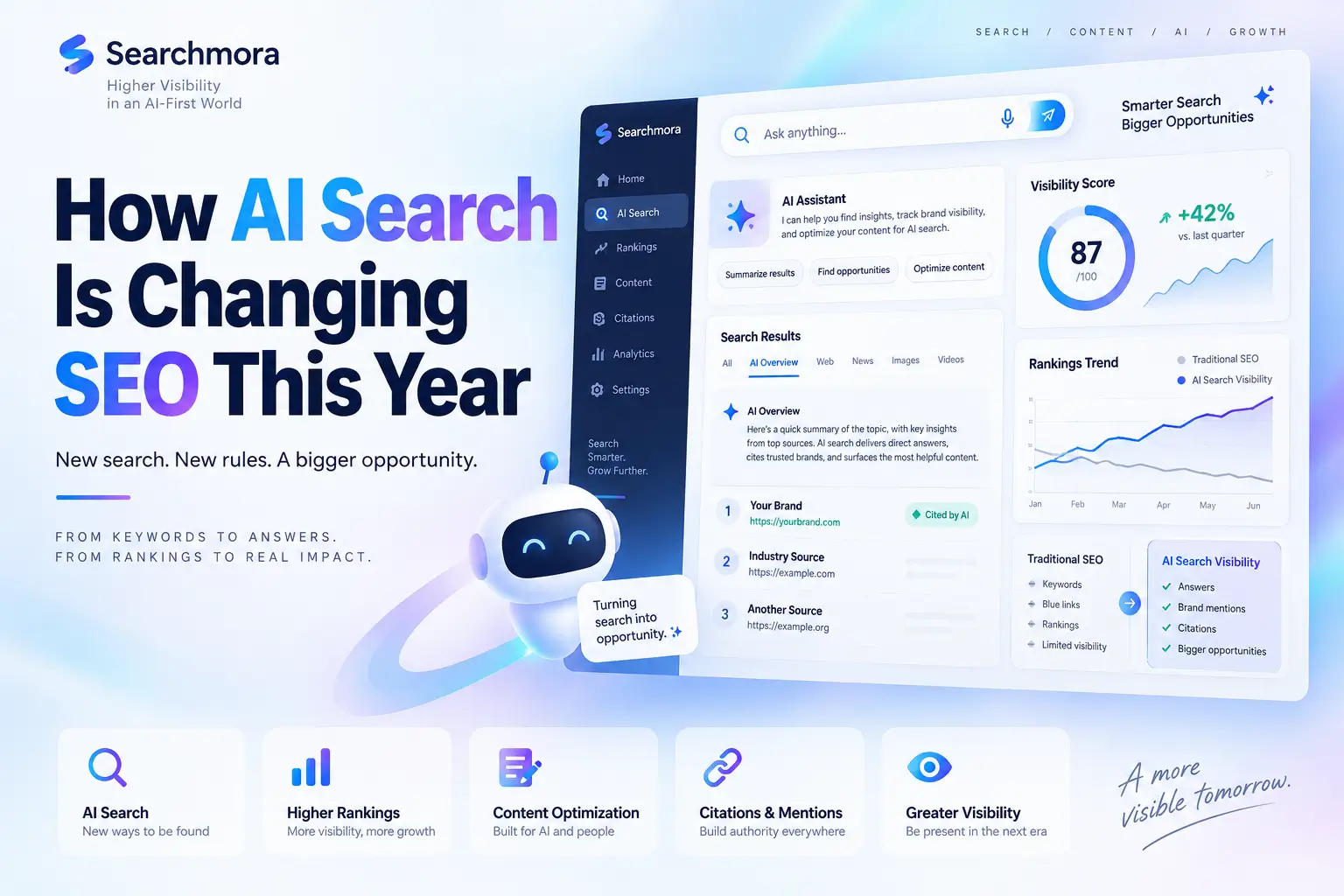
AI search is changing SEO by moving attention from keyword rankings alone to entity clarity, citation-ready content, original information gain, off-page brand proof, and AI visibility metrics. Traditional SEO still matters, but brands now need to be understood, trusted, mentioned, and cited inside generated answers.
Search is no longer only a list of links.
Google AI Overviews, AI Mode, Perplexity, ChatGPT Search, Gemini, Claude, and other AI answer systems can summarize results before the user clicks.
That does not mean SEO is dead.
It means SEO is becoming broader.
Old SEO asked:
Can this page rank for a keyword?
Modern AI search asks:
Can this brand, page, author, or product be trusted enough to appear inside a generated answer?
That shift affects how you write, structure, measure, and promote content.
You still need:
- crawlable pages.
- indexable content.
- useful information.
- strong technical SEO.
- helpful user experience.
- internal links.
- topic authority.
- trustworthy sources.
But now you also need:
- entity-based SEO.
- structured data.
- direct answer blocks.
- information gain.
- external brand mentions.
- review signals.
- community visibility.
- AI citation tracking.
- AI Share of Voice.
- GEO workflows.
This guide explains the practical changes.
⚡ Quick Verdict
AI search is changing SEO from a keyword-and-click model into a visibility-and-citation model. Winning pages are still helpful and technically sound, but they also define entities clearly, answer questions directly, include original evidence, earn external mentions, and track how often AI systems mention or cite them.
| Old SEO Focus | AI Search SEO Focus |
|---|---|
| Keyword ranking | Entity recognition and topical relationships |
| Blue-link clicks | Mentions, citations, and assisted discovery |
| Long introductions | Direct answers in the first 40–50 words |
| Keyword density | NLP entities and semantic coverage |
| Backlinks only | Backlinks, reviews, PR, and community proof |
| Traffic reporting | AI Share of Voice and citation rate |
| Generic content | First-party data and real experience |
| Basic snippets | AI-extractable answer blocks |
| Page-level optimization | Brand-level knowledge graph building |
| SEO tools only | SEO + GEO + digital PR stack |
What Changed Most This Year?
| Change | What It Means |
|---|---|
| AI Overviews are more visible | Users may get answers before clicking |
| AI Mode expands search behavior | Search becomes more conversational |
| Entities matter more | Brands must be clearly connected to topics |
| Content must be citable | Sections need direct answers and clean structure |
| Original evidence matters | Generic AI rewrites are weaker |
| Off-page proof matters | Reviews, Reddit, Quora, and trusted mentions shape AI answers |
| New metrics matter | Track AI mentions, citations, sentiment, and Share of Voice |
The clearest takeaway is this: SEO is not disappearing. It is expanding into AI visibility, where the goal is not only to rank, but to be selected as a trusted source inside generated answers.
📚 Recommended Next Reads
- What Is AI Visibility?
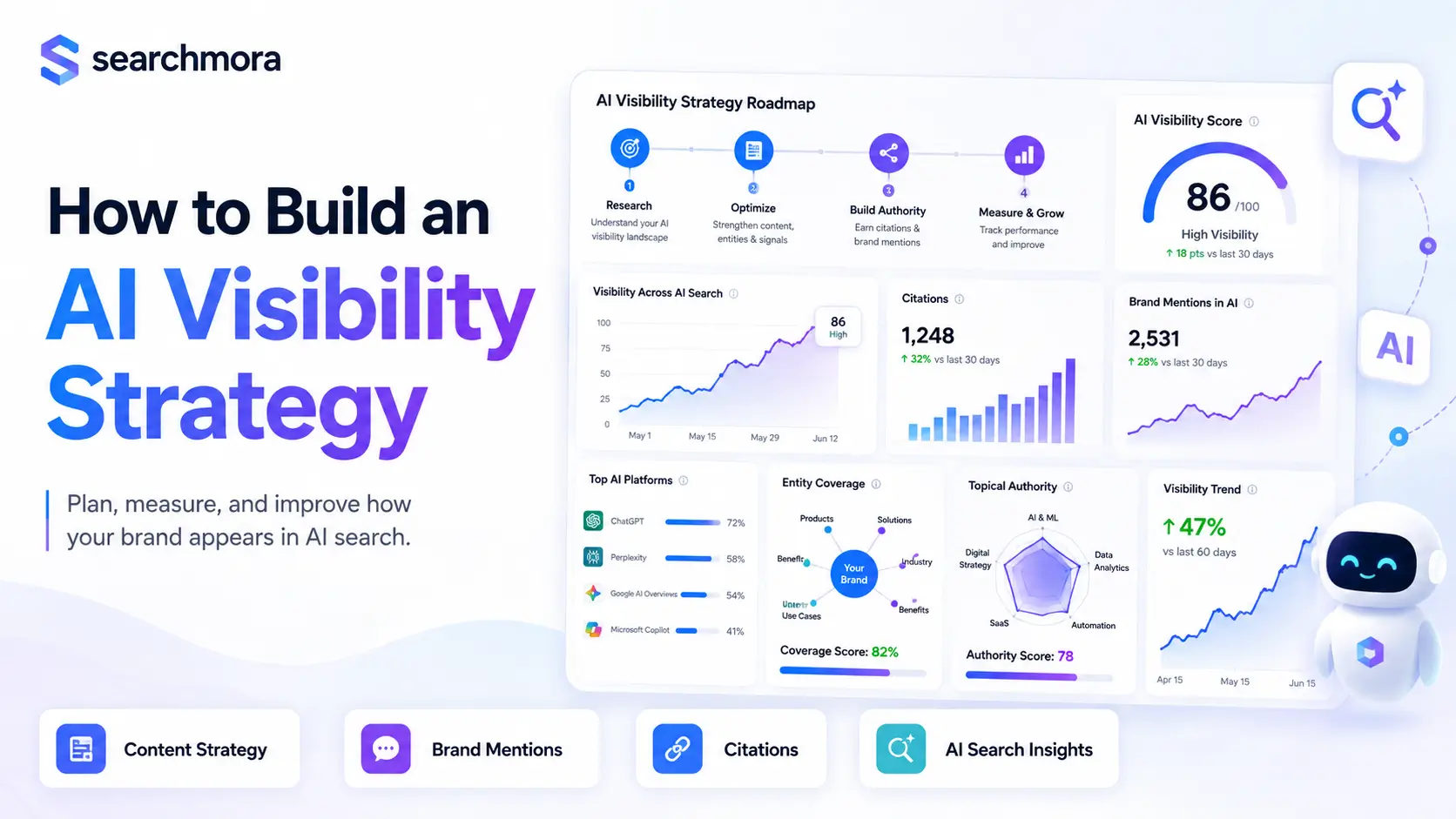
- How to Build an AI Visibility Strategy
- How to Optimize for AI Search
- Best AI Visibility Tools Tested
- Best AI Tools Tested for Content Audits
📌 In This Guide
1. 🧠 What Is AI Search?
2. 🔁 How AI Search Changes Traditional SEO
3. 🧬 Entity-Based SEO Replaces Keyword-Only Thinking
4. 🏗️ Schema Markup and the Knowledge Graph
5. ✍️ Citatability and Direct Answers
6. 📊 Tables, Lists, and Structured Content Blocks
7. 💡 Information Gain Becomes More Important
8. 📣 Off-Page AI Visibility Matters More
9. 💬 Reviews, Reddit, Quora, and Third-Party Proof
10. 📈 GEO Metrics Redefine SEO Measurement
11. 🧰 Tools for AI Search Visibility Tracking
12. 🛡️ What Still Has Not Changed
13. ⚠️ Common Mistakes in AI Search SEO
14. 🧪 Practical AI Search SEO Workflow
15. ❓ FAQ
16. 🏁 Final Verdict
17. 📚 Recommended Next Reads
🧠 What Is AI Search?
AI search is a search experience where the system generates a summarized answer using multiple sources, context, retrieval, and language models. Instead of only showing links, it may provide an answer, cite sources, compare options, and let users ask follow-up questions.
Examples include:
- Google AI Overviews.
- Google AI Mode.
- Perplexity.
- ChatGPT Search.
- Gemini.
- Claude with web access.
- Copilot.
- AI shopping assistants.
- Vertical answer engines.
- Internal enterprise search systems.
AI search does not remove the web.
It changes how users interact with it.
A user may ask:
What is the best AI SEO platform for a small agency?
Instead of opening ten pages immediately, the AI system may:
- summarize the category.
- mention several tools.
- cite supporting pages.
- compare strengths.
- recommend a shortlist.
- answer follow-up questions.
That means your content must be prepared for both:
- classic ranking
- AI extraction and citation
🔁 How AI Search Changes Traditional SEO
AI search changes SEO by reducing the importance of keyword ranking as the only success metric. Rankings still matter, but brands also need to earn mentions, citations, and recommendations inside generated answers.
The Old SEO Model
The older model was:
- Find a keyword.
- Write a page.
- Optimize title and headings.
- Build links.
- Rank higher.
- Earn clicks.
This still works in many cases.
But it is no longer enough.
The AI Search Model
The AI search model adds:
- Can AI systems identify the brand?
- Can they connect the brand to the right category?
- Can they verify claims from trusted sources?
- Can they extract a direct answer?
- Can they cite the page?
- Can they compare the brand with competitors?
- Can they understand the author?
- Can they find external proof?
SEO Now Has Two Jobs
| Job | Goal |
|---|---|
| Traditional SEO | Rank and earn organic clicks |
| AI visibility | Get mentioned, cited, and recommended in generated answers |
The best strategy does both.
🧬 Entity-Based SEO Replaces Keyword-Only Thinking
Entity-based SEO focuses on clearly defining the people, brands, products, topics, and relationships behind your content. AI systems rely on these relationships to understand meaning, not just repeated keywords.
A keyword is a phrase users type.
An entity is a recognized thing.
Examples:
| Entity Type | Example |
|---|---|
| Brand | Searchmora |
| Product | Search Atlas |
| Person | An author or expert |
| Topic | AI visibility |
| Search feature | Google AI Overviews |
| Platform | Perplexity |
| Category | AI SEO tools |
| Review source | G2 or Trustpilot |
Why Entities Matter
AI systems need to understand:
- Who is the brand?
- What does it do?
- Who created the content?
- What product is being discussed?
- Which category does it belong to?
- Which competitors are related?
- Which sources support the claim?
- Which topics connect to this page?
Example
A keyword-focused page may repeat:
AI SEO tools
An entity-focused page connects:
- AI SEO tools
- Search Atlas
- Surfer
- Frase
- Google AI Overviews
- Content optimization
- LLM visibility
- affiliate SEO
- agencies
- topical maps
- real reviews
The second page gives AI systems more context.
Practical Entity SEO Checklist
For every important page, define:
- Main topic.
- Secondary topics.
- brand entity.
- product entities.
- author entity.
- competitor entities.
- Platform entities.
- Source entities.
- internal related pages.
- External trusted references.
Entity-based SEO does not mean keyword stuffing.
It means making the page’s subject and relationships clear.
🏗️ Schema Markup and the Knowledge Graph
Schema markup helps search systems understand your organization, authors, products, articles, reviews, and page relationships. It should match visible content and support real entity clarity, not hide unsupported claims.
Schema Types That Matter
| Schema Type | Best Use |
|---|---|
| Organization | Brand identity, logo, contact details, sameAs profiles |
| Article / BlogPosting | Editorial articles and guides |
| Person | Author and expert identity |
| Product | Product information where eligible |
| Review | Real review content when compliant |
| BreadcrumbList | Site hierarchy |
| WebSite | Site identity |
| FAQPage | Visible FAQ content when appropriate |
| ProfilePage | Author or expert profile pages |
| LocalBusiness | Local business details |
Why SameAs Matters
The sameAs property can connect your entity to official external profiles.
Examples:
- LinkedIn company page.
- X profile.
- YouTube channel.
- Crunchbase page.
- GitHub profile.
- Author profile.
- Official social accounts.
- Trusted directories.
This helps reduce ambiguity.
Author and Organization Signals
For AI search, author and organization clarity matter because AI systems need to understand:
- Who published the information?
- Who wrote it?
- Why should the source be trusted?
- Is the author connected to the topic?
- Is the organization real and consistent?
Schema Safety Rule
Do not add schema that contradicts the page.
Structured data should describe what users can already see.
Fake ratings, fake offers, fake authors, or unsupported product claims create risk.
✍️ Citatability and Direct Answers
Citatability means your content is easy for AI systems to extract, summarize, and cite. The best structure starts each important section with a direct answer in the first 40–50 words, followed by examples and details.
AI systems prefer clean answer blocks because they reduce ambiguity.
A weak section begins like this:
There are many ways to think about artificial intelligence and SEO, and every business should consider several factors before deciding what to do.
A stronger section begins like this:
AI search changes SEO by rewarding pages that define entities clearly, answer questions directly, provide original evidence, and earn trusted external mentions.
The second version is easier to quote.
Direct Answer Formula
Use this structure:
Answer → Context → Example → Evidence → Action
Under each major H2 or H3:
- answer the section question first.
- add the reason.
- give an example.
- support with evidence.
- show what to do next.
Where Direct Answers Matter Most
Use direct-answer openings in:
- definitions.
- comparisons.
- pricing sections.
- how-to steps.
- tool reviews.
- strategy guides.
- FAQs.
- pros and cons.
- mistakes.
- final verdicts.
Citatability Checklist
| Element | Question |
|---|---|
| Direct answer | Does the section answer the question immediately? |
| Specific entities | Are products, tools, platforms, and people named clearly? |
| Evidence | Are claims supported by sources or real examples? |
| Tables | Can the information be summarized quickly? |
| Lists | Are steps easy to extract? |
| Author | Is the writer identifiable? |
| Date | Is the information fresh where needed? |
| Originality | Does the page add unique information? |
| Internal links | Does the page connect to related topics? |
| External proof | Can AI verify the claim elsewhere? |
📊 Tables, Lists, and Structured Content Blocks
Tables and lists help AI systems summarize content because they make comparisons, steps, pros, cons, metrics, and decisions easier to extract. They also help human readers scan complex information faster.
Use Tables For
- Tool comparisons.
- pricing comparisons.
- strategy frameworks.
- feature differences.
- SEO vs GEO metrics.
- pros and cons.
- decision matrices.
- content audit actions.
- workflows.
- before-and-after examples.
AI-Friendly Table Example
| SEO Need | Traditional Format | AI Search Format |
|---|---|---|
| Definition | Long intro | Direct answer paragraph |
| Comparison | Narrative review | Feature table and verdict |
| Trust | Generic claim | Source, author, and evidence |
| Authority | Backlinks only | Mentions, reviews, citations |
| Measurement | Rankings | Mentions, citations, Share of Voice |
Use Lists For
Lists are useful for:
- steps.
- criteria.
- mistakes.
- prompts.
- audit checks.
- signals.
- metrics.
- action plans.
Do Not Over-Structure Everything
Structure should help the reader.
Do not create tables just for decoration.
A useful table makes a decision easier.
A useless table repeats the paragraph.
💡 Information Gain Becomes More Important
Information gain means adding original value that is not already repeated across the web. AI search makes this more important because generic AI-written summaries are easy to ignore and hard to trust.
AI can summarize common knowledge.
It cannot honestly produce your:
- original data.
- real screenshots.
- test results.
- customer insights.
- expert interviews.
- product photos.
- failure examples.
- internal process.
- personal opinion.
- practical judgment.
Add Information Gain With
| Element | Why It Helps |
|---|---|
| First-party data | Shows original insight |
| Case studies | Proves real use |
| Screenshots | Shows real workflow |
| Charts | Makes data easier to cite |
| Personal verdicts | Adds editorial judgment |
| Product testing | Supports affiliate and review content |
| Expert quotes | Adds authority |
| Failure notes | Builds trust |
| Methodology | Makes claims verifiable |
| Updated comparisons | Keeps content useful |
Weak vs Strong Content
Weak:
AI search is important for SEO because it helps users find answers faster.
Strong:
After auditing 50 SEO tool reviews, the pages most likely to be useful for AI search had direct answer openings, current pricing tables, named tools, original screenshots, and clear pros and cons.
The second version adds experience and specificity.
Practical Rule
For every important article, add at least one original element:
- screenshot.
- data point.
- mini case study.
- expert quote.
- personal testing note.
- unique table.
- opinionated verdict.
- workflow example.
- failure warning.
- updated source review.
AI search rewards content that answers engines something useful to cite.
📣 Off-Page AI Visibility Matters More
Off-page AI visibility is the presence of your brand, product, or experts across trusted websites, review platforms, communities, directories, and social discussions. AI systems can use these signals to verify and describe your brand.
Your website says who you are.
The web confirms whether others recognize you.
That is why AI search makes off-page visibility more important.
Important External Sources
| Source Type | Examples | Why It Matters |
|---|---|---|
| Review platforms | G2, Trustpilot, Capterra | Shows user feedback |
| Communities | Reddit, Quora | Shows real questions and sentiment |
| Professional networks | Builds expert identity | |
| Video platforms | YouTube | Adds demonstrations and reviews |
| Industry blogs | Niche publishers | Builds topical validation |
| News mentions | PR coverage | Supports brand authority |
| Directories | Tool directories | Helps category association |
| Podcasts | Expert interviews | Builds authority signals |
What AI Systems May Look For
When users ask for “best tools,” “best platforms,” or “is this brand worth it,” AI systems may look for:
- independent reviews.
- repeated brand mentions.
- third-party comparisons.
- real user sentiment.
- expert commentary.
- community discussions.
- source credibility.
- consistent product descriptions.
- competitor comparisons.
- updated facts.
Off-Page Action Plan
Build off-page AI visibility by:
- creating official brand profiles.
- asking real customers for honest reviews.
- publishing expert LinkedIn posts.
- answering relevant Quora questions.
- monitoring Reddit discussions.
- earning mentions in niche roundups.
- pitching original data to blogs.
- joining podcasts or webinars.
- building comparison pages.
- Correcting inaccurate brand information.
Do not fake reviews or community discussions.
Manipulated signals can damage trust.
💬 Reviews, Reddit, Quora, and Third-Party Proof
Third-party proof helps AI systems understand how real people describe your brand. Reviews, community discussions, expert mentions, and independent comparisons can influence whether your brand appears in recommendation-style AI answers.
Why Reviews Matter
Reviews often contain details your own website does not show:
- use cases.
- customer type.
- strengths.
- weaknesses.
- support experience.
- pricing concerns.
- implementation notes.
- competitor comparisons.
- satisfaction signals.
- objections.
These details can shape AI summaries.
Why Communities Matter
Reddit, Quora, forums, and LinkedIn discussions can reveal:
- what users ask.
- how they compare products.
- what problems they mention.
- what language they use.
- which brands they trust.
- which brands they avoid.
How to Use Communities Correctly
Use communities to:
- learn language and pain points.
- answer questions honestly.
- share useful experience.
- identify content gaps.
- discover objections.
- find comparison opportunities.
Do not use communities to spam links.
The goal is trusted presence, not artificial mentions.
📈 GEO Metrics Redefine SEO Measurement
GEO metrics measure how often your brand appears, gets cited, and is recommended in AI-generated answers. They add a new visibility layer beyond keyword rankings, organic traffic, and classic SERP position.
New AI Search Metrics
| Metric | Meaning |
|---|---|
| AI Share of Voice | Your brand visibility compared with competitors |
| Mention rate | How often your brand is mentioned |
| Citation rate | How often your website is cited as a source |
| Recommendation rate | How often AI suggests your product |
| Sentiment | Whether mentions are positive, neutral, or negative |
| Prompt coverage | Which questions trigger your brand |
| Source URLs | Which pages AI cites |
| Competitor overlap | Which competitors appear with you |
| Accuracy score | Whether AI describes your brand correctly |
| Position in answer | Whether your brand appears early or late |
Why Rankings Are Not Enough
A page may rank number three in Google but never appear in AI answers.
Another page may not get the most clicks but may be cited often in Perplexity or Google AI Overviews.
That means you should track both:
- classic SEO performance.
- AI visibility performance.
Prompt Categories to Track
Track prompts such as:
- best tools for [use case].
- [brand] vs [competitor].
- best [category] for [audience].
- is [brand] worth it?
- alternatives to [competitor].
- how to solve [problem].
- which platform is best for [industry]?
- what are the top [product category] tools?
Track the same prompts over time.
One AI answer is not enough evidence.
🧰 Tools for AI Search Visibility Tracking
AI visibility tools help track brand mentions, citations, sentiment, competitors, prompt coverage, and AI Share of Voice across answer engines. They show where your brand appears and which content or external proof may need improvement.
AI Visibility Tools to Know
| Tool | Best For | What It Tracks |
|---|---|---|
| Search Atlas LLM Visibility | SEO teams using Search Atlas | Mentions, citations, sentiment, Share of Voice |
| RankinAI | Focused GEO tracking | AI visibility, citations, competitor gaps |
| Dageno AI | Data-driven GEO workflows | Visibility, Share of Voice, citations, sentiment |
| Profound | Enterprise AI visibility | Brand presence and AI answer intelligence |
| Peec AI | Marketing teams | AI discovery and competitor visibility |
| Otterly AI | Smaller teams | AI search monitoring and citations |
| Goodie | AEO strategy | AI answer monitoring and recommendations |
| Nightwatch | SEO and AI reporting | Rankings and AI visibility |
| Semrush AI Visibility Toolkit | Existing Semrush users | Domain-level AI visibility |
| Ahrefs Brand Radar | Research-heavy teams | Brand visibility and benchmarking |
How to Use GEO Tools
Use these tools to answer:
- Which prompts mention us?
- Which prompts cite us?
- Which competitors appear more often?
- Which sources influence AI answers?
- Which pages are being cited?
- Which claims are wrong?
- Which topics need stronger content?
- Which external mentions are missing?
- Which prompts are improving?
- Which prompts are declining?
Measurement Warning
AI answers can vary by:
- prompt wording.
- model.
- platform.
- location.
- personalization.
- timing.
- source availability.
- retrieval behavior.
Measure trends across repeated prompts, not one screenshot.
🛡️ What Still Has Not Changed
AI search has changed how SEO is measured and structured, but the foundation is still the same: helpful content, crawlable pages, technical quality, trustworthy authorship, relevant links, and clear user value.
SEO Fundamentals Still Matter
You still need:
- crawlability.
- indexability.
- good page experience.
- accurate titles.
- useful meta descriptions.
- internal links.
- helpful content.
- clean site architecture.
- reliable sources.
- strong topical coverage.
- fast pages.
- mobile usability.
- clear navigation.
- trustworthy authors.
- original insight.
Google AI Features Still Depend on Search Basics
For Google AI features, pages still need to meet Search technical requirements and be eligible to appear in Search with a snippet.
So do not abandon classic SEO.
Strengthen it.
AI search adds another layer on top.
⚠️ Common Mistakes in AI Search SEO
The biggest mistake is treating AI search optimization as a set of hacks. The best approach is still useful content, clear entities, external proof, structured answers, and honest measurement.
Mistakes to Avoid
| Mistake | Why It Hurts |
|---|---|
| Keyword stuffing | Weakens readability and trust |
| Fake reviews | Damages credibility |
| Unsupported schema | Creates inconsistency |
| Generic AI content | Adds no information gain |
| Long introductions | Delays the answer |
| Ignoring off-page mentions | Weakens brand verification |
| Measuring one prompt once | Produces unreliable results |
| Overusing vague headings | Reduces extractability |
| Ignoring author identity | Weakens E-E-A-T signals |
| Chasing GEO tricks | Distracts from real SEO work |
Dangerous Myth
Myth:
AI search means keywords are dead.
Reality:
Keywords still help reveal user demand.
But the winning strategy now combines:
- keywords
- entities
- intent
- direct answers
- structured data
- original evidence
- external proof
- AI visibility measurement
🧪 Practical AI Search SEO Workflow
A practical AI search SEO workflow starts with technical SEO, then adds entity clarity, citation-ready content, information gain, off-page proof, and GEO measurement.
Step-by-Step Workflow
- Crawl your website.
- Fix indexation and technical errors.
- Identify your main topics.
- Map your brand, product, and author entities.
- Add accurate schema markup.
- Update About and author pages.
- identify important AI-search prompts.
- rewrite key pages with direct answers.
- add tables and structured comparisons.
- add original screenshots or data.
- publish comparison and review content.
- earn external mentions and reviews.
- monitor Reddit, Quora, and review platforms.
- track AI Share of Voice.
- track citation rate.
- check AI answer accuracy.
- Update pages based on missing prompts.
- Repeat monthly.
30-Day Action Plan
| Week | Focus | Actions |
|---|---|---|
| Week 1 | Technical and entity audit | Check indexation, schema, author pages, brand consistency |
| Week 2 | Content structure | Add direct answers, tables, FAQs, and clearer headings |
| Week 3 | Information gain | Add screenshots, case notes, original data, and opinionated verdicts |
| Week 4 | AI visibility tracking | Monitor prompts, mentions, citations, sentiment, and competitors |
90-Day Action Plan
| Month | Goal | Output |
|---|---|---|
| Month 1 | Build foundation | Technical cleanup, schema, entity pages, content audit |
| Month 2 | Improve content | Citation-ready pages, original evidence, comparison content |
| Month 3 | Build authority | Reviews, digital PR, community presence, GEO reporting |
❓ FAQ
1. How is AI search changing SEO?
AI search is changing SEO by making entity clarity, direct answers, citations, information gain, external brand proof, and AI visibility metrics more important alongside traditional rankings and clicks.
2. Is SEO dead because of AI search?
No. SEO is not dead. AI search still depends on crawlable, indexable, useful, trustworthy content. The strategy now expands beyond rankings into mentions, citations, and AI Share of Voice.
3. What is entity-based SEO?
Entity-based SEO means optimizing brands, authors, products, and topics as recognized concepts with clear relationships, structured data, internal links, and external references.
4. What is GEO in SEO?
GEO, or Generative Engine Optimization, is the process of improving how often your brand or content appears, gets cited, and is recommended in AI-generated answers.
5. What is AI Share of Voice?
AI Share of Voice measures how often your brand appears in AI-generated answers compared with competitors for important prompts and buying questions.
6. What is citation rate in AI search?
Citation rate measures how often an AI answer cites your website as a source.
7. How do I optimize for Google AI Overviews?
Focus on classic SEO fundamentals, helpful content, clear structure, crawlability, indexability, direct answers, accurate structured data, and original evidence.
8. Do keywords still matter?
Yes. Keywords still reveal demand and intent. But they should be used with entity SEO, topical coverage, direct answers, and original information.
9. Does schema help AI search visibility?
Schema can help search systems understand your organization, authors, products, and content relationships. It should match visible page content and not include unsupported claims.
10. How do I make content more citable?
Use direct answer openings, clear headings, tables, lists, specific entities, sources, author signals, and original information such as data, screenshots, and case studies.
11. Why does off-page visibility matter for AI search?
AI systems may use reviews, communities, third-party sites, and expert mentions to verify brand reputation and build recommendation-style answers.
12. Which tools track AI visibility?
Tools such as Search Atlas LLM Visibility, RankinAI, Dageno AI, Profound, Peec AI, Otterly AI, Nightwatch, Semrush, and Ahrefs can track AI mentions, citations, and competitors.
🏁 Final Verdict
AI search is changing SEO, but it is not replacing SEO.
The new strategy is:
Classic SEO foundation + entity clarity + citation-ready content + information gain + external proof + GEO measurement
To adapt this year, focus on five changes:
- Move from keyword-only thinking to entity-based SEO.
- Use schema to clarify brands, authors, products, and relationships.
- Write direct answers under important H2 and H3 sections.
- Add tables, lists, pros and cons, and comparison blocks.
- Add first-party data, screenshots, case studies, and real opinions.
- Build off-page visibility through reviews, communities, and digital PR.
- Track AI Share of Voice, citation rate, sentiment, and prompt coverage.
The websites that win in AI search will not be the ones that publish the most generic content.
They will be the ones that are easiest to understand, easiest to verify, and easiest to cite.
The clearest takeaway is this: AI search rewards brands that combine strong SEO fundamentals with clear entities, original evidence, structured answers, trusted external signals, and measurable visibility inside AI-generated answers.
Comments 4