Surfer Alternatives
📌 In This Guide
- Why you may want a Surfer alternative
- The quick verdict matrix
- How I evaluated these Surfer alternatives
- Best Surfer alternatives for different workflows
- Why leave Surfer SEO?
- A practical test scenario for replacing Surfer
- How the alternatives compare for topical authority
- How the alternatives handle AEO readiness
- AI writing quality and human-centric content
- Workflow integrations and real-time SERP analysis
- Price versus value
- Pros and cons of the leading tools
- Final recommendation matrix
- Surfer alternatives FAQ
- Final thoughts
Introduction
The best Surfer alternative depends on why you are leaving Surfer. If you want cheaper semantic optimization, choose NeuronWriter. If you want enterprise-grade content quality, choose Clearscope. If you want content scaling, choose Writesonic or Jasper. If you want broader SEO data, choose Semrush or SE Ranking.
Surfer SEO is still a strong content optimization tool. I would not call it weak. But I also would not call it the perfect fit for every team.
Some users leave Surfer because of the price. Others leave because they need stronger team workflows, better content scaling, more flexible reporting, better multilingual support, or a tool that helps with more than one article at a time.
That is where this guide helps.
⚡ The Quick Verdict Matrix
| Use Case | Best Surfer Alternative | Why I’d Pick It |
|---|---|---|
| Best for content scaling | Writesonic / Jasper | Better for producing more content with brand voice and workflow control |
| Best for technical semantic SEO | NeuronWriter | Strong value for NLP-style optimization and semantic coverage |
| Best for enterprise and agencies | Clearscope / Semrush | Better for teams, reporting, content inventory, and broader SEO operations |
| Best budget/value option | SE Ranking | Better all-in-one value if you need more than a content editor |
| Best for research and briefs | Frase | Stronger for question research, briefs, and answer-focused outlines |
| Best for topical authority | MarketMuse | Better for content inventory, topic gaps, and authority planning |
🔍 Why You May Want a Surfer Alternative
Surfer is useful when you want to optimize one page against the current SERP. That is still valuable.
But the pain usually appears when your workflow expands.
You may start looking for a Surfer alternative if:
- Your content volume grows
- The monthly cost feels too high
- Your writers need simpler workflows
- You want stronger topical maps
- You need better reporting for clients
- You want more AEO or AI visibility support
- You want content writing plus optimization in one place
- Your team works mainly in Google Docs or WordPress
The biggest mistake is choosing an alternative just because it is cheaper.
A cheaper tool is only better if it solves your real workflow problem.
🧪 How I Evaluated These Surfer Alternatives
I evaluated these tools based on how they perform in real content operations, not just feature checklists.
I looked at:
- semantic optimization quality
- content score usefulness
- AI writing quality
- workflow integrations
- SERP analysis freshness
- topical authority support
- AEO readiness
- team and agency fit
- pricing model
- post-publish auditing
I also looked at where each tool is clearly not a good fit.
That matters because the best tool for a solo niche site is not always the best tool for an agency with ten writers.
🧭 Best Surfer Alternatives by Use Case
1. NeuronWriter
NeuronWriter is one of the strongest Surfer alternatives if your main goal is affordable semantic optimization.
It gives you content scoring, NLP-style recommendations, SERP-based analysis, content planning, and optimization workflows at a much lower entry point than many premium tools.
What stands out to me is the value. For small sites, niche publishers, and budget-conscious SEOs, NeuronWriter often covers the practical optimization layer they actually need.
It is not as polished as some enterprise tools, but it is very hard to ignore for the price-to-value ratio.
Expert Verdict
Use NeuronWriter if you want a lower-cost Surfer alternative focused on semantic relevance and content optimization.
Avoid it if you need enterprise-grade reporting, advanced team workflows, or a broader SEO platform.
✍️ 2. Writesonic
Writesonic is a better fit if your biggest issue is content production at scale.
Surfer helps optimize content. Writesonic helps create, refresh, optimize, and monitor content in a broader AI search workflow.
That makes it useful for teams that need:
- article generation
- content refresh
- AI search visibility tracking
- internal linking support
- citation gap awareness
- faster production workflows
The main advantage is speed. But I would still edit every output carefully. The best use of Writesonic is not “generate and publish.” It is “generate, structure, improve, fact-check, and human-edit.”
Expert Verdict
Use Writesonic if your team needs more content output and wants AI visibility features in the same ecosystem.
Avoid it if you only need a pure content score editor and do not want a broader AI content platform.
🧠 3. Jasper
Jasper is not a direct Surfer clone. It is more of a brand-focused AI content platform.
That makes it useful for marketing teams that care deeply about tone, brand consistency, and campaign messaging.
If Surfer feels too SEO-editor focused and not enough brand-workflow focused, Jasper may fit better.
I would use Jasper for:
- branded blog drafts
- comparison pages
- landing page copy
- campaign content
- multi-writer brand consistency
But I would still pair it with a dedicated SEO optimization tool if ranking precision is the main goal.
Expert Verdict
Use Jasper if brand voice, content scaling, and marketing consistency matter more than raw content scoring.
Avoid it if you want a direct replacement for Surfer’s SERP-based optimization editor.
🏢 4. Clearscope
Clearscope is one of the strongest premium Surfer alternatives for serious content teams.
It is clean, reliable, and built for teams that want high-quality optimization without overwhelming writers with too many aggressive recommendations.
What I like about Clearscope is that it tends to feel more editorially mature. It is less about chasing every term and more about creating a strong, readable, well-covered page.
That matters for enterprise content teams and agencies.
Expert Verdict
Use Clearscope if you want a premium content optimization platform for teams, agencies, or brands that care about quality control.
Avoid it if you are on a tight budget or need a broader all-in-one SEO platform.
📊 5. Semrush
Semrush is the right Surfer alternative if your problem is not only content optimization.
Surfer is mainly a content optimization platform. Semrush is a much broader SEO and visibility platform.
I would consider Semrush if you need:
- keyword research
- competitor research
- content tools
- site audits
- rank tracking
- backlink analysis
- AI visibility workflows
- client reporting
It is not the cheapest alternative, but it can replace multiple tools if your workflow is broad enough.
Expert Verdict
Use Semrush if you want a full SEO platform with content, technical SEO, competitive research, and AI visibility features.
Avoid it if you only want a simple content editor and do not need the larger toolkit.
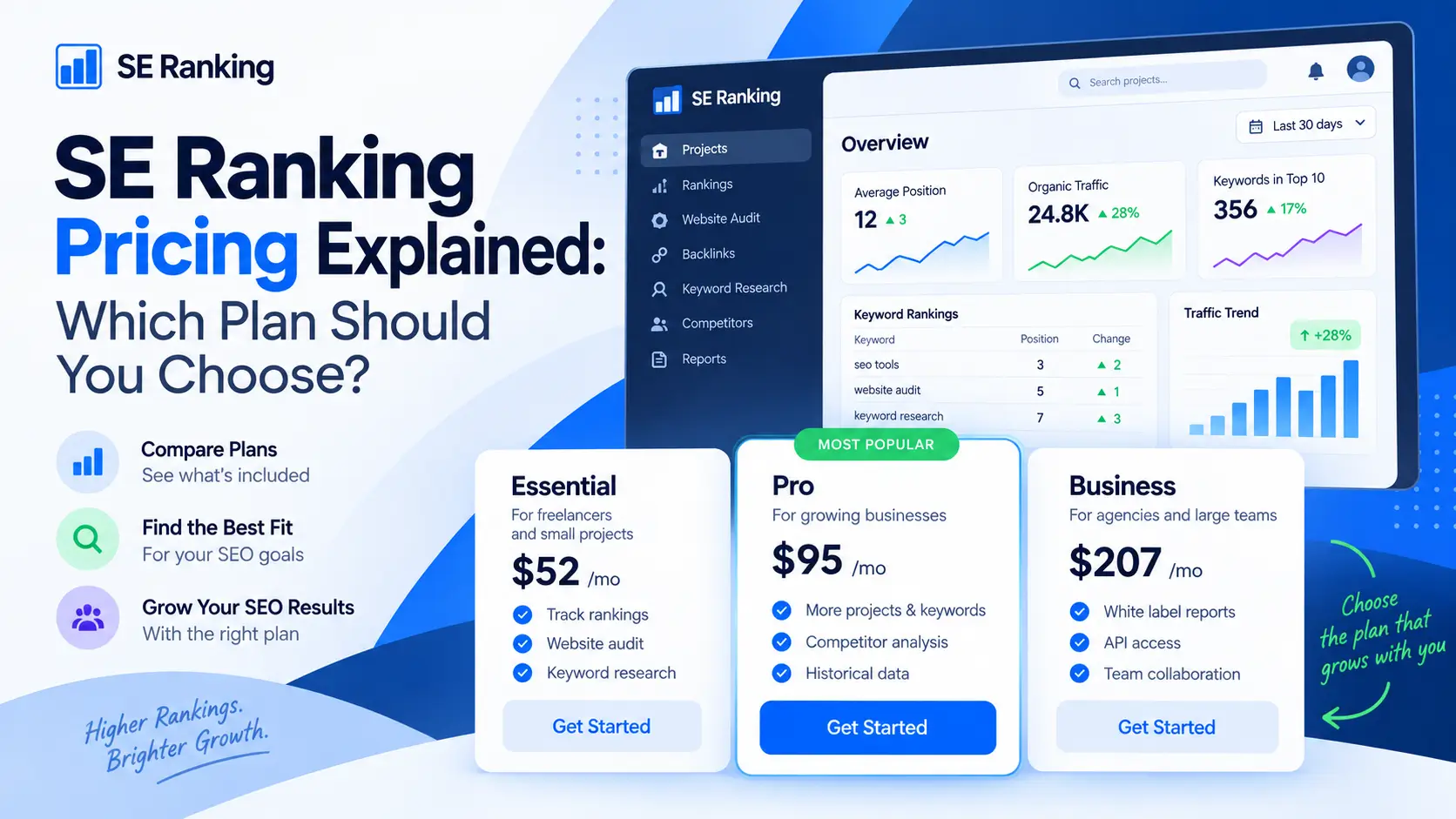
💸 6. SE Ranking
SE Ranking is one of the best value alternatives if Surfer feels too narrow.
It gives you a broader SEO platform with keyword research, rank tracking, audits, reporting, and content-related workflows.
For small teams, freelancers, and growing agencies, SE Ranking can make more financial sense because it covers more SEO jobs in one subscription.
It may not beat Surfer at Surfer’s exact core function, but it can be a better overall business decision.
Expert Verdict
Use SE Ranking if you want a budget-friendly all-in-one SEO platform rather than a dedicated content optimizer only.
Avoid it if your main priority is advanced content scoring and nothing else.
❓ 7. Frase
Frase is a strong Surfer alternative for research, outlines, briefs, and answer-focused content.
If Surfer tells you how to optimize the page, Frase often helps you understand what questions the content needs to answer.
That makes it especially useful for:
- FAQ research
- People Also Ask-style sections
- content briefs
- answer-engine optimization
- writers who need structure before drafting
I like Frase when the bottleneck is planning and research, not only final optimization.
Expert Verdict
Use Frase if your content team struggles with research, briefs, and answering the right questions.
Avoid it if you mainly want deep scoring and technical optimization.
🗺️ 8. MarketMuse
MarketMuse is the Surfer alternative I would consider when the problem is topical authority.
Surfer is strong for optimizing one page. MarketMuse is stronger when you need to understand the broader content inventory and identify authority gaps across a topic.
That matters if you are building a serious content moat.
I would use MarketMuse for:
- topic clusters
- content inventory analysis
- Authority gap detection
- refresh prioritization
- strategic content planning
Expert Verdict
Use MarketMuse if you care about building topical authority across an entire niche.
Avoid it if you only need a low-cost editor for individual articles.
🔥 Why Leave Surfer SEO?
This is the section many comparison articles skip.
Surfer is not bad. But there are real reasons to look elsewhere.
Price Pressure
Surfer can become expensive when you need more articles, more writers, or more workflow flexibility.
For solo publishers or smaller teams, the cost per optimized article can matter.
Workflow Limits
Some teams want content writing, optimization, AI visibility, and reporting in one place. Surfer may feel too focused if you need a broader SEO workflow.
Content Score Fatigue
A common issue with content optimization tools is that writers start chasing the score instead of improving the article.
That can lead to awkward writing.
The better question is not “How do I get 100?”
The better question is, “Does this page satisfy the searcher better than the current results?”
Topical Authority Gaps
Surfer is strong at article-level optimization, but if your site needs a full topical map, you may need a tool like MarketMuse, Semrush, or Keyword Insights alongside it.
📊 Practical Test Scenario: Moving 12 Page-Two Articles Closer to Page One
I would not claim fake results without real site data. But this is exactly how I would structure a real test if I were replacing Surfer on a content site.
The test would start with 12 articles ranking between positions 11 and 20.
That range matters because these pages already have some relevance. They are close enough to recover with a strong refresh.
Test Setup
| Test Element | What I Would Do |
|---|---|
| Page selection | Choose 12 articles ranking on page two |
| Baseline metrics | Record clicks, impressions, CTR, and average position |
| Tool group | Optimize 6 pages with Surfer and 6 with NeuronWriter or Clearscope |
| Refresh method | Update intent, entities, headings, answer blocks, and internal links |
| Measurement period | Track results for 30–60 days |
| Success signal | Higher impressions, improved average position, and better CTR |
What I Would Look For
I would not only look at content scores.
I would check whether the alternative improved:
- semantic relevance
- missing entities
- topical completeness
- direct answers
- internal link connections
- readability
- SERP alignment
My Takeaway
This is the kind of test that creates real E-E-A-T.
Not “I used this tool and liked it.”
But:
I selected pages, measured baseline performance, changed specific variables, and tracked outcomes.
That is the level of evidence I would want before calling any tool a true Surfer replacement.
🧠 Topical Authority: Which Alternatives Go Beyond One Article?
Surfer is strongest when optimizing a single article.
But if you are building a serious site, you also need topical authority.
That means covering:
- main topics
- supporting subtopics
- comparison pages
- definitions
- use cases
- alternatives
- FAQs
- internal links
Best Alternatives for Topical Authority
MarketMuse is strongest for authority gaps and content inventory.
Semrush is strongest when topical planning needs to connect with keyword research, competitor data, and broader SEO operations.
SE Ranking is a strong value option if you need a more affordable all-in-one workflow.
NeuronWriter is useful for smaller sites that want semantic coverage without enterprise pricing.
💡 Pro-Tip: Don’t judge a content tool only by how well it optimizes one page. Judge whether it helps you build the next 20 pages that make that one page more authoritative.
🤖 AEO Readiness: Which Tools Help You Get Cited by AI?
AEO readiness means your content is easier for answer engines to extract, summarize, and cite.
The best Surfer alternatives should help you create:
- direct answers
- clean definitions
- concise summaries
- comparison tables
- question-based headings
- entity-rich sections
Strongest AEO Fits
Frase is strong for questions and answer-focused outlines.
Writesonic is strong for AI visibility-aware content workflows.
Clearscope is strong for clean, high-quality editorial optimization.
NeuronWriter is strong for semantic completeness and NLP-style coverage.
My Take
If I wanted to improve AEO readiness, I would not rely on one score.
I would use the tool to find gaps, then manually add better answer blocks, clearer definitions, and stronger examples.
🧬 Keyword Stuffing vs Semantic Optimization
This is where tool choice matters.
Bad optimization tells you to repeat terms until the score improves.
Good optimization helps you cover related concepts naturally.
The strongest alternatives focus more on:
- entities
- subtopics
- semantic relationships
- intent coverage
- content completeness
That is why I prefer tools that help explain the topic better, not just mention the keyword more often.
My Rule
If a tool makes your article sound worse just to raise the score, do not follow it blindly.
A strong content editor knows when to ignore a recommendation.
✍️ AI Writing Quality: Which Tools Need the Least Editing?
AI writing quality matters, but not because you want to remove human editing.
Human editing is still necessary.
The real question is: how much cleanup does the draft need?
Best for Human-Centric Content
Jasper is strongest when brand voice matters.
Writesonic is strongest when speed and content volume matter.
Semrush Content Toolkit is useful when writing needs to connect with SEO data.
Frase is useful when the outline and questions matter more than the final prose.
My Take
I would not publish raw AI output from any of these tools.
The best workflow is:
- Use AI for draft structure
- Add expert judgment
- Verify facts
- Improve examples
- Add internal links
- Edit for human clarity
That is how you avoid generic AI content.
🔌 Workflow Integration: Google Docs, WordPress, and Team Use
Workflow matters more than people admit.
A tool can have great recommendations, but if writers hate using it, adoption drops.
Best Integration Fit
Clearscope is strong for teams that write in Google Docs and WordPress.
Surfer is also strong here, but this article is about alternatives.
Frase is practical for brief-building workflows.
Semrush works better when content is part of a broader SEO and reporting system.
My Take
If your team writes in Google Docs every day, integrations are not a minor feature.
They are a productivity feature.
⚡ Real-Time SERP Analysis and Fresh Data
The SERP changes quickly.
That means content tools should not depend only on stale data.
When comparing alternatives, I would look for tools that analyze current top-ranking pages, current questions, and current content patterns.
Strong Fits
Surfer SEO is known for SERP-based optimization, but among alternatives, I would look closely at Frase, NeuronWriter, Clearscope, and Semrush, depending on workflow.
The key is not only whether the tool pulls SERP data.
The key is whether it helps you make better editorial decisions from that data.
💰 Price vs Value: Think in Cost per Useful Article
Do not judge pricing only by the monthly subscription.
Judge the tool by cost per useful article.
A tool that costs more may be cheaper if it helps your team publish better pages faster.
A cheaper tool may still be expensive if every article needs heavy rework.
How I Think About ROI
Ask:
- How many articles will I optimize each month?
- How many writers need access?
- Does the tool reduce editing time?
- Does it help with refreshes after publishing?
- Does it replace another tool?
- Does it improve traffic or conversion potential?
For a solo publisher, NeuronWriter or SE Ranking may be the better value.
For an agency, Clearscope, Semrush, or MarketMuse may justify the higher cost.
📈 Post-Publish Auditing and Content Refresh
One reason to look beyond Surfer is that content optimization does not end at publishing.
You need to know when a page starts decaying.
Useful post-publish features include:
- content inventory
- tracked topics
- GSC data
- rank monitoring
- refresh alerts
- performance reporting
Strong Fits
MarketMuse is strong for content inventory and refresh prioritization.
Semrush is strong for broader reporting and tracking.
SE Ranking is useful if you want rank tracking and audits in one lower-cost platform.
NeuronWriter is useful for smaller teams that want GSC-informed optimization workflows.
✅ Pros and Cons of the Leading Surfer Alternatives
1. NeuronWriter
Pros
- Strong value for semantic optimization
- Useful NLP-style content guidance
- Good fit for small sites and budget-conscious teams
Cons
- Less polished than premium enterprise tools
- Not as strong for large agency reporting
2. Writesonic
Pros
- Strong for content scaling
- Useful for AI visibility-aware workflows
- Good fit for teams producing content at volume
Cons
- Needs human editing and fact-checking
- Not a pure Surfer-style editor only
3. Jasper
Pros
- Strong brand voice control
- Good for human-centric marketing content
- Useful for teams that need consistency
Cons
- Not a direct content optimization replacement
- Needs SEO data support around it
4. Clearscope
Pros
- Strong editorial optimization
- Good for teams and agencies
- Clean workflow and premium positioning
Cons
- Expensive for small publishers
- Not a full SEO platform
5. Semrush
Pros
- Broad SEO and content ecosystem
- Useful for agencies and teams
- Stronger for competitive research and reporting
Cons
- Can feel heavy if you only need content optimization
- More expensive than lightweight alternatives
6. SE Ranking
Pros
- Strong value as an all-in-one SEO platform
- Good for rank tracking, audits, and reporting
- Useful for smaller teams and agencies
Cons
- Not as specialized as Surfer for content optimization
- Better as a broader SEO tool than a pure editor
7. Frase
Pros
- Strong for briefs, questions, and research
- Useful for AEO-friendly content structure
- Good for writers who need direction before drafting
Cons
- Less suited for deep technical SEO operations
- Not the best all-in-one SEO platform
8. MarketMuse
Pros
- Excellent for topical authority
- Strong content inventory and gap analysis
- Useful for serious content strategy
Cons
- More advanced and expensive
- Not ideal if you only need quick article optimization
🧭 Final Recommendation Matrix
| Need | Best Choice | Why |
|---|---|---|
| Cheapest strong Surfer alternative | NeuronWriter | Best balance of semantic optimization and affordability |
| Best content scaling platform | Writesonic | Stronger for AI writing, refresh, and AI visibility workflows |
| Best brand voice platform | Jasper | Better for human-centric branded content |
| Best premium team workflow | Clearscope | Stronger for editorial teams and agencies |
| Best all-in-one SEO platform | Semrush | Better if content is only one part of your SEO workflow |
| Best budget all-in-one platform | SE Ranking | Good value for rank tracking, audits, reporting, and content workflows |
| Best research and brief tool | Frase | Stronger for question-led and AEO-friendly content planning |
| Best topical authority platform | MarketMuse | Better for content inventory and authority gaps |
❓ Surfer Alternatives FAQ
1. What is the best Surfer alternative?
The best Surfer alternative depends on your workflow. NeuronWriter is best for budget semantic optimization, Clearscope is best for premium teams, and Writesonic is best for content scaling.
2. What is the cheapest Surfer SEO alternative?
NeuronWriter is one of the strongest low-cost Surfer alternatives for content optimization and semantic SEO.
3. What is the best Surfer alternative for agencies?
Clearscope, Semrush, and SE Ranking are better fits for agencies depending on budget, reporting needs, and SEO workflow depth.
4. What is the best Surfer alternative for content scaling?
Writesonic and Jasper are stronger when the goal is producing more content while maintaining workflow and brand control.
5. What is the best Surfer alternative for topical authority?
MarketMuse is one of the strongest choices when the goal is topic clusters, content inventory, and authority gap analysis.
6. Is NeuronWriter better than Surfer?
NeuronWriter can be better for budget-conscious users who want semantic optimization at a lower cost. Surfer may still be stronger for users who prefer its workflow and content editor.
7. Is Clearscope better than Surfer?
Clearscope may be better for editorial teams that want a cleaner, premium optimization workflow. Surfer may be better for users who prefer more aggressive SERP-based scoring.
8. Do Surfer alternatives help with AI Overviews?
Some do. Tools like Frase, Writesonic, Clearscope, Semrush, and NeuronWriter can help improve answer structure, topical coverage, and citation readiness.
🏁 Final Thoughts
If I had to give a clear recommendation, I would keep it simple.
Choose NeuronWriter if you want the best budget Surfer alternative.
Choose Clearscope if you want premium content optimization for a serious team.
Choose Writesonic or Jasper if your main problem is content scaling.
Choose Semrush if you want content optimization inside a broader SEO platform.
Choose MarketMuse if you are building topical authority, not just optimizing one article.
The biggest mistake is trying to find a perfect Surfer clone.
The better move is to choose the tool that fixes the real problem in your workflow.
Recommended Next Reads
- Frase vs Surfer (New Comparison)
- Semrush vs Surfer
- Best AI Content Optimization Tools
- Best AI Tools Tested for Content Refresh
- Best AEO Tools Tested


Comments 4