Best AI SEO Tools Tested for Bloggers and Affiliate Sites
🚀 Introduction
The best AI SEO tools for bloggers and affiliate sites help you find realistic keywords, create better content, optimize articles, build internal links, and improve rankings without needing an enterprise SEO budget. For most small publishers, the right stack is not one tool. It is a focused combination of keyword research, content optimization, AI writing, and internal linking tools.
That matters because bloggers and affiliate marketers have different needs from large brands.
You do not always need the biggest SEO platform. You need tools that help you publish faster, target easier keywords, improve existing posts, and connect your content in a way that supports rankings and conversions.
In this guide, I will review the best AI SEO tools for bloggers and affiliate sites, explain when I would use each one, and show how to build a practical SEO stack without wasting money on tools you do not need.
⚡ Quick Verdict
For most bloggers and affiliate site owners, the best AI SEO tool stack should cover five jobs: keyword research, content planning, content optimization, AI-assisted writing, and internal linking.
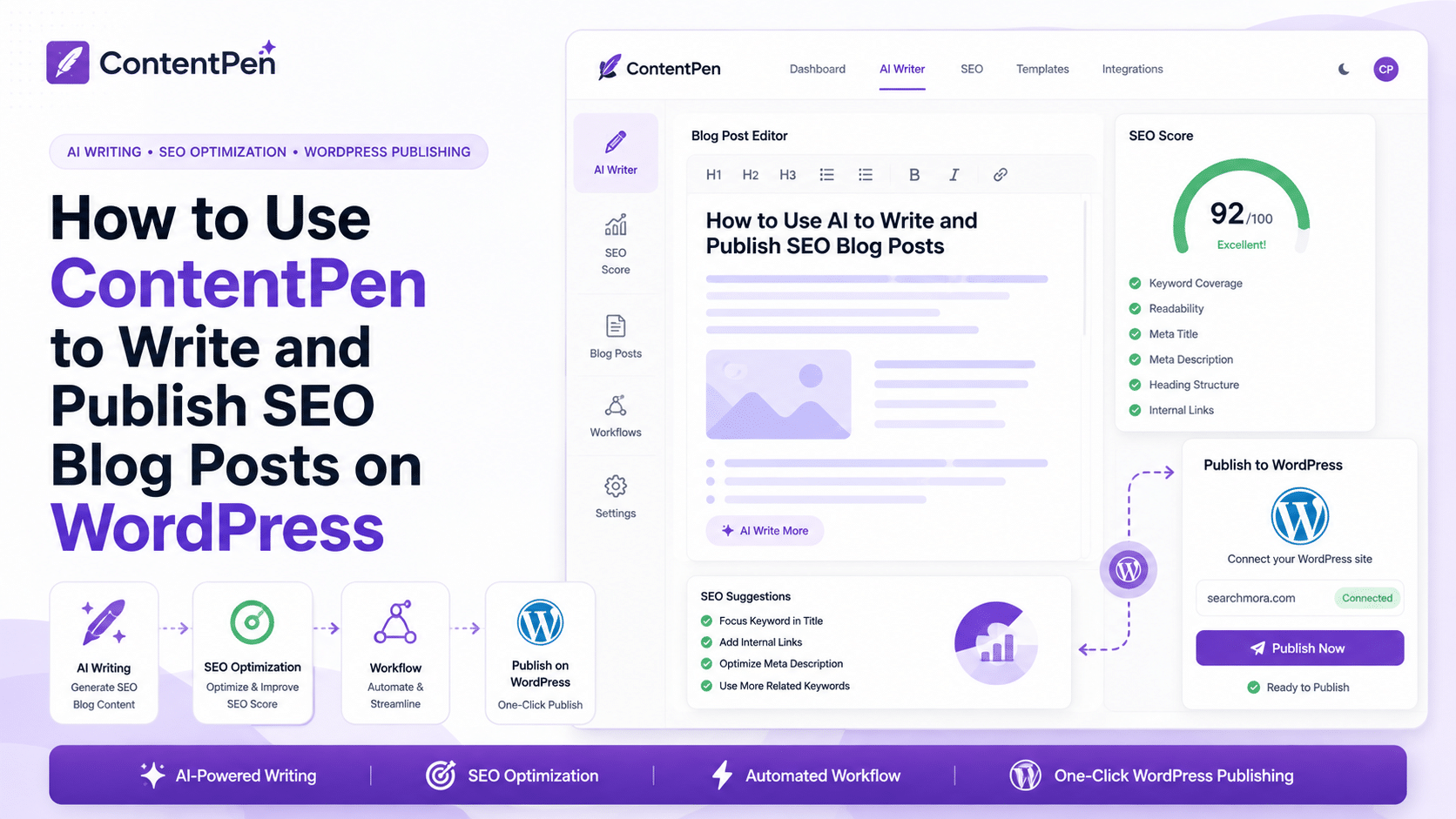
If I had to build a lean stack, I would start with LowFruits or Mangools for keyword research, NeuronWriter for content optimization, KoalaWriter or ContentPen for AI-assisted drafts, and Link Whisper for internal linking.
| Question | Quick Answer |
|---|---|
| Best overall value | NeuronWriter |
| Best for AI SEO drafts | KoalaWriter |
| Best for low-competition keywords | LowFruits |
| Best for internal linking | Link Whisper |
| Best for keyword clustering | WriterZen |
| Best beginner SEO toolkit | Mangools |
| Best blog-focused SEO reports | RankIQ |
| Best premium content optimizer | Surfer SEO |
| Best WordPress SEO plugin | Rank Math |
| Best WordPress AI content workflow | GetGenie |
| I would use these tools if you need | I would not use these tools if you need |
|---|---|
| Faster SEO content production | A fully automated business with no editing |
| Low-competition keyword discovery | Guaranteed rankings |
| Better article optimization | Deep enterprise SEO reporting |
| Internal linking support | Advanced backlink campaigns |
| Affiliate content workflows | Technical SEO automation at enterprise scale |
| Blog post refreshes | A replacement for human strategy |
| AI-assisted outlines and drafts | Fake hands-on product reviews |
| A practical SEO stack for small sites | One tool that does everything perfectly |
The clearest takeaway is this: bloggers and affiliate marketers should not buy tools because they are “AI-powered.” Buy tools that solve a real workflow problem: finding easier keywords, writing faster drafts, optimizing better content, and linking related posts strategically.
📌 In This Guide
- What Makes an AI SEO Tool Good for Bloggers and Affiliate Sites?
- Best AI SEO Tools for Bloggers and Affiliate Sites
- Best AI SEO Tools by Use Case
- How to Choose the Right AI SEO Stack
- Pricing and Value: What Should Bloggers Pay For?
- Real-World Evidence: What Independent Reviews Show
- Common Mistakes When Using AI SEO Tools
- FAQ
- Final Verdict
- Recommended Next Reads
🧠 What Makes an AI SEO Tool Good for Bloggers and Affiliate Sites?
A good AI SEO tool for bloggers and affiliate sites should help with practical growth, not just generate text.
Bloggers and affiliate marketers usually need tools that help them:
- Find low-competition keywords.
- Understand search intent.
- Build topic clusters.
- Create faster article drafts.
- Optimize posts for semantic coverage.
- Improve titles, headings, and FAQs.
- Add internal links.
- Refresh old content.
- Avoid keyword cannibalization.
- Support affiliate pages with helpful content.
The biggest mistake is thinking that AI writing alone is the solution.
AI can help you write faster, but SEO success still depends on choosing the right keywords, matching search intent, adding original value, building internal links, improving trust, and updating content over time.
For affiliate sites, this is even more important.
Affiliate content should not sound like generic AI output. It should include practical comparisons, honest pros and cons, pricing notes, screenshots when possible, product experience, and clear buying guidance.
The strongest AI SEO tools help you work faster without removing human judgment.
🛠️ Best AI SEO Tools for Bloggers and Affiliate Sites
| Tool | Best For | Best Fit |
|---|---|---|
| NeuronWriter | Budget content optimization | Bloggers and affiliate sites improving articles |
| KoalaWriter | Fast AI SEO drafts | Niche sites and affiliate publishers |
| Link Whisper | Internal linking | WordPress blogs and affiliate sites |
| LowFruits | Low-competition keywords | Newer sites and niche publishers |
| WriterZen | Keyword clustering and planning | Bloggers building topic clusters |
| Mangools | Beginner-friendly SEO toolkit | Small blogs and affiliate beginners |
| RankIQ | Blog-focused SEO reports | Bloggers who want simple content guidance |
| Surfer SEO | Premium content optimization | Teams that want stronger optimization workflows |
| Rank Math | WordPress SEO and schema | WordPress bloggers and affiliate sites |
| GetGenie | WordPress AI content workflow | Bloggers who want AI writing inside WordPress |
🥇 NeuronWriter
NeuronWriter is one of the best AI SEO tools for bloggers and affiliate site owners who want affordable content optimization.
It helps you analyze competing pages, improve semantic coverage, use NLP-style recommendations, score your content, and optimize blog posts before publishing.
I especially like NeuronWriter for affiliate SEO because it fits the budget of smaller publishers better than many premium tools. You can use it to improve review articles, comparison pages, buying guides, informational posts, and content refreshes.
I would use NeuronWriter if you need:
| NeuronWriter Summary | Details |
|---|---|
| Best for | Budget semantic SEO optimization |
| Strongest use case | Optimizing existing drafts and refreshes |
| Best audience | Bloggers, affiliate marketers, freelancers, small publishers |
| Main weakness | Less polished than premium tools like Clearscope or Surfer |
| Searchmora verdict | One of the strongest value tools for affiliate SEO |
- Affordable content optimization.
- Semantic keyword recommendations.
- Content scoring.
- Competitor analysis.
- AI writing support inside the optimization workflow.
- A lower-cost Surfer alternative.
I would not use NeuronWriter if you need:
- Enterprise reporting.
- Deep backlink analysis.
- Full technical SEO audits.
- Premium editorial workflows.
- Advanced content inventory planning.
For most affiliate site owners, NeuronWriter is one of the easiest tools to recommend because the value is clear: better SEO content optimization without premium pricing.
✍️ KoalaWriter
KoalaWriter is one of the best AI writing tools for bloggers and affiliate sites that need fast SEO article drafts.
It is especially useful for niche site content, informational articles, affiliate roundups, Amazon-style product content, and bulk article workflows.
KoalaWriter works best when you already have a validated keyword and clear search intent. It can create the first draft quickly, but the final article still needs editing, fact-checking, internal links, and original value.
| KoalaWriter Summary | Details |
|---|---|
| Best for | Fast AI SEO article drafts |
| Strongest use case | Affiliate and niche site content production |
| Best audience | Bloggers, niche site owners, affiliate marketers |
| Main weakness | Raw AI drafts can feel generic without editing |
| Searchmora verdict | Excellent for speed, but not a replacement for human review |
I would use KoalaWriter if you need:
- Fast first drafts.
- Affiliate content support.
- SEO blog article generation.
- Bulk content workflows.
- WordPress publishing support.
- Product roundup draft support.
I would not use KoalaWriter if you need:
- Deep keyword research.
- Premium content scoring.
- Advanced brand voice control.
- Expert product reviews without real testing.
- Full SEO strategy.
KoalaWriter is best used as a drafting engine. The tool helps you move faster, but your editing process creates trust.
🔗 Link Whisper
Link Whisper is one of the best internal linking tools for WordPress bloggers and affiliate sites.
Internal links are important because they help search engines understand your site structure, help users discover related content, and support important money pages.
For affiliate SEO, Link Whisper is especially useful because you can connect supporting informational posts to review articles, comparison pages, buying guides, and “best tools” lists.
| Link Whisper Summary | Details |
|---|---|
| Best for | Internal linking |
| Strongest use case | Linking old and new WordPress posts faster |
| Best audience | Bloggers, affiliate sites, content-heavy WordPress sites |
| Main weakness | Suggestions still need manual review |
| Searchmora verdict | One of the most practical tools for content-heavy affiliate sites |
I would use Link Whisper if you need:
- Faster internal link suggestions.
- Help finding orphaned posts.
- Bulk internal link opportunities.
- Auto-linking rules.
- Broken internal link reporting.
- Better links to affiliate money pages.
I would not use Link Whisper if you need:
- Keyword research.
- AI article writing.
- Backlink analysis.
- Technical SEO crawling.
- Full SEO reporting.
Link Whisper does not make weak content rank by itself. But it can make a strong content library easier to connect, crawl, and maintain.
🍏 LowFruits
LowFruits is one of the best keyword research tools for bloggers and affiliate sites that need realistic ranking opportunities.
Its main strength is weak SERP analysis. Instead of only showing keyword difficulty, LowFruits helps you find keywords where weaker websites, forums, or lower-authority pages already rank.
That is valuable for newer websites.
If your site does not have strong authority yet, chasing high-volume keywords is often a waste of time. LowFruits helps you find easier entry points.
| LowFruits Summary | Details |
|---|---|
| Best for | Low-competition keyword discovery |
| Strongest use case | Finding weak SERPs and long-tail opportunities |
| Best audience | New blogs, niche sites, affiliate publishers |
| Main weakness | Not a full SEO suite |
| Searchmora verdict | Excellent for finding realistic keywords before writing |
I would use LowFruits if you need:
- Low-competition keywords.
- Weak SERP analysis.
- Long-tail keyword ideas.
- Affiliate topic discovery.
- Small-site SEO opportunities.
- A pay-as-you-go keyword research option.
I would not use LowFruits if you need:
- Content optimization.
- AI writing.
- Technical audits.
- Advanced backlink analysis.
- Enterprise SEO reporting.
LowFruits helps you choose better SEO battles. For smaller sites, that can be more valuable than having a huge keyword database full of impossible keywords.
🧩 WriterZen
WriterZen is a practical SEO content workflow tool for keyword research, topic discovery, keyword clustering, content briefs, and AI-assisted writing.
It is useful for bloggers and affiliate site owners who want to build topic clusters instead of publishing random articles.
Keyword clustering matters because many keywords should not become separate posts. Some should be grouped into one strong page. Others deserve separate articles. WriterZen helps organize that planning process.
| WriterZen Summary | Details |
|---|---|
| Best for | Keyword clustering and content planning |
| Strongest use case | Turning keyword ideas into topic clusters |
| Best audience | Bloggers, affiliate site owners, SEO freelancers |
| Main weakness | Not a full SEO suite |
| Searchmora verdict | Strong planning tool before writing and optimization |
I would use WriterZen if you need:
- Keyword research.
- Keyword clustering.
- Topic discovery.
- Content briefs.
- AI-assisted drafts.
- A lighter SEO planning workflow.
I would not use WriterZen if you need:
- Deep technical audits.
- Backlink analysis.
- Premium content optimization.
- Advanced AI visibility tracking.
- Enterprise content strategy.
WriterZen is strongest before and during content creation. It helps you plan smarter before you spend time writing.
🔎 Mangools
Mangools is one of the best beginner-friendly SEO toolkits for bloggers and small affiliate sites.
The suite includes tools for keyword research, SERP analysis, rank tracking, backlink checks, and competitor insights. Its best-known tool is KWFinder, which is especially useful for finding simple keyword opportunities.
Mangools is not as deep as Ahrefs or Semrush, but that is not the point. Its strength is usability.
| Mangools Summary | Details |
|---|---|
| Best for | Beginner-friendly SEO research |
| Strongest use case | Keyword research with KWFinder |
| Best audience | Bloggers, freelancers, small businesses, affiliate beginners |
| Main weakness | Not deep enough for advanced SEO teams |
| Searchmora verdict | Great starter toolkit before upgrading to heavier tools |
I would use Mangools if you need:
- Easy keyword research.
- SERP analysis.
- Rank tracking.
- Basic backlink checks.
- Competitor keyword ideas.
- A simple SEO toolkit.
I would not use Mangools if you need:
- Deep backlink research.
- Technical SEO audits.
- SEO automation.
- Premium content optimization.
- Advanced agency reporting.
Mangools is ideal when you want SEO data without feeling overwhelmed.
📘 RankIQ
RankIQ is an AI SEO tool built specifically for bloggers who want simpler keyword research and content optimization guidance.
Its strongest feature is its curated keyword library, which can help bloggers find lower-competition topics across many blogging niches.
RankIQ is not the broadest SEO tool. It does not replace Ahrefs, Semrush, or Screaming Frog. But for bloggers who want easier SEO reports and content guidance, it can be useful.
| RankIQ Summary | Details |
|---|---|
| Best for | Blog-focused SEO reports |
| Strongest use case | Finding and optimizing blog topics |
| Best audience | Bloggers and small publishers |
| Main weakness | Limited compared with broader SEO platforms |
| Searchmora verdict | Good fit for bloggers who want simple SEO guidance |
I would use RankIQ if you need:
- Blog-focused keyword ideas.
- Simple SEO reports.
- Content optimization guidance.
- Easier workflows for non-technical bloggers.
- Help improve article titles and topics.
I would not use RankIQ if you need:
- Deep competitor analysis.
- Backlink research.
- Advanced keyword clustering.
- Technical SEO crawling.
- AI search visibility tracking.
RankIQ is best for bloggers who want practical direction without needing advanced SEO knowledge.
🌊 Surfer SEO
Surfer SEO is a premium content optimization platform for users who want stronger SERP-based content scoring, content briefs, and AI-assisted article workflows.
For bloggers and affiliate marketers, Surfer is useful when content quality and optimization depth matter more than budget.
It is especially useful for competitive topics where you need to understand content length, headings, related terms, topical coverage, and competitor structure.
| Surfer SEO Summary | Details |
|---|---|
| Best for | Premium content optimization |
| Strongest use case | SERP-based content scoring and optimization |
| Best audience | Serious bloggers, agencies, content teams |
| Main weakness | More expensive than budget tools |
| Searchmora verdict | Strong option when you want deeper content optimization |
I would use Surfer SEO if you need:
- Strong content scoring.
- SERP-based content recommendations.
- Content briefs.
- AI-assisted article workflows.
- Better optimization for competitive posts.
I would not use Surfer SEO if you need:
- The cheapest SEO tool.
- Weak SERP keyword discovery.
- Internal linking automation.
- Deep backlink research.
- Simple beginner SEO only.
Surfer is a strong upgrade path when budget tools are no longer enough.
🧮 Rank Math
Rank Math is one of the best WordPress SEO plugins for bloggers and affiliate site owners.
It helps with on-page SEO settings, schema markup, XML sitemaps, redirects, SEO titles, meta descriptions, content analysis, and Content AI features.
For affiliate sites using WordPress, Rank Math can act as the foundation of the technical on-page setup.
| Rank Math Summary | Details |
|---|---|
| Best for | WordPress SEO and schema |
| Strongest use case | On-page SEO settings inside WordPress |
| Best audience | WordPress bloggers and affiliate sites |
| Main weakness | Not a complete keyword research or content optimization suite |
| Searchmora verdict | Essential WordPress SEO foundation for many small publishers |
I would use Rank Math if you need:
- WordPress SEO settings.
- Schema markup.
- XML sitemaps.
- Redirect management.
- Title and meta controls.
- Content AI inside WordPress.
I would not use Rank Math if you need:
- Deep keyword research.
- SERP-based content optimization.
- Backlink analysis.
- AI writing at scale.
- Advanced competitor research.
Rank Math is not a replacement for your full SEO stack, but it is a strong foundation for WordPress SEO.
🧞 GetGenie
GetGenie is an AI SEO content tool for WordPress users who want keyword intelligence, competitor analysis, AI writing, and content optimization inside the WordPress editor.
It is especially useful for bloggers who prefer working directly inside WordPress instead of moving between multiple SaaS tools.
| GetGenie Summary | Details |
|---|---|
| Best for | WordPress AI content workflow |
| Strongest use case | AI writing and SEO inside WordPress |
| Best audience | WordPress bloggers, small publishers, affiliate sites |
| Main weakness | Not as strong as specialist tools in every category |
| Searchmora verdict | Good option for WordPress-first AI SEO workflows |
I would use GetGenie if you need:
- AI blog writing inside WordPress.
- SEO content suggestions.
- Keyword intelligence.
- Competitor analysis.
- A WordPress-native workflow.
I would not use GetGenie if you need:
- Deep backlink analysis.
- Large-scale keyword clustering.
- Dedicated internal linking automation.
- Enterprise content strategy.
- Full technical SEO audits.
GetGenie is best for users who want fewer tabs and a more WordPress-centered AI SEO workflow.
🧭 Best AI SEO Tools by Use Case
| Use Case | Best Tool |
|---|---|
| Best overall budget optimizer | NeuronWriter |
| Best AI SEO writer for affiliate sites | KoalaWriter |
| Best internal linking tool | Link Whisper |
| Best weak SERP keyword tool | LowFruits |
| Best keyword clustering tool | WriterZen |
| Best beginner SEO toolkit | Mangools |
| Best blogger-focused SEO report tool | RankIQ |
| Best premium content optimizer | Surfer SEO |
| Best WordPress SEO plugin | Rank Math |
| Best WordPress AI SEO content tool | GetGenie |
🧱 How to Choose the Right AI SEO Stack
The best SEO stack depends on your site stage.
If You Are a New Blogger
Start simple.
Use:
- LowFruits for easy keywords.
- Rank Math for WordPress SEO basics.
- NeuronWriter for content optimization.
This gives you a lean setup without overspending.
If You Run an Affiliate Site
Use tools that support commercial content.
A strong stack could be:
- LowFruits for weak SERPs.
- KoalaWriter for first drafts.
- NeuronWriter for optimization.
- Link Whisper for internal links.
- Rank Math for schema and on-page SEO.
This stack covers the most important affiliate SEO workflow.
If You Publish a Lot of Content
Use tools that save time.
A practical stack could be:
- WriterZen for clustering.
- KoalaWriter or ContentPen for drafts.
- NeuronWriter or Surfer for optimization.
- Link Whisper for internal links.
The key is quality control. Publishing faster only helps if the content remains useful.
If You Already Have Traffic
Focus on optimization and refreshing.
Use:
- Google Search Console.
- NeuronWriter.
- Link Whisper.
- Rank Math.
- Surfer SEO if you need premium optimization.
Old content often has faster growth potential than brand-new content.
💰 Pricing and Value: What Should Bloggers Pay For?
Bloggers and affiliate marketers should not pay for every tool at once.
The smarter approach is to buy based on the current bottleneck.
| Your Bottleneck | Best Tool Type to Pay For |
|---|---|
| You cannot find easy keywords | LowFruits or Mangools |
| Your articles are not optimized | NeuronWriter or Surfer |
| You write too slowly | KoalaWriter, ContentPen, or GetGenie |
| Your site has weak internal links | Link Whisper |
| Your keyword list is messy | WriterZen |
| Your WordPress SEO setup is weak | Rank Math |
| You need simple blogger guidance | RankIQ |
The biggest mistake is buying advanced tools too early.
A new site does not need a huge SEO stack. It needs consistent publishing, good keyword selection, clear structure, internal links, and useful content.
As the site grows, you can upgrade.

📊 Real-World Evidence: What Independent Reviews Show
AI SEO tools can help bloggers and affiliate site owners, but they do not guarantee rankings. The most useful external evidence shows the same pattern: tools can save time and improve workflows, but results still depend on keyword selection, content quality, editing, links, and execution.
External source: TechRadar’s RankIQ review and independent AI SEO tool reviews from WP-focused publications.
TechRadar describes RankIQ as an AI-powered SEO tool geared toward bloggers and content creators. Its review highlights the curated keyword library, AI-driven SEO reports, content optimization, and title analysis as useful for bloggers who want organic traffic without deep SEO expertise. The review also notes limitations: RankIQ is not a full SEO suite and lacks advanced backlink analysis, technical audits, and broader integrations.
Independent WordPress-focused reviews of tools such as GetGenie also support the practical value of AI-assisted SEO workflows inside WordPress, especially for users who want article generation, SEO optimization, and writing support inside the editor.
Here is the practical evidence summary:
| Evidence Point | What It Means for Bloggers and Affiliate Sites |
|---|---|
| AI SEO tools can simplify SEO workflows | Bloggers can move faster without needing enterprise SEO knowledge. |
| Blog-focused tools are useful for smaller publishers | Tools like RankIQ help with keywords, reports, and optimization. |
| WordPress-native AI tools reduce workflow friction | Tools like GetGenie can help users write and optimize inside WordPress. |
| Specialist tools still have limits | Most tools do not replace backlinks, technical SEO, human editing, or real experience. |
| Results depend on execution | Better tools help, but the final content and strategy still matter most. |
For Searchmora readers, the fair conclusion is this:
AI SEO tools are most valuable when they support a focused workflow. They help you find opportunities, write faster, optimize better, and improve site structure. But they do not replace strategy, editing, internal links, product experience, or patience.
A smart 30-day test would look like this:
- Choose one niche topic cluster.
- Use LowFruits or Mangools to find 10 realistic keywords.
- Use KoalaWriter or GetGenie to create first drafts.
- Edit every article manually.
- Optimize each draft with NeuronWriter or Surfer.
- Add internal links with Link Whisper.
- Publish 5–10 strong articles.
- Track impressions and clicks in Google Search Console.
- Refresh weak posts after 60–90 days.
- Keep the tools that saved time and improved quality.
The strongest way to use AI SEO tools is to improve your process, not replace your judgment.
⚠️ Common Mistakes When Using AI SEO Tools
Publishing Raw AI Content
This is the biggest mistake.
AI drafts should be edited, fact-checked, and improved before publishing.
Choosing Keywords Only by Volume
High-volume keywords are often too competitive.
For small sites, easier long-tail keywords are usually smarter.
Ignoring Search Intent
If Google wants a comparison page, do not publish a basic definition article.
Match the page type to the intent.
Forgetting Internal Links
Internal links help connect your articles and support important pages.
Use internal links strategically, especially for affiliate content.
Using Too Many Tools Too Early
A small site does not need every tool.
Start with the bottleneck that matters most.
Creating Fake Product Experience
Affiliate content needs honesty.
Do not claim hands-on testing unless you actually tested the product.
Not Updating Old Posts
SEO content needs maintenance.
Refresh old articles, update prices, improve examples, and add new internal links.
❓ FAQ
1. What are the best AI SEO tools for bloggers?
The best AI SEO tools for bloggers are NeuronWriter, KoalaWriter, LowFruits, Link Whisper, WriterZen, Mangools, RankIQ, Surfer SEO, Rank Math, and GetGenie.
2. What is the best AI SEO tool for affiliate sites?
For affiliate sites, the strongest stack is usually LowFruits for keywords, KoalaWriter for drafts, NeuronWriter for optimization, Link Whisper for internal links, and Rank Math for WordPress SEO.
3. Is NeuronWriter good for affiliate SEO?
Yes, NeuronWriter is very useful for affiliate SEO because it helps optimize reviews, comparison pages, buying guides, and supporting informational content at a lower cost than many premium tools.
4. Is KoalaWriter good for affiliate content?
Yes, KoalaWriter is useful for affiliate content drafts, product roundups, niche articles, and bulk blog production. However, every draft still needs human editing and real product insight.
5. Is LowFruits better than Mangools?
LowFruits is better for finding weak SERPs and low-competition keywords. Mangools is better if you want a broader beginner-friendly SEO toolkit with keyword research, SERP analysis, rank tracking, and backlink checks.
6. Do bloggers need Surfer SEO?
Not always. Surfer SEO is useful for more competitive content optimization, but beginners may start with NeuronWriter or a lower-cost tool first.
7. What is the best internal linking tool for affiliate sites?
Link Whisper is one of the best internal linking tools for WordPress affiliate sites because it helps find internal link opportunities, orphaned content, and links to important money pages.
8. Can AI SEO tools guarantee rankings?
No. AI SEO tools can improve research, writing, optimization, and internal linking, but rankings depend on search intent, content quality, authority, backlinks, technical SEO, competition, and consistency.
9. How many SEO tools does a blogger really need?
Most bloggers only need 3–5 tools at first: one keyword research tool, one content optimizer, one WordPress SEO plugin, one internal linking tool, and optionally one AI writing tool.
🏁 Final Verdict
The best AI SEO tools for bloggers and affiliate sites are the ones that solve specific workflow problems.
If you need better keywords, start with LowFruits or Mangools. If you need better article optimization, use NeuronWriter or Surfer SEO. If you need faster drafts, use KoalaWriter or GetGenie. If you need better internal links, use Link Whisper. If your content planning is messy, use WriterZen.
My final recommendation is simple:
Start lean.
Do not buy every tool at once. Build your stack around your current bottleneck, then upgrade as your site grows.
For most bloggers and affiliate marketers, the strongest practical stack is:
- LowFruits for low-competition keywords.
- KoalaWriter for faster drafts.
- NeuronWriter for optimization.
- Link Whisper for internal links.
- Rank Math for WordPress SEO basics.
The clearest takeaway is this: AI SEO tools can help you publish faster and optimize smarter, but they only work when paired with real strategy, useful content, internal linking, and honest affiliate recommendations.
📚 Recommended Next Reads
- NeuronWriter Review: Is This Budget-Friendly SEO Content Optimizer Worth It?
- KoalaWriter Review: Is This AI SEO Writer Worth It?
- LowFruits Review: Is This Low-Competition Keyword Tool Worth It?
- Link Whisper Review: Is This Internal Linking Tool Worth It?
- WriterZen Review: Is This SEO Content Workflow Tool Worth It?


Comments 4