Introduction
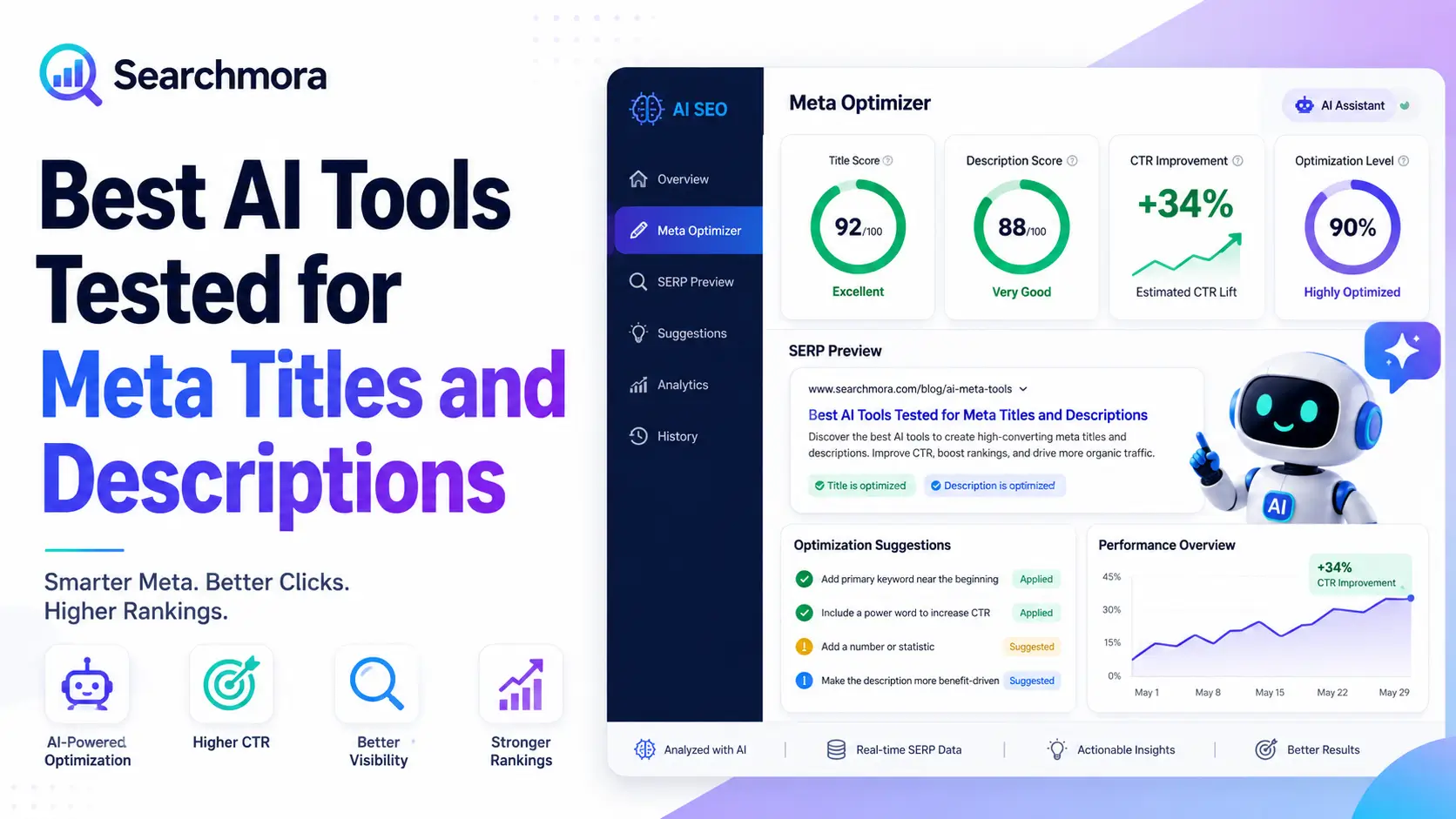
The best AI tools tested for meta titles and descriptions are Rank Math and Yoast for WordPress optimization, Jasper and CoSchedule for CTR-focused headline testing, ContentPen for SEO content workflows, and Screaming Frog with OpenAI API for bulk metadata generation across large ecommerce or enterprise websites.
Meta titles and descriptions still matter because they shape how users understand your page in search results.
They do not guarantee rankings by themselves.
They also do not guarantee that Google will use your exact description.
But they can help improve:
- Search result clarity.
- Organic CTR.
- Page-topic relevance.
- User expectation.
- Brand positioning.
- Snippet readability.
- Large-site metadata quality.
- Duplicate meta tag cleanup.
- Ecommerce category and product presentation.
- GEO-ready answer framing.
The mistake is treating every page the same.
A WordPress blog post needs a different workflow from a 20,000-product ecommerce site.
That is why this guide does not list tools randomly. It groups them by how they generate and optimize metadata.
⚡ Quick Verdict
Rank Math is the best AI meta tool for WordPress users who want real-time metadata generation inside the CMS. Yoast is better for users who prefer a simpler SEO plugin workflow. Jasper and CoSchedule are stronger for CTR hooks, while Screaming Frog plus OpenAI is best for bulk metadata generation.
| Tool | Best For | Metadata Workflow | Main Limitation |
|---|---|---|---|
| Rank Math Content AI | WordPress SEO users | AI meta titles and descriptions inside WordPress | Requires review before bulk use |
| Yoast AI Generate | WordPress and Shopify users | AI title and description suggestions inside the editor | Less flexible for custom bulk workflows |
| Jasper | Brand-safe title variations | H1, SEO title, and description copywriting | Not a technical crawler |
| CoSchedule Headline Studio | CTR and hook testing | Headline scoring and SEO title improvement | Not a full meta description system |
| ContentPen | SEO content teams | Article metadata inside AI content workflow | Better for articles than massive ecommerce catalogs |
| Screaming Frog + OpenAI API | Large sites and ecommerce | Crawl-based bulk metadata generation | Requires setup, QA, and API cost control |
| ChatGPT / Gemini | Manual metadata rewriting | Flexible prompts for small batches | Needs source data and strict review |
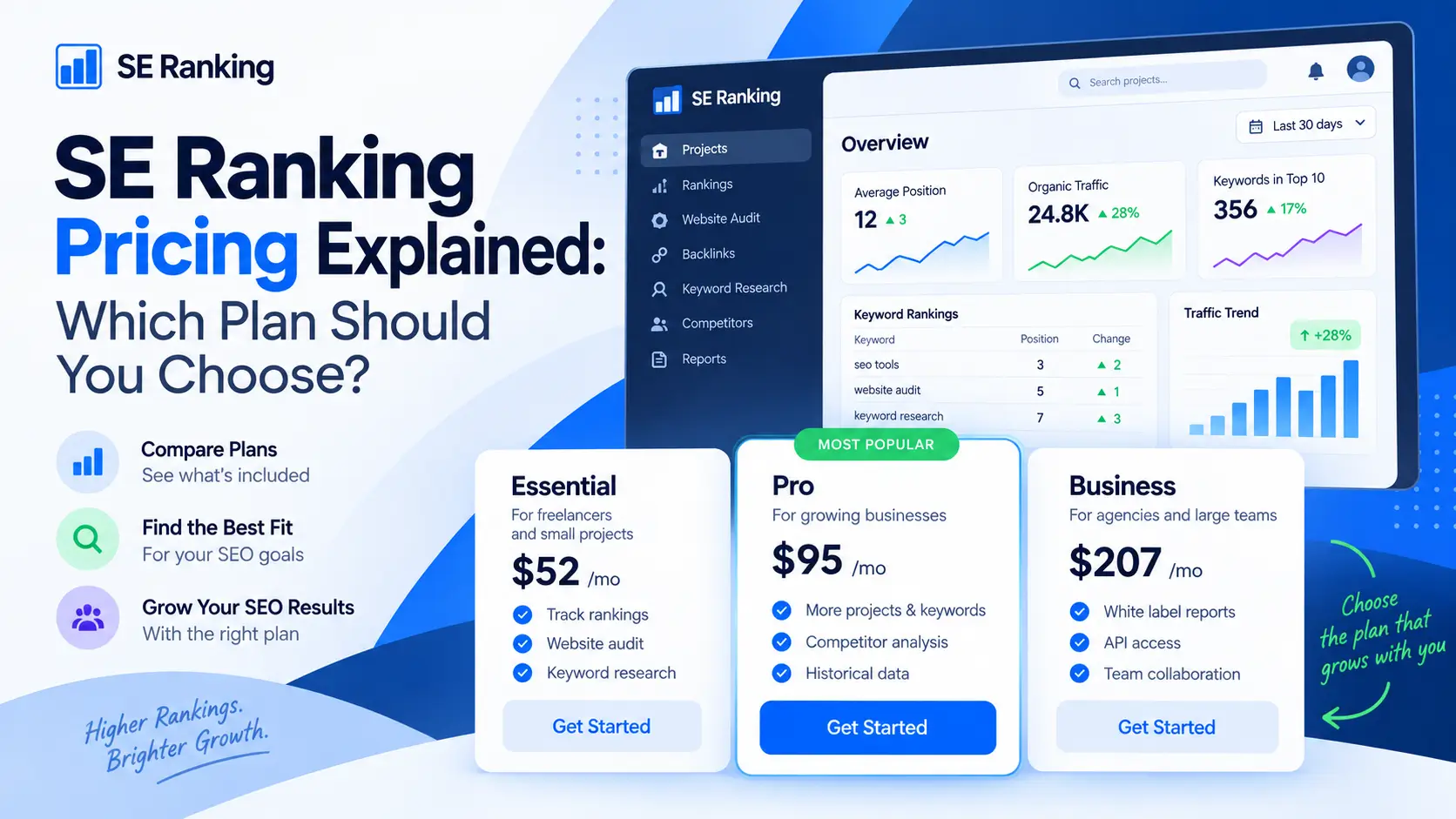
| SE Ranking Content Tools | SEO teams | SEO content and metadata support | Not as direct as CMS plugins |
Best Tool by Use Case
| Use Case | Best Tool |
|---|---|
| Generate meta inside WordPress | Rank Math or Yoast |
| Generate product titles in Shopify | Yoast SEO for Shopify |
| Improve title CTR | CoSchedule or Jasper |
| Keep brand voice consistent | Jasper |
| Bulk-generate metadata for large sites | Screaming Frog + OpenAI API |
| Generate metadata while writing articles | ContentPen |
| Rewrite 10–30 descriptions manually | ChatGPT or Gemini |
| Combine metadata with SEO reporting | SE Ranking |
The clearest takeaway is this: use CMS plugins for real-time page optimization, copywriting tools for CTR, and crawler-based AI workflows for large-scale metadata cleanup.
📚 Recommended Reads
- Best AI Tools Tested for Heading Optimization
- How to Audit SEO Content with AI
- Best AI Tools Tested for Content Audits
- ContentPen Review: Is This AI Blog Writer Worth It?
- Rank Math Review: Is This WordPress SEO Plugin Worth It?
📌 In This Guide
1. 🧠 What Are AI Meta Title and Description Tools?
2. 🧪 How These Tools Were Evaluated
3. 🧭 The Main Types of AI Metadata Tools
4. 📊 Best AI Meta Title and Description Tools Compared
5. 🧩 Rank Math Content AI
6. 🟢 Yoast AI Generate
7. ✍️ Jasper
8. 🧲 CoSchedule Headline Studio
9. 🚀 ContentPen
10. 🐸 Screaming Frog + OpenAI API
11. 🤖 ChatGPT or Gemini
12. 🛒 Best Tools for Ecommerce Metadata at Scale
13. 🌐 GEO Rules for Meta Descriptions
14. ⚠️ Metadata Hallucination and QA Checklist
15. 🧰 Prompts You Can Copy
16. 📈 How to Measure Results
17. ❓ FAQ
18. 🏁 Final Verdict
19. 📚 Recommended Next Reads
🧠 What Are AI Meta Title and Description Tools?
AI meta title and description tools generate or improve SEO titles and page summaries using page content, target keywords, search intent, SERP patterns, product data, brand voice, or crawl exports. The best tools reduce repetitive writing while keeping metadata accurate and useful.
A good AI metadata tool should help you create:
- A clear SEO title.
- A concise meta description.
- A relevant keyword angle.
- A user-focused benefit.
- A natural call to action.
- A page-specific summary.
- A non-clickbait hook.
- A description that matches the real page.
- Metadata that avoids duplication.
- Output that a human can review quickly.
Meta Title vs H1 vs Meta Description
| Element | Purpose |
|---|---|
| H1 | The visible main page heading |
| SEO title/title tag | The title search engines may show in results |
| Meta description | A short page summary search engines may use as the snippet |
| Social title | The title used for social sharing |
| Product title | Ecommerce product-name field, not always the SEO title |
The title tag and H1 can be similar, but they should not be blindly duplicated on every page.
🧪 How These Tools Were Evaluated
These tools were evaluated by how well they generate accurate, concise, non-clickbait metadata that matches page content, supports search intent, includes important entities naturally, and avoids duplicate or hallucinated claims.
Evaluation Criteria
| Test Area | What Was Reviewed |
|---|---|
| Title length control | Can the tool keep titles around 50–60 characters? |
| Description length control | Can it keep descriptions around 140–160 characters? |
| Search intent match | Does the metadata match the user’s likely goal? |
| CTR quality | Does it create a clear reason to click? |
| Entity use | Does it include important entities naturally? |
| Keyword balance | Does it avoid keyword stuffing? |
| Page accuracy | Does it reflect the real content? |
| Hallucination risk | Does it invent features, prices, or claims? |
| Bulk workflow | Can it handle many URLs efficiently? |
| CMS integration | Does it work inside WordPress, Shopify, or another CMS? |
| Human control | Can editors review before publishing? |
What “Tested” Does Not Mean
This article does not claim fake results such as:
- Exact CTR increases.
- Guaranteed ranking improvements.
- 500 product descriptions generated in 3 minutes.
- Perfect 155-character compliance.
- Zero hallucinations.
- Universal pixel-width accuracy.
AI metadata performance depends on:
- page type
- keyword
- SERP layout
- brand strength
- snippet rewriting
- search intent
- product data quality
- human review
The safest conclusion is not “AI writes perfect metadata.”
The safest conclusion is:
AI can speed up metadata creation, but it must be constrained, reviewed, and measured.
🧭 The Main Types of AI Metadata Tools
AI metadata tools should be chosen by workflow. WordPress plugins are best for page-level optimization, CTR tools are best for title hooks, and crawler-based AI workflows are best for ecommerce and enterprise sites.
1. Real-Time CMS Optimization Tools
These tools work inside WordPress, Shopify, or a CMS editor.
Best examples:
- Rank Math Content AI.
- Yoast AI Generate.
Best for:
- bloggers
- WordPress users
- Shopify stores
- small business websites
- teams editing one page at a time
2. CTR and Intent Optimization Tools
These tools improve the title hook and click appeal.
Best examples:
- Jasper.
- CoSchedule Headline Studio.
Best for:
- SEO titles
- H1 variations
- article hooks
- campaign titles
- high-impression pages with low CTR
3. Bulk Meta Generation Tools
These tools generate or rewrite metadata across many URLs.
Best examples:
- Screaming Frog + OpenAI API.
- ContentPen for article workflows.
- ChatGPT or Gemini with structured exports.
Best for:
- ecommerce
- large blogs
- category pages
- product pages
- old sites with missing descriptions
- duplicate meta cleanup
📊 Best AI Meta Title and Description Tools Compared
| Tool | Best Category | Title Generation | Description Generation | Bulk Support | CMS Workflow | Best User |
|---|---|---|---|---|---|---|
| Rank Math | WordPress CMS AI | Strong | Strong | Yes | Strong | WordPress bloggers |
| Yoast | WordPress / Shopify CMS AI | Strong | Strong | Moderate | Strong | Simple CMS users |
| Jasper | CTR and brand voice | Strong | Good | Moderate | Content workflow | Marketing teams |
| CoSchedule | CTR and headline scoring | Strong | Limited | Limited | Extension/plugin | Title testing |
| ContentPen | AI SEO articles | Good | Strong | Strong | Publishing workflow | Content teams |
| Screaming Frog + OpenAI | Enterprise bulk metadata | Strong | Strong | Very strong | Export/API workflow | Technical SEOs |
| ChatGPT / Gemini | Manual custom metadata | Good | Good | Moderate | Manual | Small teams |
| SE Ranking | SEO workflow metadata | Good | Good | Moderate | SEO platform | SEO teams |
🧩 Rank Math Content AI
Rank Math Content AI
Rank Math Content AI is the best choice for WordPress users who want AI-generated SEO titles and meta descriptions inside the post editor. It is especially useful when metadata should be generated from the actual page content and managed directly in WordPress.
Rank Math is strong because it keeps metadata close to the publishing workflow.
You do not need to export the article, write the title elsewhere, and paste it back manually.
What Rank Math Does Well
Rank Math can help with:
- SEO title generation.
- SEO description generation.
- SEO meta generation.
- WordPress snippet editing.
- Bulk SEO meta generation.
- Page-level optimization.
- Focus keyword workflows.
- SEO score checks.
- WooCommerce metadata workflows.
- AI-assisted content tasks.
Best Use Case
Use Rank Math when:
- Your site runs on WordPress.
- You already use Rank Math SEO.
- You want metadata inside the editor.
- You publish articles regularly.
- You need quick SEO title and description suggestions.
- You want bulk help without leaving WordPress.
Pixel and Character Control
Rank Math can help generate concise metadata, but you should still check:
- SEO title display length.
- meta description length.
- mobile SERP preview.
- keyword placement.
- duplicate titles.
- duplicate descriptions.
- whether Google may rewrite the snippet.
NLP and Entity Quality
Rank Math works best when the article itself is clear.
If the content is thin, generic, or poorly structured, the generated metadata may also become vague.
Hallucination Risk
The risk is moderate.
The tool may create a benefit-focused description that sounds better than the page if the content is weak.
Review product claims, pricing, numbers, and comparisons manually.
Main Weakness
Rank Math is best for WordPress. It is not the best option for teams that need a custom crawler-based workflow across a large ecommerce database.
Verdict
Choose Rank Math if you want fast AI metadata generation inside WordPress with strong editor-level control.
🟢 Yoast AI Generate
Yoast AI Generate
Yoast AI Generate is best for WordPress and Shopify users who want simple AI suggestions for SEO titles and meta descriptions inside a familiar SEO plugin. It is easier for non-technical teams than crawler-based bulk workflows.
Yoast’s advantage is simplicity.
It gives editors generated options and lets them apply the one that fits best.
What Yoast Does Well
Yoast helps with:
- AI-generated SEO titles.
- AI-generated meta descriptions.
- WordPress post metadata.
- page metadata.
- Category page metadata.
- Shopify metadata.
- WooCommerce product metadata.
- Content previews.
- Editor-based optimization.
- SEO checks.
Best Use Case
Use Yoast when:
- You already use Yoast SEO.
- Your team wants a simple interface.
- Editors work inside WordPress or Shopify.
- You want fast title and description suggestions.
- You prefer page-by-page human approval.
Pixel and Character Control
Yoast is useful for previewing search appearance and generating options, but the editor should still verify that the final version is concise and not cut off in search results.
NLP and Entity Quality
Yoast’s AI suggestions are based on the page and keyphrase context.
The output is usually strongest when the page has a clear topic, direct intro, and specific headings.
Hallucination Risk
The risk is lower when the page content is specific.
The risk increases on thin product pages, vague service pages, or pages with missing pricing and feature details.
Main Weakness
Yoast is not the best choice for custom large-scale prompt engineering across hundreds of thousands of URLs.
Verdict
Choose Yoast if you want a familiar CMS-based AI workflow that helps editors generate and apply metadata quickly.
✍️ Jasper
Jasper
Jasper is best for teams that need persuasive SEO title and meta description variations with brand voice control. It is strongest for CTR, hooks, campaign angles, and polished copy, not technical crawling or bulk ecommerce metadata.
Jasper is useful when the metadata is accurate but boring.
For example:
Weak title:
AI Meta Tools
Stronger title:
Best AI Meta Tools for SEO Titles, Descriptions, and CTR
What Jasper Does Well
Jasper helps with:
- SEO title variations.
- Meta title and description generation.
- brand voice.
- style guide control.
- audience-specific copy.
- campaign messaging.
- benefit-led phrasing.
- call-to-action language.
- content rewriting.
- consistent marketing tone.
Best Use Case
Use Jasper when:
- You need several title angles.
- Brand voice matters.
- A page has impressions but weak CTR.
- A landing page needs stronger copy.
- The title must be persuasive without becoming clickbait.
- The metadata should match campaign messaging.
CTR and Intent Quality
Jasper is stronger than basic SEO plugins for persuasive phrasing.
It can create variants such as:
- Direct.
- benefit-focused.
- pain-point focused.
- comparison-based.
- curiosity-based.
- audience-specific.
Hallucination Risk
The risk is moderate.
Because Jasper is good at persuasive copy, it may overstate a benefit if the prompt does not include strict page facts.
Use a rule such as:
Do not mention features, prices, results, guarantees, or product claims unless they appear in the provided page content.
Main Weakness
Jasper is not a technical SEO crawler. It does not automatically audit every URL for duplicate or missing metadata.
Verdict
Choose Jasper when the main problem is click appeal, brand voice, or weak title positioning.
🧲 CoSchedule Headline Studio
CoSchedule Headline Studio
CoSchedule Headline Studio is best for testing SEO titles, blog headlines, and hooks before publishing. It helps improve clarity, emotional appeal, SEO value, and click potential, but it is not a complete meta description generator.
CoSchedule is a headline tool first.
Use it when the title is the main problem.
What CoSchedule Does Well
CoSchedule can help with:
- headline scoring.
- SEO score.
- Headline AI.
- sentiment analysis.
- word balance.
- power words.
- SERP preview.
- headline history.
- WordPress plugin workflows.
- browser extension workflows.
Best Use Case
Use CoSchedule when:
- A page has impressions but low CTR.
- The title is too flat.
- You want stronger emotional appeal.
- You need title variations.
- You want to avoid clickbait.
- You want a quick quality check before publishing.
CTR and Intent Quality
CoSchedule helps title writers ask:
- Is the headline clear?
- Is the benefit visible?
- Does it match intent?
- Is it too long?
- Does it look natural in search?
- Is it emotional without being manipulative?
Hallucination Risk
The risk is low for scoring existing titles.
The risk increases if you use AI-generated title suggestions without checking whether they match the actual page.
Main Weakness
CoSchedule does not solve large-scale meta description generation.
It should be paired with another tool for descriptions and bulk metadata.
Verdict
Choose CoSchedule when your priority is improving the title tag or H1 for organic clicks.
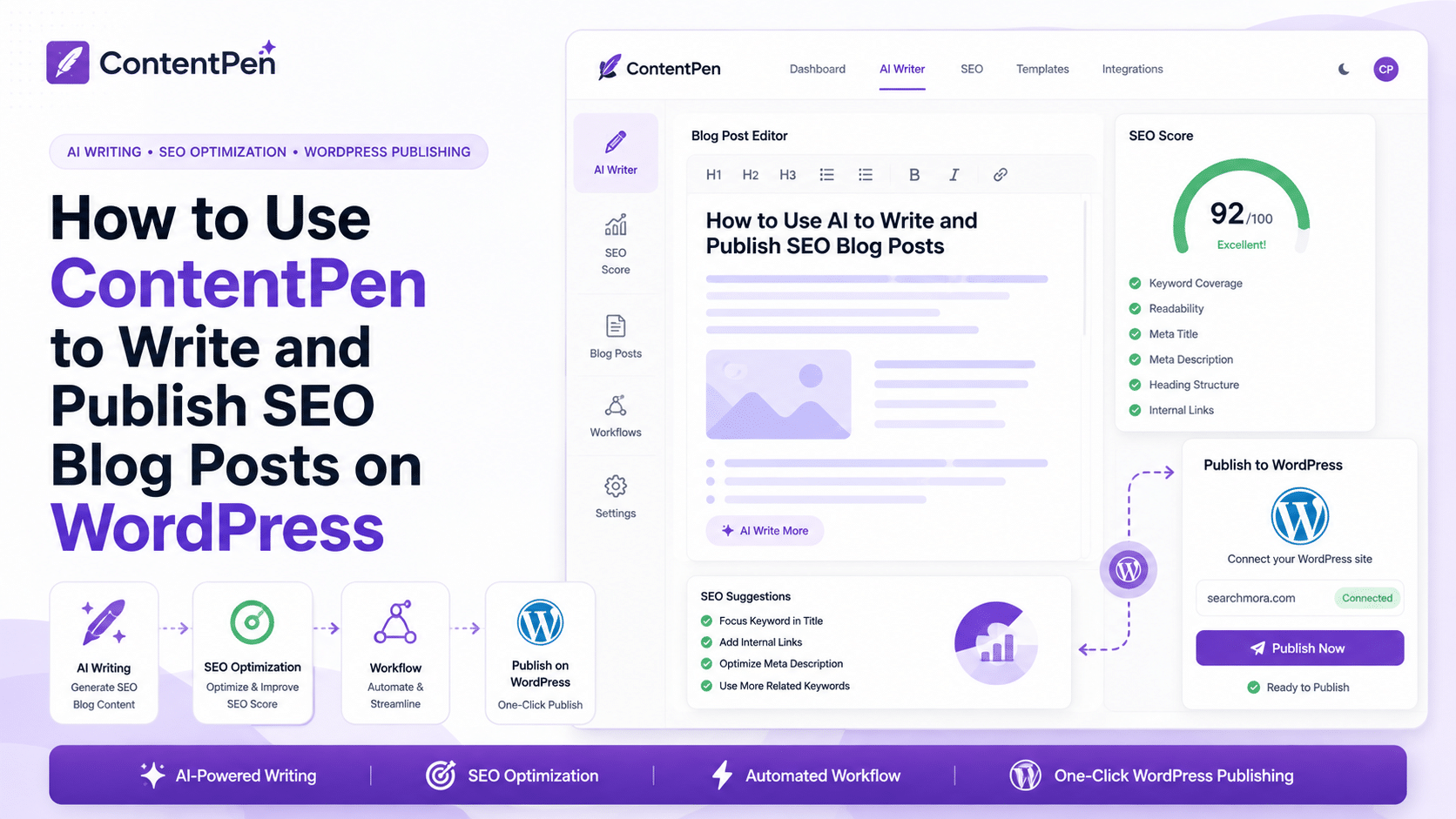
🚀 ContentPen
ContentPen
ContentPen is best for SEO content teams that want meta titles and descriptions generated as part of the article production workflow. It is useful for blogs and affiliate sites, but less flexible than Screaming Frog for custom enterprise metadata generation.
ContentPen is not only a metadata tool.
It generates article drafts and related SEO fields as part of a larger content workflow.
What ContentPen Does Well
ContentPen supports:
- article generation.
- SEO meta title fields.
- SEO meta description fields.
- SEO and article settings.
- article body context.
- content refresh workflows.
- SERP-based content creation.
- internal and external linking.
- Bulk article generation.
- CMS publishing workflows.
Best Use Case
Use ContentPen when:
- You create SEO articles at scale.
- You want metadata included with each draft.
- You publish affiliate or blog content.
- You need 10–100 article workflows.
- You want content and metadata in one place.
- You are not building a custom ecommerce metadata pipeline.
Character Limit Control
ContentPen is useful for article-level metadata because the meta title and description sit inside the same workflow as the draft.
Still, review every description for:
- clarity
- length
- accuracy
- duplication
- CTA quality
- page-specific value
Hallucination Risk
The risk depends on the page type.
For informational content, risk is manageable with editing.
For affiliate reviews, pricing pages, and comparison posts, human review is required.
Main Weakness
ContentPen is better for article production than for crawling and rewriting metadata across thousands of old product URLs.
Verdict
Choose ContentPen if your metadata generation is tied to SEO article production, not technical ecommerce cleanup.
🐸 Screaming Frog + OpenAI API
Screaming Frog + OpenAI API
Screaming Frog with OpenAI API is the strongest workflow for bulk meta title and description generation across large websites. It lets technical SEOs run AI prompts against crawl data, page text, HTML, or custom extractions at scale.
This is the best option when the problem is not writing one title.
The problem is fixing thousands of missing, duplicated, or weak metadata fields.
What This Workflow Does Well
Screaming Frog plus AI can help with:
- missing meta descriptions.
- duplicate titles.
- duplicate descriptions.
- ecommerce category metadata.
- product page metadata.
- page-type classification.
- intent classification.
- page summaries.
- metadata rewriting.
- large-site QA.
Best Use Case
Use this workflow when:
- You manage a large site.
- You have many missing descriptions.
- You need metadata by page type.
- You want to use crawl data.
- You can handle API setup.
- You need exportable results for QA.
- You want prompts based on page text or HTML.
Ecommerce Advantage
For ecommerce, you can create prompts that use:
- product name
- category
- price
- brand
- attributes
- page text
- breadcrumbs
- stock status
- unique selling point
This helps avoid generic descriptions like:
Buy the best products online today.
Hallucination Risk
The risk is high if the prompt allows the model to invent details.
Use strict prompts:
Only use facts found in the supplied page text, product fields, or structured extraction. If a detail is missing, do not invent it.
Main Weakness
This workflow needs technical setup, API cost management, prompt testing, and manual QA.
It is powerful, but not beginner-friendly.
Verdict
Choose Screaming Frog plus OpenAI API when you need scalable, crawl-based metadata generation and have the technical ability to review outputs safely.
🤖 ChatGPT or Gemini
ChatGPT or Gemini
ChatGPT or Gemini can generate strong meta titles and descriptions when you provide the page content, target keyword, search intent, brand rules, and length limits. They are best for small batches and custom rewriting, not fully automated sitewide deployment.
General prompts create general metadata.
Good inputs create better outputs.
Best Use Case
Use ChatGPT or Gemini for:
- rewriting 10–30 pages.
- testing title angles.
- creating meta description variations.
- matching brand tone.
- adding clearer CTAs.
- shortening long titles.
- improving low-CTR pages.
- creating title templates.
Prompt Quality Matters
Bad prompt:
Write a meta description for this page.
Better prompt:
Write 5 meta descriptions under 155 characters. Use only the facts below. Include the primary keyword naturally. Start with the main benefit. Do not invent features, prices, results, or guarantees.
Main Weakness
ChatGPT and Gemini are not metadata databases.
They do not crawl your site, detect duplicates, or update your CMS unless connected through another workflow.
Verdict
Choose ChatGPT or Gemini when you need flexible human-reviewed metadata drafts, not automatic bulk publishing.
🛒 Best Tools for Ecommerce Metadata at Scale
For ecommerce, the best AI metadata workflow is Screaming Frog with OpenAI API for technical teams, Yoast WooCommerce SEO for WordPress stores, and ContentPen only when the ecommerce site also publishes SEO articles.
Ecommerce Metadata Problems
Large stores often suffer from:
- Missing product descriptions.
- duplicate product titles.
- duplicate meta descriptions.
- category pages with weak metadata.
- brand pages with generic titles.
- product variants using the same description.
- outdated prices or features.
- metadata that ignores search intent.
- manufacturer copy.
- low CTR on high-impression pages.
Recommended Ecommerce Stack
| Ecommerce Need | Best Tool |
|---|---|
| WooCommerce product metadata | Yoast WooCommerce SEO or Rank Math |
| Shopify metadata | Yoast SEO for Shopify |
| Bulk crawl and export | Screaming Frog |
| AI prompt generation from crawl data | Screaming Frog + OpenAI |
| Product page copywriting | Jasper |
| Blog metadata | ContentPen or Rank Math |
| CTR testing for category titles | CoSchedule |
| Manual QA | ChatGPT or Gemini |
Ecommerce Prompt Rule
For product pages, always include:
- Product name.
- brand.
- category.
- key attribute.
- main use case.
- unique selling point.
- target audience.
- character limit.
- no-invention rule.
- duplicate-avoidance rule.
🌐 GEO Rules for Meta Descriptions
GEO-ready meta descriptions should answer the page’s main question directly, include the main entity, show the user benefit, and use a clear action verb without sounding like clickbait.
How Meta Descriptions Changed
Meta descriptions used to be treated mainly as short promotional summaries.
Now they should also help:
- users decide quickly.
- search engines understand the page.
- AI systems identify the answer angle.
- answer engines summarize the page.
- brands communicate value clearly.
Snippet-Friendly Rule
Write the description as a short answer.
Example:
Weak:
Learn more about the best AI SEO tools and how they can help your business grow.
Better:
Compare the best AI SEO tools for content audits, keyword research, GEO tracking, internal links, and SEO automation.
The better version is specific.
CTA Rule
Use action verbs naturally:
- Compare.
- Learn.
- Discover.
- Review.
- Find.
- See.
- Choose.
- Audit.
- Improve.
- Build.
Avoid empty hype:
- Ultimate
- Revolutionary
- Game-changing
- Unbelievable
- Guaranteed
- Secret
- Magical
Entity Rule
Include the main entity when useful.
For example:
Compare Rank Math, Yoast, Jasper, CoSchedule, ContentPen, and Screaming Frog for AI meta title and description generation.
155-Character Rule
A practical target is:
- 50–60 characters for SEO titles.
- 140–160 characters for meta descriptions.
These are guidelines, not guaranteed display limits.
Google may rewrite snippets depending on the query.
⚠️ Metadata Hallucination and QA Checklist
AI metadata can create risk when it invents prices, features, guarantees, statistics, product details, or outcomes not present on the page. Always review metadata before publishing, especially for ecommerce, affiliate, legal, health, and financial pages.
Common AI Metadata Errors
| Error | Example |
|---|---|
| Invented pricing | “Plans start at $9” when the page does not say that |
| Fake feature | “Includes API access” when it does not |
| Overpromise | “Guaranteed to rank higher” |
| Wrong audience | “Best for agencies” on a beginner page |
| Duplicate description | Same description across many product pages |
| Keyword stuffing | Repeats the same phrase unnaturally |
| Clickbait | Promises more than the page delivers |
| Outdated claim | Uses old pricing or old product names |
| Wrong entity | Confuses similar product names |
| Too generic | Could apply to any page |
QA Checklist
Before publishing metadata, check:
- Is the title under a practical display limit?
- Is the description around 140–160 characters?
- Does it match the actual page?
- Does it include the main topic?
- Does it avoid fake claims?
- Does it avoid keyword stuffing?
- Is the CTA natural?
- Is the description unique?
- Does it match search intent?
- Would a user feel misled after clicking?
Bulk QA Rules
For large sites, sample manually:
- 20 product pages.
- 20 category pages.
- 20 blog posts.
- 20 high-traffic pages.
- 20 pages with commercial intent.
- All pages with prices.
- All pages with legal or compliance claims.
Do not bulk-publish without sampling.
🧰 Prompts You Can Copy
Prompt 1: SEO Title and Meta Description
Write 5 SEO title options and 5 meta description options for this page.
Rules:
- SEO title under 60 characters where possible
- Meta description under 155 characters where possible
- Use the primary keyword naturally
- Match the search intent
- Include one clear benefit
- Do not invent prices, features, results, guarantees, or statistics
- Avoid clickbait
- Use plain English
Page content: [paste content]
Prompt 2: Low-CTR Rewrite
Rewrite this SEO title and meta description for a page with high impressions but low CTR.
Keep the meaning accurate. Improve clarity and click appeal. Add a stronger benefit or action verb. Do not exaggerate.
Current title: [title]
Current description: [description]
Target query: [query]
Page summary: [summary]
Prompt 3: Ecommerce Product Metadata
Generate a unique SEO title and meta description for this product page.
Use only the data provided. Do not invent features, prices, compatibility, ratings, discounts, or shipping details.
Product name: [name]
Brand: [brand]
Category: [category]
Main feature: [feature]
Audience: [audience]
Page URL: [url]Output:
- SEO title under 60 characters
- Meta description under 155 characters
Prompt 4: Bulk Meta QA
Review these generated meta titles and descriptions for quality.
Flag:
- titles over 60 characters
- descriptions over 155 characters
- duplicate descriptions
- invented claims
- keyword stuffing
- vague descriptions
- missing primary entity
- mismatch with page type
Return a QA table with recommended fixes.
Prompt 5: GEO-Friendly Meta Description
Write a GEO-friendly meta description that answers the page’s main question directly.
Rules:
- Under 155 characters
- Start with the core answer or benefit
- Include the main entity
- Use one action verb
- Avoid hype and clickbait
📈 How to Measure Results
Measure AI-generated metadata by tracking CTR, impressions, average position, snippet rewrites, duplicate metadata reduction, and performance changes in Search Console after publishing.
Metrics to Track
| Metric | Why It Matters |
|---|---|
| Organic CTR | Shows whether the search result earns more clicks |
| Impressions | Shows whether the page still matches the query |
| Average position | Separates ranking changes from CTR changes |
| Clicks | Shows traffic impact |
| Query-level CTR | Shows which searches respond to the rewrite |
| Duplicate titles | Measures metadata cleanup |
| Duplicate descriptions | Measures uniqueness |
| Google snippet rewrites | Shows whether Google ignores your description |
| Ecommerce category clicks | Shows commercial impact |
| Conversions | Shows business impact |
Test Carefully
Do not rewrite every title and description at once.
Start with:
- High-impression, low-CTR pages.
- Pages with missing meta descriptions.
- Duplicate title clusters.
- Important category pages.
- pages ranking between positions 3 and 15.
- old posts with vague titles.
Annotate the changes and compare performance over a meaningful period.
❓ FAQ
1. What is the best AI tool for meta titles and descriptions?
Rank Math is best for WordPress users, Yoast is best for simple CMS workflows, Jasper and CoSchedule are best for CTR-focused titles, and Screaming Frog plus OpenAI is best for bulk metadata generation.
2. Can AI write good meta descriptions?
Yes. AI can write useful meta descriptions when it receives the page content, search intent, keyword, and strict rules. Human review is still required to prevent exaggeration or inaccurate claims.
3. What is the best AI tool for WordPress meta descriptions?
Rank Math Content AI and Yoast AI Generate are the strongest choices for WordPress users because they generate metadata inside the editor.
4. What is the best tool for ecommerce meta descriptions?
Screaming Frog plus OpenAI API is best for large ecommerce sites. Yoast WooCommerce SEO or Rank Math are easier for smaller WordPress stores.
5. Can AI generate metadata in bulk?
Yes. Screaming Frog with AI API integrations can run prompts against crawl data. Rank Math and Yoast also support bulk metadata workflows inside WordPress.
6. What is the ideal meta title length?
A practical target is around 50–60 characters. Pixel width and device display matter, so this is a guideline rather than a fixed rule.
7. What is the ideal meta description length?
A practical target is around 140–160 characters. Many editors aim near 155 characters, but Google may use a different snippet based on the query.
8. Does Google always use my meta description?
No. Google may use your meta description when it best represents the page for a query, but it may also generate a different snippet from on-page content.
9. Can AI metadata improve CTR?
It can help when the old metadata is vague, missing, duplicated, or poorly aligned with intent. Results depend on ranking position, query, SERP layout, and snippet rewriting.
10. Can AI metadata hurt SEO?Best AI tools tested for meta titles and descriptions
Yes. Bad metadata can mislead users, reduce CTR, create duplicate snippets, overpromise benefits, or introduce inaccurate claims.
11. Should meta descriptions include keywords?
Yes, when natural. The description should summarize the page and include important entities or phrases without stuffing.
12. Should I bulk-publish AI meta descriptions?
Only after QA. Bulk generation is useful, but bulk publishing without sampling can create duplicate, inaccurate, or misleading metadata.
🏁 Final Verdict
The best AI tool for meta titles and descriptions depends on your workflow.
Choose Rank Math Content AI if you use WordPress and want fast AI-generated metadata inside your SEO plugin.
Choose Yoast AI Generate if your team prefers a simpler WordPress or Shopify SEO workflow.
Choose Jasper if brand voice, persuasive copy, and title variations matter.
Choose CoSchedule Headline Studio if your main goal is improving title hooks and organic CTR.
Choose ContentPen if metadata generation is part of your AI SEO article production process.
Choose Screaming Frog + OpenAI API if you need to generate or rewrite metadata across a large site, ecommerce catalog, or enterprise crawl.
Choose ChatGPT or Gemini if you want flexible, human-reviewed metadata for smaller batches.
My recommended stack is simple:
- WordPress blog: Rank Math or Yoast.
- Ecommerce at scale: Screaming Frog + OpenAI API.
- Low-CTR title testing: CoSchedule or Jasper.
- AI article workflow: ContentPen.
- Manual cleanup: ChatGPT or Gemini.
The clearest takeaway is this: AI can write metadata faster, but the winning workflow still needs page-specific facts, intent alignment, length control, CTR judgment, and human QA.
Comments 4